







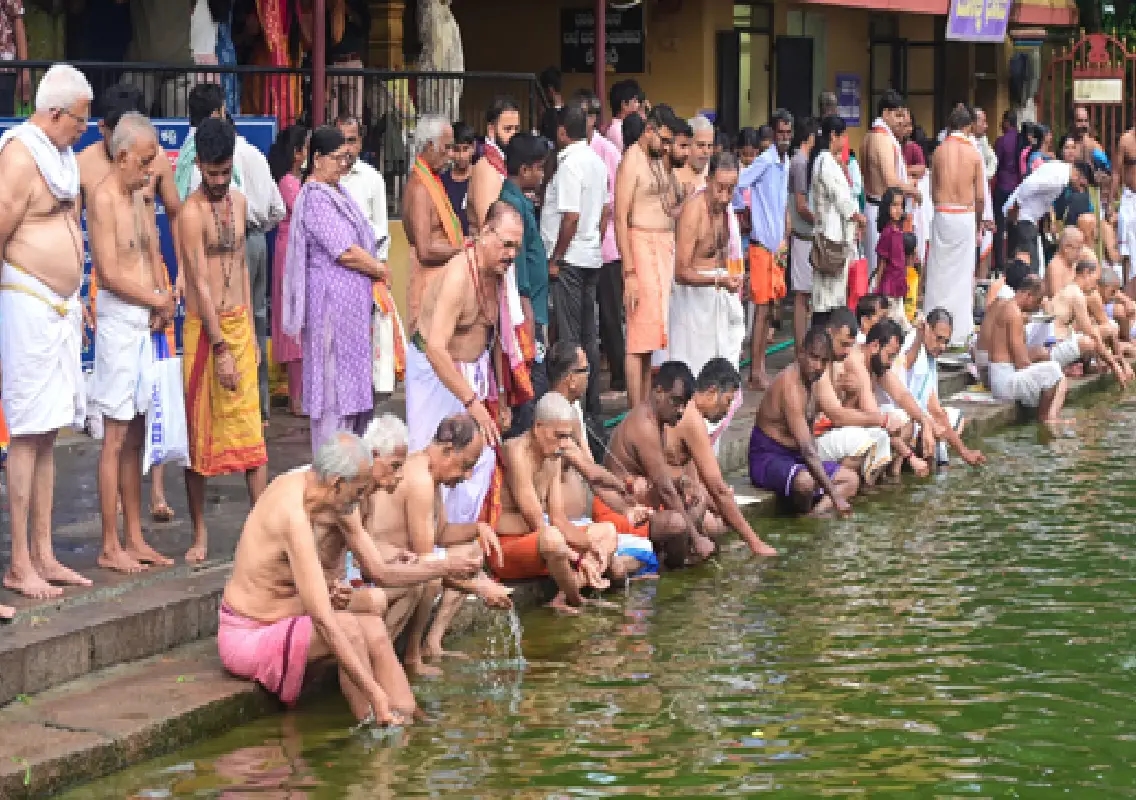


Mangaluru: Hundreds of devotees gathered at Someshwara beach in Ullal taluk of Dakshina Kannada district on Saturday to perform Pinda Pradana on the occasion of Mahalaya Amavasya. The historic Sri Manjunatha Temple at Kadri in Mangaluru also witnessed a large turnout of devotees who visited the shrine to offer prayers and seek blessings.
Mahalaya Amavasya marks the concluding day of Pitru Paksha, a period considered sacred in Hindu tradition for remembering deceased ancestors and performing rituals for their peace and salvation. Beaches, riverbanks and temples across the coastal districts of Dakshina Kannada and Udupi witnessed religious observances as families paid homage to their departed loved ones.
Hundreds perform Pinda Pradana at Someshwara beach
Someshwara beach, located near the Someshwara temple in Ullal taluk, was among the important centres for ancestral rites in Dakshina Kannada on the occasion.
Hundreds of devotees gathered along the beach to perform Pinda Pradana, a traditional Hindu ritual dedicated to deceased ancestors. Priests assisted families in carrying out the ceremonies according to their religious customs.
The temple authorities made arrangements to facilitate the rituals, including provisions for engaging additional priests to meet the demand as more devotees arrived to observe the occasion.
Devotees were permitted to perform the rites individually as well as collectively, allowing families to follow their respective traditions. The beach is among the locations in the district where special arrangements are made during Mahalaya Amavasya for people wishing to perform ancestral ceremonies.
Pinda Pradana is regarded as an important observance during Pitru Paksha. The ritual involves offering pindas, or rice balls, to deceased ancestors, accompanied by prayers and other customary rites. Devotees believe the offerings help bring peace to departed souls and fulfil their religious obligations towards their forefathers.
Kadri Sri Manjunatha Temple witnesses large turnout
The historic Sri Manjunatha Temple at Kadri in Mangaluru also witnessed a large gathering of devotees on Mahalaya Amavasya.
Devotees visited the temple throughout the auspicious occasion to offer prayers and seek divine blessings. The shrine, one of the prominent religious centres in Mangaluru, attracts devotees for its spiritual significance and long-standing religious traditions.
Mahalaya Amavasya is observed by many Hindu families as a day to remember their ancestors and offer prayers for their well-being in the afterlife. While some devotees visit temples, others travel to beaches, riverbanks and designated pilgrimage centres to perform Pinda Pradana and Tarpana.
The observances reflect the importance attached to ancestral worship in Hindu customs, with families undertaking the rituals in accordance with traditions passed down through generations.
Significance of Pinda Pradana during Pitru Paksha
Pitru Paksha is a period dedicated to paying homage to deceased family members. Mahalaya Amavasya, also known as Sarvapitru Amavasya in several Hindu traditions, is considered particularly significant because ancestral rites are performed on this day to honour departed relatives.
Pinda Pradana generally involves preparing rice balls using ingredients such as cooked rice, sesame seeds and ghee. These are offered to ancestors as part of prescribed rituals, which may also include prayers, water offerings and the chanting of religious mantras.
Tarpana, another important observance, involves offering water, often accompanied by sesame seeds, while invoking the ancestors. The specific procedures can vary according to family customs, regional practices and religious traditions.
Devotees believe these rituals express gratitude towards previous generations and help ensure peace for departed souls. The observances also serve as an occasion for families to reflect on their ancestry and maintain connections with their cultural and spiritual heritage.
Udupi prepares for ancestral rites at coastal locations
Udupi district also witnessed preparations for Mahalaya Amavasya, with coastal locations and religious centres expected to receive large numbers of devotees.
The seashore near Sri Vadabhandeshwara Balarama Temple at Malpe Padukere was among the prominent locations where devotees were expected to perform ancestral rites. The customary observances include taking a holy dip in the sea, followed by Pinda Pradana and Tila Tarpana.
Malpe and other coastal locations in the district hold religious significance for families who prefer to perform ancestral rituals near the sea. Beaches and riverbanks are traditionally considered suitable locations for such observances in several Hindu communities.
Arrangements were also made for rituals at coastal locations including Kaup, Katapady, Hejamady, Padubidri and Uchila. In Dakshina Kannada, devotees also observe the occasion at locations such as Surathkal, Panambur and Ullal.
The observances across the two districts reflect the enduring importance of Mahalaya Amavasya in coastal Karnataka, where religious practices are closely connected with local temples, coastal traditions and family customs.
Families observe traditional rituals at home
Apart from visits to temples and coastal locations, several families observe Mahalaya Amavasya at home.
Home-based observances may include offering prayers before photographs of deceased family members and preparing traditional dishes that were favoured by them during their lifetime. Such practices provide families with an opportunity to remember their loved ones and preserve personal and cultural traditions.
Following Shraddha rituals, some families offer food to crows and cows as part of customary observances. Annadana, or the distribution of food, and donations of clothes to Brahmins and people in need are also undertaken by some families and religious organisations.
The exact practices differ across communities, but the underlying purpose remains the remembrance of ancestors and the expression of respect and gratitude towards previous generations.
Police and lifeguards deployed for devotees’ safety
With large gatherings expected at beaches across the coastal districts, safety arrangements were planned at prominent locations, including Malpe and Kaup.
Lifeguards and police personnel were to be deployed to help manage crowds and prevent incidents along the seashore. Devotees visiting beaches for ritual baths and ancestral offerings were expected to follow safety instructions and cooperate with personnel on duty.
Temple management committees, religious organisations and maths also made arrangements to facilitate the smooth conduct of the ceremonies and assist devotees.
The observances at Someshwara, Kadri, Malpe and other religious centres marked Mahalaya Amavasya across Dakshina Kannada and Udupi, bringing families together to remember their ancestors and continue traditions that remain an important part of the region’s religious and cultural life.