







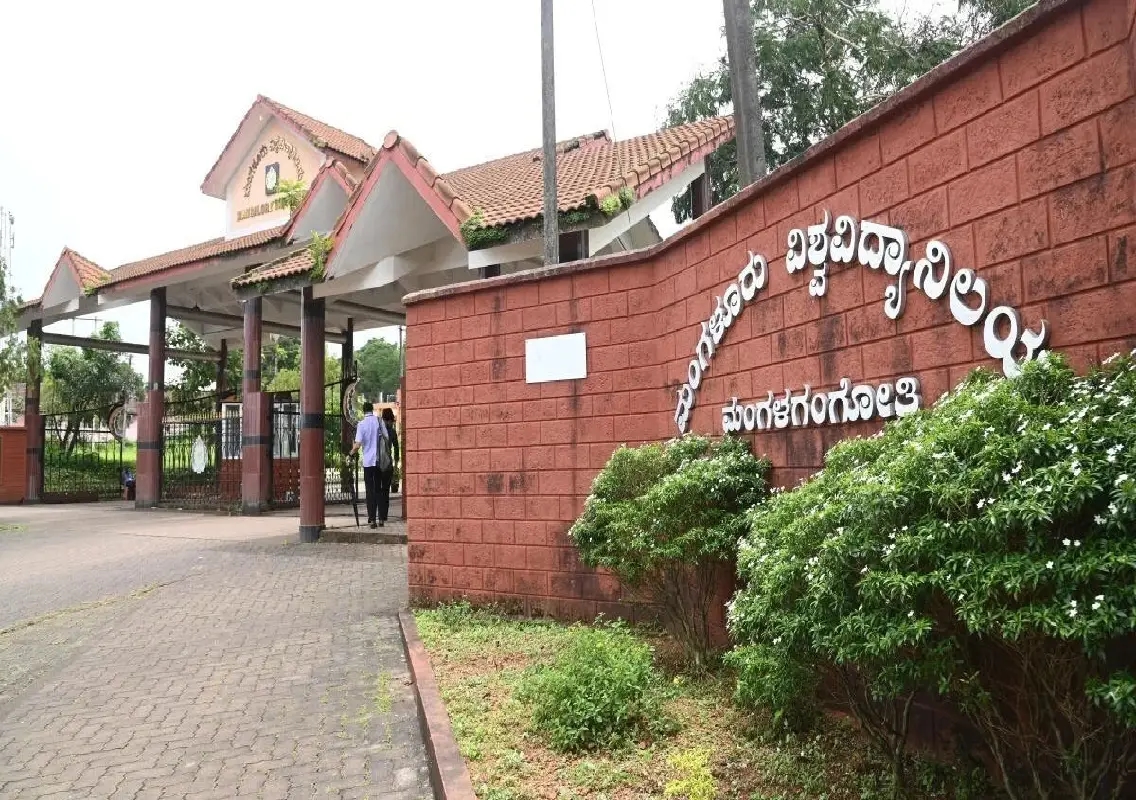


Mangaluru: Mangalore University has reported its highest-ever budget deficit of ₹68.3 crore, raising serious concerns about its financial sustainability. The figures were announced by Vice-Chancellor PL Dharma during the fourth general academic council meeting held on Tuesday.
The university administration attributed the widening deficit to increasing expenditure, inadequate government funding, and declining internal revenue generation.
International hostel and pensions major contributors
According to officials, a significant portion of the deficit stems from liabilities related to infrastructure and employee welfare. Of the total shortfall of around ₹68 crore, nearly ₹38 crore is linked to the international hostel, while approximately ₹28 crore is due to pension and retirement benefit obligations.
These two components alone account for the bulk of the financial burden currently faced by the institution.
The vice-chancellor stated that the university had approached the state government seeking substantial financial assistance to manage these commitments. However, the response has fallen short of expectations.
Limited government support adds to strain
Dharma revealed that the university had requested around ₹40 crore from the government specifically to cover pension and retirement-related expenses. However, only about half of the requested amount was sanctioned.
He further noted that strict conditions imposed on the utilisation of the sanctioned funds have limited the university’s flexibility in addressing its financial challenges.
Officials emphasised that the lack of adequate and timely government support has compounded the crisis.
Rising expenditure and declining revenue
The university’s financial troubles have been building over the past few years. Despite implementing several cost-cutting measures—such as reducing contract staff and curbing operational expenses—the deficit has continued to grow.
Data shared during the meeting shows a sharp rise in the deficit over time:
- ₹1.8 crore in 2023–24
- ₹21 crore in 2024–25
- ₹37 crore in 2025–26
- ₹68.3 crore in 2026–27
This steep increase reflects a widening gap between income and expenditure.
The vice-chancellor also pointed to mounting costs related to guest faculty salaries, which are currently being paid from the university’s internal resources. This has added further pressure to already strained finances.
Decline in admissions impacts income
Another major factor contributing to the deficit is a noticeable drop in student admissions. According to Dharma, this decline is partly due to several affiliated colleges gaining autonomy or being upgraded to deemed universities.
As these institutions move away from the university’s direct administrative and financial structure, the university’s revenue base has shrunk significantly.
The reduced intake of students has also affected fee collections, further limiting internal income.
Proposed measures to cut costs
In response to the financial crisis, the university is considering structural reforms aimed at reducing expenditure. One of the key proposals is to offer only those courses that attract a minimum of 15 admissions.
Additionally, the university is planning to implement a “school concept” model, which is expected to streamline departments and reduce human resource costs.
Officials believe that these steps could help in optimising resources and improving financial efficiency over time.
Conclusion
The record deficit at Mangalore University highlights the growing financial challenges faced by public higher education institutions. With rising operational costs, shrinking revenue sources, and limited government support, the university is under increasing pressure to restructure its finances.
While proposed reforms may offer some relief, experts suggest that sustained government backing and strategic financial planning will be essential to restore long-term stability.