


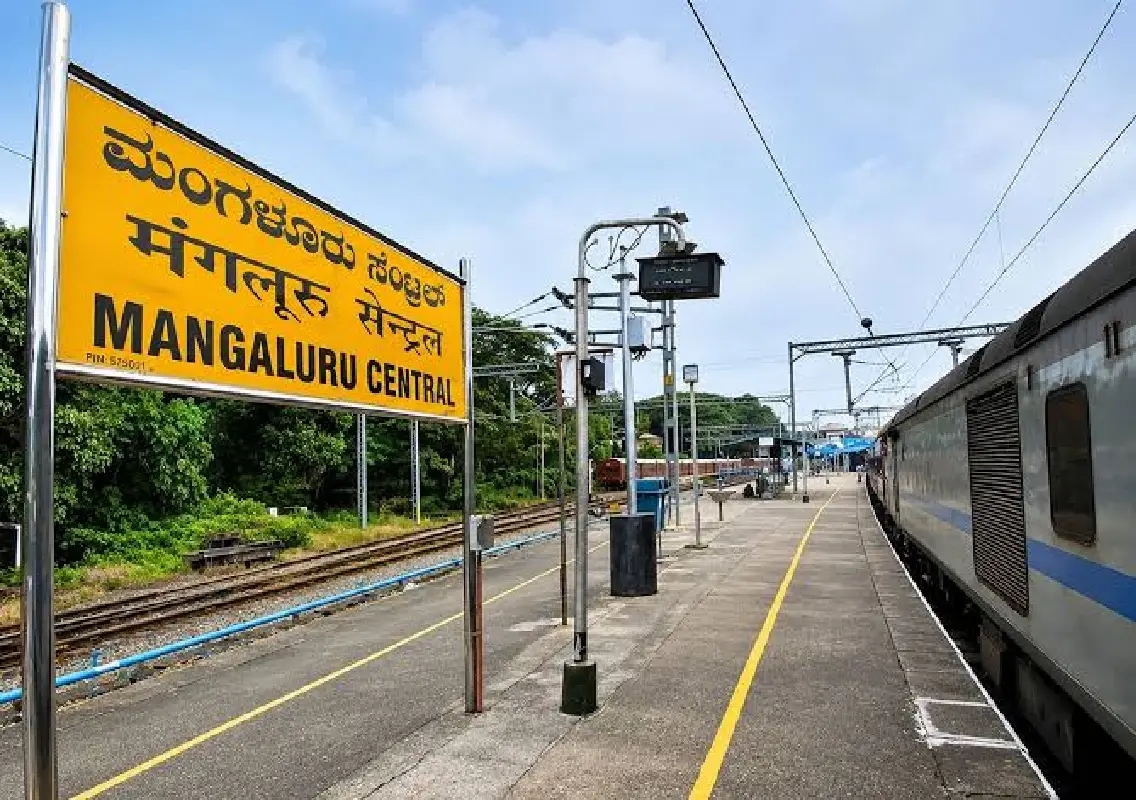


Mangaluru: Mangaluru Central railway station handled 56,84,811 passengers during 2025-26, emerging as the busiest among the three railway stations in the Mangaluru area in terms of passenger traffic. The station accounted for more than 81% of the combined passenger volume recorded at Mangaluru Central, Mangaluru Junction and Ullal.
The figures, obtained by railway organisations through the Right to Information (RTI) Act, highlight the importance of Mangaluru Central as a major railway terminal serving the coastal region.
Of the total passengers handled by Mangaluru Central, 16,99,232 travelled with reserved tickets, while 39,85,579 were unreserved passengers. The figures indicate the substantial demand for both reserved and unreserved railway services at the station.
Mangaluru Junction recorded 12,32,705 passengers during the same financial year, comprising 5,70,828 reserved passengers and 6,61,877 unreserved passengers. Ullal railway station handled 93,255 passengers, including 27,978 reserved and 65,277 unreserved passengers.
Together, the three stations recorded passenger traffic of 70,10,771 during 2025-26, underlining the importance of railway connectivity for residents, commuters and travellers in and around Mangaluru.
Mangaluru Central accounts for the largest passenger share
The passenger figures show a significant difference in traffic between the three stations.
Mangaluru Central handled more than four times the passenger volume recorded at Mangaluru Junction and substantially more than Ullal. Its position as the leading station reflects its role as a major terminal for passenger train services connecting Mangaluru with other parts of Karnataka and destinations across the country.
Mangaluru Junction, which also serves the city and surrounding areas, recorded more than 12 lakh passengers during the year. Ullal handled fewer than one lakh passengers, with unreserved travellers accounting for the majority of its traffic.
The combined figures offer an indication of the scale of passenger movement through the three stations and the importance of maintaining adequate infrastructure and passenger facilities.
For a growing urban centre such as Mangaluru, railway stations play an important role in providing affordable transport for daily commuters as well as people travelling longer distances for employment, education, business and other purposes.
The figures also provide a basis for assessing the relative passenger loads at the stations when planning improvements to facilities and operations.
Passenger revenue crosses Rs 195 crore
The three stations together generated approximately Rs 195.48 crore in passenger revenue during 2025-26, according to the figures obtained under the RTI Act.
Mangaluru Central recorded the highest passenger revenue at Rs 133.06 crore. Mangaluru Junction generated Rs 62.10 crore, while Ullal railway station recorded passenger revenue of Rs 32.72 lakh.
The revenue figures broadly reflect the difference in passenger traffic between the stations, with Mangaluru Central contributing the largest share.
Passenger revenue is an important indicator of a station’s contribution to railway operations. Along with passenger numbers and other operational considerations, it can inform decisions on infrastructure development, passenger amenities and service planning.
The figures underline Mangaluru Central’s significance within the local railway network and the need to ensure that its facilities can accommodate passenger demand.
Stations fall under different NSG categories
Mangaluru Central has been classified as Non-Suburban Group (NSG)-2, while Mangaluru Junction falls under NSG-3 and Ullal under NSG-4.
The Non-Suburban Group classification is used in railway administration to categorise stations based on relevant operational and traffic parameters. Such classifications are considered in planning station infrastructure, passenger amenities and operational facilities.
The categories provide a framework for assessing the requirements of stations with different levels of passenger activity and revenue.
Railway organisations have expressed the view that Mangaluru Central, given its position as a major terminal, deserves appropriate priority in modernisation and capacity expansion.
With the station handling more than 56 lakh passengers in a single financial year, future planning needs to take account of passenger movement, station capacity and the demand for improved facilities.
Infrastructure improvements at major railway terminals can include better passenger circulation, upgraded waiting areas, improved accessibility and facilities to manage peak-period crowds. The precise requirements, however, depend on operational assessments and railway planning decisions.
Freight traffic records a rise
Apart from passenger movement, freight handling at Mangaluru Central and Ullal has also shown growth, according to the information provided.
During 2024-25, the stations handled 38,816 tonnes of freight and generated freight revenue of Rs 13,78,416.
In 2025-26, freight volume increased to 53,293 tonnes, while freight revenue rose to Rs 43,49,281.
The figures for April to September of 2026-27 show that freight handling reached 38,859 tonnes, generating revenue of Rs 25,98,729.
The reported figures indicate an increase in freight volumes compared with the previous financial year, along with higher freight revenue.
Freight operations form another component of railway infrastructure utilisation, alongside passenger services. Efficient handling of goods can support businesses that depend on rail transport and contribute to the broader use of railway facilities.
The increase in reported freight volumes suggests that goods movement through the stations is an area of growing activity. However, the figures provided do not specify the types of commodities handled or the individual freight contributions of Mangaluru Central and Ullal.
Railway infrastructure needs attention
The passenger and freight figures together highlight the importance of the Mangaluru railway network to the region’s transport needs.
Mangaluru Central’s dominant share of passenger traffic strengthens the case for continued assessment of its infrastructure and capacity requirements. At the same time, Mangaluru Junction and Ullal remain important parts of the local railway system, serving their respective passenger catchments.
As passenger demand and freight activity evolve, planning will need to account for station capacity, service requirements and the availability of appropriate facilities.
The data obtained through the RTI Act provides a snapshot of passenger traffic, revenue and freight handling across the three stations. It also offers a reference point for discussions on railway modernisation and the allocation of infrastructure priorities in the coastal region.
With Mangaluru Central handling more than 56 lakh passengers and the three stations together recording over 70 lakh passenger movements during 2025-26, the figures underline the railway network’s importance to the city’s connectivity and economic activity.