


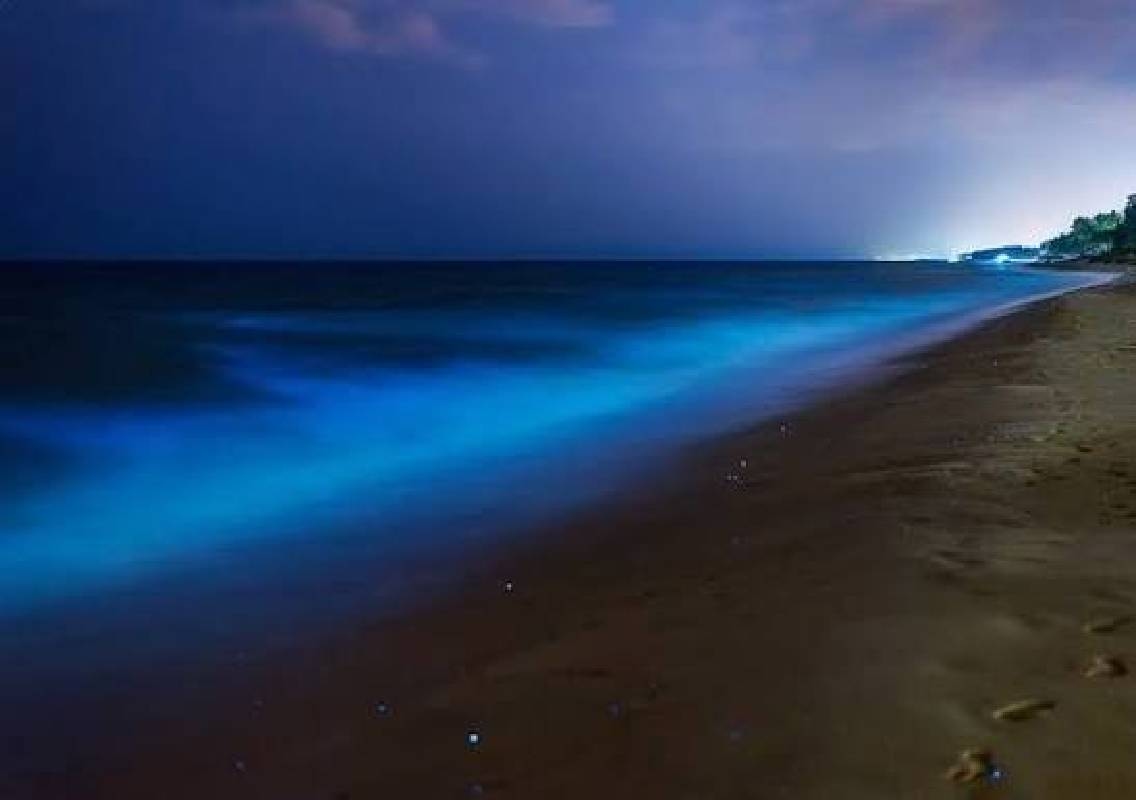


Mangaluru: Several beaches along the Mangaluru coast have witnessed a rare natural spectacle, with sea waves glowing bright blue at night due to a phenomenon known as bioluminescence.
The unusual sight has drawn attention to the coastline, where waves appear to shimmer with a blue glow as they move towards the shore. The phenomenon, often referred to as sea sparkle, is caused by microscopic marine organisms present in seawater.
What causes the sea to glow blue?
The blue glow is produced by a microscopic marine organism called Noctiluca scintillans, a type of dinoflagellate found in the sea. These organisms can emit light under certain conditions, creating the striking visual effect.
The light is generated through a chemical reaction involving two substances present in the organism luciferin and luciferase. When these interact with oxygen, they produce light. This natural process is known as bioluminescence.
The phenomenon can make waves, splashes and disturbed seawater appear illuminated in the dark, giving the impression that the sea is glowing.
Post-monsoon conditions may contribute
Experts believe that the organisms multiply in greater numbers when increased nutrients enter the sea after the monsoon. This rise in nutrient availability may encourage their growth and contribute to the blue glow observed along the coastline.
The appearance of bioluminescence is a natural occurrence and is not caused by chemical pollution, according to the report.
A rare natural spectacle along the coast
Bioluminescence is among the fascinating natural phenomena found in marine environments. It occurs when certain living organisms produce and emit light through biological and chemical processes.
The blue shimmer along the Mangaluru coast offers a striking example of this phenomenon, transforming ordinary waves into a glowing spectacle after dark.
The sight has once again highlighted the unusual natural activity that can occur in coastal waters, particularly when environmental conditions favour the growth of bioluminescent organisms.