


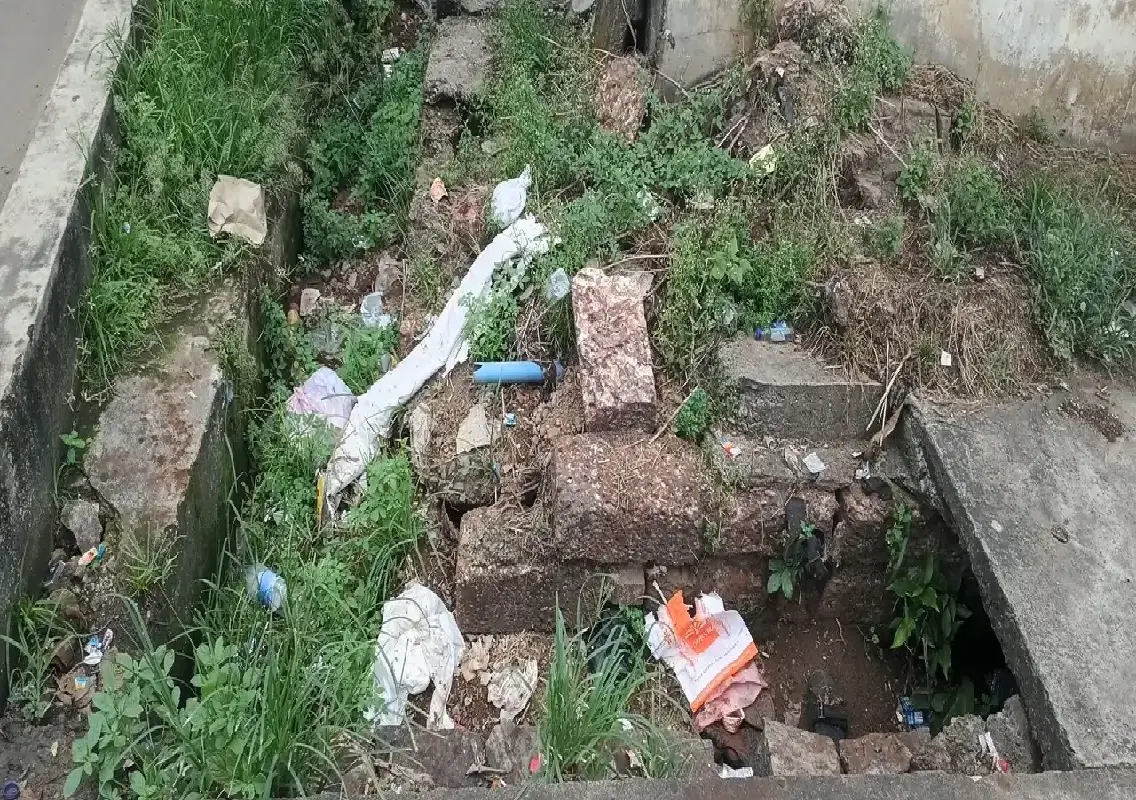


Mangaluru: Despite fines for littering-related offences and open urination, the KSRTC bus stand in Mangaluru continues to face serious sanitation and hygiene problems, with commuters allegedly dumping waste around dustbins and urinating in poorly lit areas between parked buses.
The persistent problems at the busy transit hub have raised concerns over public hygiene, civic responsibility and the difficulties faced by transport officials in maintaining cleanliness. KSRTC officials said dustbins had been installed throughout the premises and regular cleaning was being carried out, but indiscriminate littering and other violations continued.
Inadequate security personnel have also made it difficult to monitor the large premises and take action against offenders.
Fines fail to deter sanitation violations
Madhusudan Naik, divisional security inspector of the KSRTC Mangaluru Division, said penalties were imposed on people caught violating rules at the bus stand.
“ We penalise offenders with Rs 200 for smoking, and Rs 100 each for spitting and open urination,” Naik said.
However, enforcing these rules remains challenging because of the size of the premises and the limited number of security personnel available to monitor passenger activity.
Naik said some commuters continued to dump waste indiscriminately, even when dustbins were available nearby.
“People dump garbage right next to the dustbins instead of putting it inside,” he said, highlighting the difficulties faced by staff in maintaining cleanliness at the facility.
The continued violations have undermined efforts to keep the bus stand clean, despite the penalties intended to discourage such behaviour.
Dustbins and regular cleaning have not solved the problem
Rajesh Shetty, divisional controller of the KSRTC Mangaluru Division, said dustbins had been placed at every pillar across the bus stand to make waste disposal convenient for passengers.
He added that cleaning work was undertaken continuously to maintain hygiene throughout the premises.
Despite these arrangements, some commuters continued to spit tobacco and leave food waste in public areas.
Shetty said the problem could not be resolved through fines or additional manpower alone unless passengers developed a stronger sense of civic responsibility.
“Imposing fines or increasing manpower is a waste unless the public develops civic awareness,” he said.
He also pointed to the difficulties involved in managing people who arrive at the bus stand intoxicated and create a nuisance.
“For instance, we cannot physically control people who arrive intoxicated and create a nuisance,” Shetty said.
The officials’ remarks underline the challenges of maintaining sanitation at a busy public transport facility where large numbers of passengers move through the premises every day.
Foul stench near parking area raises concern
Commuters have also complained about a foul smell near the bus stand’s parking area, adding to concerns over the condition of the premises.
Responding to these complaints, Shetty said he had instructed the contractors concerned to address the issue.
“We will address the issue of open drainage immediately to eliminate the stench,” he said.
The reported drainage problem has added another dimension to the sanitation concerns at the bus stand. While waste disposal and open urination remain persistent issues, addressing the drainage problem will also be important to improve conditions for passengers and transport staff.
The foul smell has prompted calls for prompt corrective measures, particularly in areas frequented by commuters and those waiting for buses.
Poorly lit areas create additional challenges
The areas between parked buses have reportedly become spots where some people urinate, with inadequate lighting making monitoring more difficult.
The lack of sufficient security personnel across the large premises further complicates efforts to prevent such activities.
Although penalties are in place, effective enforcement depends on identifying offenders and ensuring that violations are addressed promptly. Limited surveillance and staff availability can make this difficult during busy periods.
Improved lighting, closer monitoring of vulnerable areas and timely action against offenders could help strengthen sanitation enforcement. Regular inspection of parking areas and drainage infrastructure would also help identify problems before they worsen.
Civic responsibility crucial to maintaining hygiene
The situation at the Mangaluru KSRTC bus stand highlights the limitations of relying exclusively on cleaning staff and penalties to maintain public hygiene.
Transport officials have said that infrastructure and cleaning arrangements are already in place, but irresponsible behaviour by some commuters continues to create difficulties.
Proper use of dustbins, avoiding spitting and open urination, and keeping public spaces free of food waste are essential to maintaining a clean environment at a busy transport facility.
At the same time, complaints about poor drainage and foul smells require timely attention from the authorities and contractors responsible for maintenance.
Improved enforcement, adequate lighting, sufficient security and effective drainage management could help address the problems. However, sustained improvement will also depend on commuters treating the bus stand as a shared public space and following basic standards of cleanliness.