


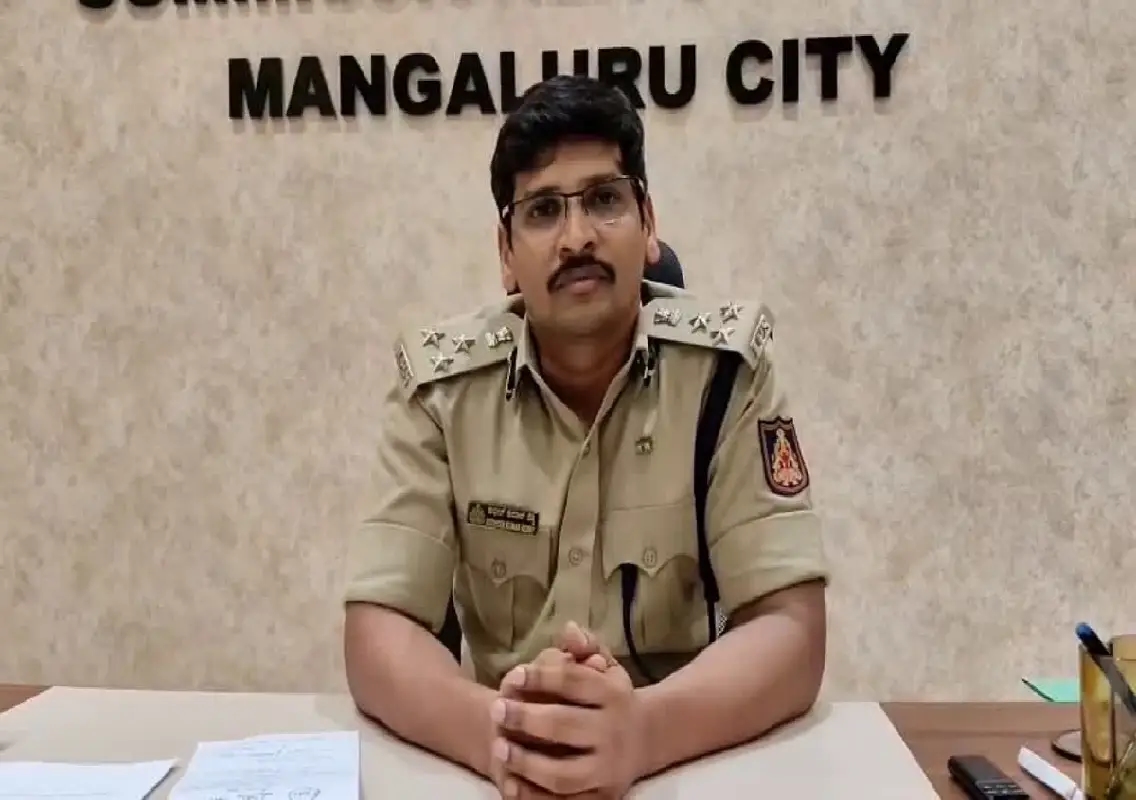


Mangaluru: Mangaluru Police Commissioner Sudheer Kumar Reddy has rejected allegations by ABVP and BJP leaders that police personnel assaulted individuals for raising the slogan “Bharat Mata Ki Jai” and demanded bonds from them for participating in a protest.
In an official statement, the commissioner said the police had not prohibited protests but had imposed certain conditions to maintain peace and order. He maintained that the students involved had neither obtained prior permission nor formally notified the police about the demonstration.
Responding to the allegations, Reddy said raising patriotic slogans could not be used to justify wrongdoing or divert public attention from the issues under consideration.
“Raising slogans in support of the country—and thereby attempting to cover up their own wrongdoing and divert public attention—does not constitute showing any respect to the nation,” he said.
The statement comes amid a controversy over police action against students and ABVP activists following a protest at St Agnes College in Mangaluru. ABVP and BJP leaders had raised objections to the police response and demanded accountability for the alleged treatment of protesters.
Police cite law and order concerns
According to the commissioner, the police had not imposed a blanket ban on demonstrations. Instead, certain mandatory conditions had been stipulated to ensure that protests did not disturb public order.
He said the students had failed to obtain prior permission or provide formal notification to the police before organising the protest. Nevertheless, the police refrained from taking stringent action, keeping the interests of the college students in mind.
Reddy also said the situation required police intervention because individuals from outside the locality had joined the protest and the college administration had lodged a complaint.
“Some individuals present at the scene were taken into custody due to concerns that law and order might be disrupted,” the commissioner stated.
He maintained that the police had acted in response to concerns about a possible disturbance rather than because the protesters had raised patriotic slogans.
Commissioner clarifies bond issue
The demand that protesters execute bonds not to repeat such activities had become a major point of contention between the police and the student groups.
Clarifying the issue, Reddy said those taken into custody were subsequently asked to execute bonds as a precautionary measure, undertaking not to engage in similar acts in the future.
However, he said the police ultimately decided against obtaining the bonds after considering the students’ request and the potential consequences for their education.
“In response to the students’ plea—and to ensure that their academic future would not be hindered—it was ultimately decided not to obtain any such bond,” he clarified.
The commissioner’s statement thus acknowledged that the possibility of obtaining bonds had been considered, while asserting that the police eventually dropped the measure in the students’ interest.
‘When we wear khaki, we pledge ourselves to the nation’
The commissioner also invoked the responsibilities associated with wearing the police uniform, stating that police personnel pledge themselves to the defence of the nation.
His response sought to counter the allegation that police action against the protesters amounted to disrespecting patriotic sentiment. He argued that slogans supporting the country should not be used to deflect attention from the conduct of those involved in the demonstration.
The dispute has highlighted the competing positions of the police and the protesting groups. While ABVP and BJP leaders have questioned the police response and raised allegations concerning the treatment of protesters, the commissioner has defended the action as necessary to address law and order concerns.
The allegations of assault and the circumstances surrounding the protest remain contentious. The commissioner’s statement presents the police department’s position, while the claims raised by ABVP and BJP leaders would require independent examination.