







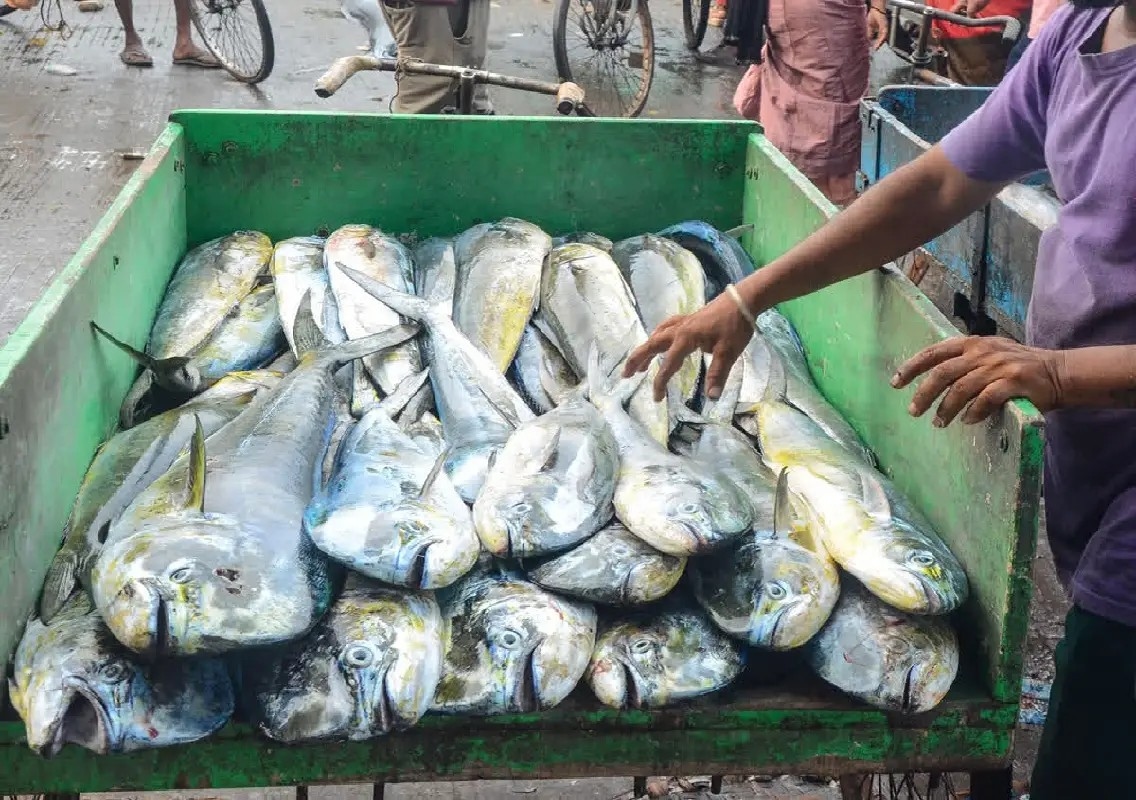


Mangaluru: Fish bones, scales and other processing waste, often discarded after the edible portions are removed, could soon find a valuable use in the biomedical sector. Researchers at the College of Fisheries, Mangaluru, have demonstrated that fish bones and scales can be converted into nano-hydroxyapatite, a compound with potential applications in bone grafting and dental restoration.
The research was carried out by a team led by Prof Dr B Manja Naik, Professor and Head of the Department of Fish Processing Technology at the College of Fisheries, Mangaluru. The team has shown that fish-processing waste, which otherwise contributes to foul odour and environmental pollution, can be transformed into a high-value biomedical material.
According to Prof Naik, the research reflects the potential of sustainable and zero-waste processing in the fisheries sector. Fish bones and scales, usually considered worthless after processing, contain important minerals that can be recovered and developed into products with possible medical applications.
Turning fish-processing waste into a valuable resource
A significant portion of a fish is discarded during processing. When one kilogram of fish is cleaned and converted into fillets, only around 60 to 65 per cent is generally obtained as edible flesh. The remaining 35 to 40 per cent consists of bones, scales, heads, intestines and other by-products.
Much of this material is treated as waste and discarded. Improper disposal can result in foul smell and environmental pollution, particularly around fish-processing centres and dumping areas. However, researchers point out that these discarded parts contain considerable quantities of protein and essential minerals such as calcium and phosphorus.
The Mangaluru research team aimed to recover these valuable components and convert them into a useful product instead of allowing them to become waste.
The initiative follows the principle of zero-waste processing, under which every possible component of a raw material is put to productive use. Besides addressing waste disposal concerns, the process could potentially create new economic opportunities for the fisheries and fish-processing industries.
“Fish is not valuable only for its flesh. Even the bones and scales that are discarded as waste contain significant nutrients,” Prof Naik said.
What is nano-hydroxyapatite?
The researchers found that fish bones and scales contain calcium and phosphorus, minerals that are essential components of bones and teeth. Using a scientific process known as thermal calcination, the team processed the collected fish bones and scales to produce nano-hydroxyapatite particles.
The particles developed through the process measured between 10 and 15 nanometres.
Hydroxyapatite is considered important for biomedical applications because its mineral composition is similar to that found naturally in human bones and teeth. Reducing the material to nano-sized particles may enhance its potential usefulness in specialised biomedical and dental applications.
The researchers believe fish-derived nano-hydroxyapatite could provide a natural alternative to some conventional sources of the compound. Hydroxyapatite products available in international markets are commonly manufactured using materials derived from bovine or porcine bones.
The development of a fish-based alternative could therefore open new possibilities for the utilisation of marine resources and fish-processing by-products.
Potential applications in bone treatment
One of the major potential applications of the fish-derived compound is in bone grafting. Bone graft materials are used in certain medical procedures to support the repair and regeneration of damaged or fractured bones.
The nano-hydroxyapatite developed by the research team could potentially be used in materials designed to support bone repair following serious fractures or bone loss. It may also contribute to the development of artificial or substitute bone materials.
Such applications could be particularly relevant in cases where natural bone tissue requires additional support for regeneration. However, the material will require further quality assessment and necessary validation before any wider medical or commercial application.
Prof Naik said the team’s work demonstrates how materials previously treated as fish waste could become a resource for the growing biomedical sector.
Possible use in dental restoration
The compound also has potential applications in dentistry. Nano-hydroxyapatite may be useful in developing materials for restoring teeth affected by decay and cavities.
The researchers believe the material could potentially be used as a filler or grafting material during certain dental procedures. Because hydroxyapatite has a mineral composition similar to that of human teeth, it is being explored for various dental applications, including restoration and repair.
The Mangaluru team’s research could therefore add value to fish-processing waste while opening opportunities for its possible use in both orthopaedic and dental fields.
The findings also highlight the growing importance of converting agricultural and marine by-products into high-value products through scientific processing.
Earlier success with fish-skin leather
The latest development is part of the research team’s wider efforts to explore alternative uses for fish-processing waste.
Prof Naik said the team had earlier succeeded in producing leather from fish skin. The development of nano-hydroxyapatite from fish bones and scales represents another step towards using different parts of fish that would otherwise be discarded.
“Our team had earlier succeeded in producing leather from fish skin. We have now developed nano-hydroxyapatite from fish bones and scales for possible use in the medical sector,” he said.
The research could help address two important challenges facing the fish-processing sector: waste management and value addition. By converting discarded materials into commercially useful products, processors may be able to reduce the environmental burden of waste while creating additional sources of revenue.
Patent and technology transfer plans
The research findings have been sent to leading scientific laboratories in India for quality testing. Preparations are also underway to obtain a patent for the technology developed by the researchers.
The College of Fisheries also plans to transfer the technology to interested micro, small and medium enterprises. If commercialised successfully after the required testing and approvals, the technology could encourage the establishment of new businesses focused on processing fish waste into value-added materials.
Researchers believe such enterprises could generate employment and provide additional income opportunities in the fisheries sector. The technology could also help reduce the quantity of fish-processing waste reaching dumping areas.
The development underlines the growing role of scientific research in creating sustainable solutions from materials traditionally considered waste. By converting fish bones and scales into a potentially useful biomedical compound, the Mangaluru researchers have demonstrated how waste from one sector could become a valuable resource for another.
If the technology progresses through quality testing, patenting and commercial transfer, it could provide a practical model for sustainable fish processing while supporting the development of new value-added industries.