







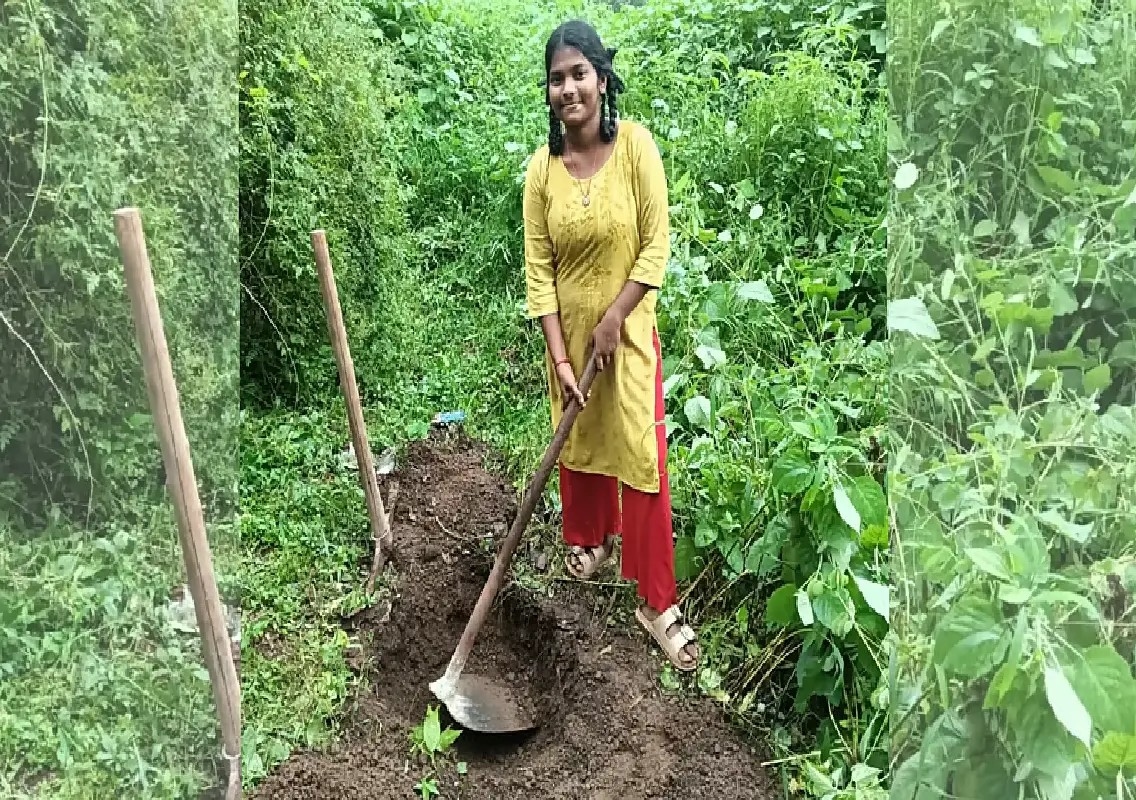


Mangaluru: Students of Government High School, Badaga Ekkaru, in Mangaluru North have launched a water conservation campaign aimed at encouraging every household to construct at least one recharge pit to improve groundwater levels and reduce the risk of future water shortages.
Titled “One recharge pit for every home – Our resolve to increase groundwater,” the initiative seeks to create awareness about rainwater harvesting and groundwater recharge among students, parents and villagers.
The campaign began within the school and is now being expanded to the village level, with students taking the message to their families, neighbours, local organisations and women’s self-help groups.
The initiative comes amid concerns over rising temperatures and the possibility of changes in rainfall patterns in Karnataka associated with El Nino conditions. The school has taken up the campaign with the objective of ensuring that rainwater is not simply allowed to flow away but is instead directed into the ground to replenish groundwater.
Students become water conservation ambassadors
The campaign places students at the centre of the awareness effort.
Students have been encouraged to motivate their parents and neighbours to construct percolation or recharge pits on their residential premises. They have also been asked to act as “water conservation ambassadors” in their localities and explain the benefits of groundwater recharge to more households.
As part of the initiative, the students and teachers took a pledge during the school assembly to construct at least one recharge pit at their respective homes.
The campaign is designed not merely as a school activity but as a community-level effort in which students can encourage practical action among families.
Teachers said the initiative is intended to create a culture in which rainwater conservation becomes part of everyday household practices.
Awareness programme held for 130 parents
A special water conservation awareness programme was organised at the school for around 130 parents.
English teacher Dr Anith Kumar said the programme was aimed at explaining the importance of conserving water and encouraging families to participate in the recharge-pit campaign.
The school, in association with its Vanasiri Eco Club, also adopted a resolution promoting the construction of percolation pits and greater awareness about water conservation.
The involvement of parents is considered particularly important because the campaign ultimately depends on households adopting the practice on their own premises.
By connecting the school initiative with families and the wider village community, teachers hope to create a larger network of households participating in groundwater recharge.
Recharge pits to help replenish groundwater
Recharge pits are intended to allow rainwater to percolate into the ground rather than being lost as surface runoff.
The students have been advised to construct recharge pits with a minimum capacity of around one cubic metre. Larger pits can be constructed depending on the space available and the requirements of individual households.
The basic objective is to capture rainwater and facilitate its gradual movement into the ground.
For households with suitable space, such structures can become part of a broader rainwater harvesting system. The school is encouraging families to assess their individual premises and adopt an appropriate design based on local conditions.
The campaign also seeks to make students aware that groundwater conservation is not solely the responsibility of government agencies or large institutions. Individual households can also contribute by retaining rainwater and allowing it to recharge the ground.
Students take campaign to the village
The students have prepared special pamphlets and appeals explaining the campaign and distributed them among villagers.
They have also approached organisations and women’s self-help groups in the village and neighbouring areas, requesting them to support the initiative.
This outreach is intended to take the message beyond the school campus and encourage broader community participation.
Teachers said the campaign has been designed so that students can communicate the idea directly to their families and communities.
The school hopes that participation by more households will eventually make groundwater recharge a collective village-level effort rather than an activity limited to individual students.
Technology used to track participation
A notable feature of the campaign is the use of technology to document participation.
The school has created a special Google Form through which students can upload photographs of recharge pits constructed at their homes.
Students can enter details including their names, class, address and photographs showing the completed recharge pits.
Mathematics teacher Ramya K trained students through a PowerPoint presentation on how to use the Google Form and how to assist their parents and villagers in submitting the required information.
The system allows the school to maintain a record of participating students and households while encouraging students to take ownership of the campaign.
Certificates generated automatically
The campaign also uses an automated certification system to motivate students to participate.
Once a student submits the details of the recharge-pit activity through the Google Form, a certificate is automatically generated using the Certify’em add-on and sent to the student’s email address.
The digital certification system gives students a tangible recognition of their contribution while making it easier for the school to document participation.
Teachers said the technology-based approach has helped generate additional interest in the campaign and made it easier to monitor the activities being undertaken by students.
Initiative draws response beyond Karnataka
The campaign has also attracted attention outside the immediate locality.
According to teachers, citizens from Kasaragod in Kerala and Maharashtra have responded to the initiative and participated in the campaign, with some obtaining certificates after submitting details through the digital system.
The response indicates that the idea has the potential to reach communities beyond the school and village where it originated.
The use of digital tools has allowed people outside the local area to learn about the campaign and participate in its broader water conservation message.
Eco Club and teachers support initiative
The campaign is being implemented under the guidance and encouragement of Headmistress Indira N Rao, Vanasiri Eco Club coordinator Winnie Nirmala D’Souza and the school’s teaching staff.
The Eco Club has played an important role in linking environmental education with practical action.
Instead of limiting water conservation lessons to classroom discussions, the school has encouraged students to undertake an activity that can directly benefit their households and communities.
The participation of teachers across different subjects has also helped integrate awareness, technology and community outreach into the campaign.
Building a water-conscious community
The “One recharge pit for every home” campaign demonstrates how schools can use student participation to address wider environmental concerns.
Groundwater is an important source of water for households and communities, particularly during periods when rainfall is inadequate or surface water sources are under pressure.
Encouraging households to capture and recharge rainwater can form one part of a broader water conservation strategy.
The students of Government High School, Badaga Ekkaru are now seeking to turn their school resolution into a wider community movement. By encouraging families to construct recharge pits, documenting participation through technology and recognising contributors with digital certificates, the campaign combines environmental awareness with practical action.
The initiative’s larger message is simple: every household can contribute to conserving water. If more homes adopt rainwater harvesting and groundwater recharge practices, individual efforts can collectively make a meaningful difference to local water security.