







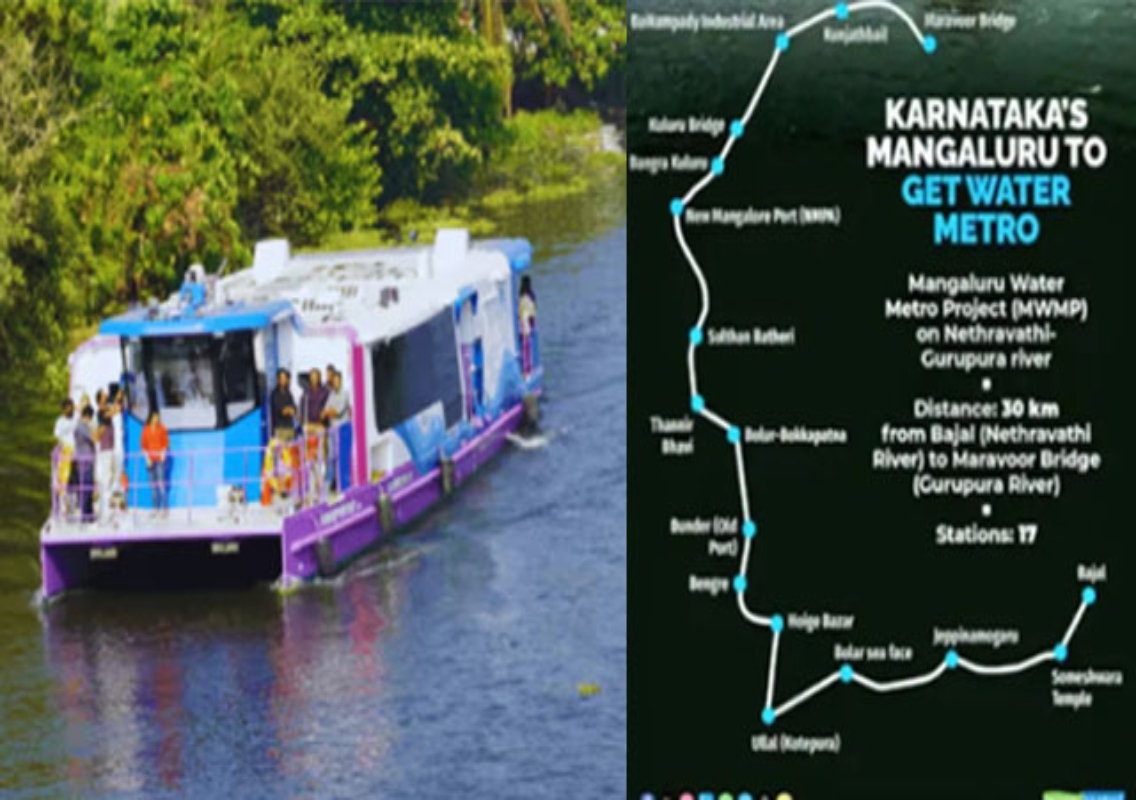


Mangaluru: The proposed Mangaluru Water Metro project has received a fresh boost with 11 of the 19 proposed stations now finalised, marking a significant step forward in efforts to develop waterways as an additional mode of public transport in the coastal city.
The Mangaluru Port and Fisheries Sub-Division has finalised the 11 stations after several rounds of discussions and processes. However, the project is still at a preliminary stage, with its technical feasibility, route, station designs, financial model and implementation framework yet to be finalised.
11 stations identified for the Water Metro network
The proposed Water Metro network currently includes 19 stations, of which 11 have been finalised. The identified stations are:
- Jeppinamogaru NH
- Northern Sand Bar
- Old Port
- Port Ferry
- Sandpit Bengre
- Bangra Kulur
- Kulur Bridge
- Kasaba Bengre
- Sultan Battery
- Jeppinamogaru Old Ferry
- Tannirbhavi Church
Kulur Bridge is expected to be a key component of the proposed network. Two separate station concepts — one based on a Ro-Ro model and another using a floating station model — are being considered at the location.
The proposed stations would connect several important areas around Mangaluru’s waterways, including the Old Mangaluru Port, Port Ferry, Sandbar, Thota Bengre, Hoige Bazaar, Jeppu and Ullal areas.
Project aims to improve waterway connectivity
The Water Metro proposal is being considered not merely as an urban transport project but also as a means of improving connectivity to Mangaluru’s port and coastal areas.
Mangaluru has an extensive network of waterways surrounding the city. Using these waterways for passenger transportation could provide an alternative for some commuters who currently depend on roads.
The concept could also create opportunities for tourism, trade and other activities around the waterways if the project is eventually implemented.
With road congestion becoming an important consideration in urban mobility planning, a water-based public transport system could provide another connectivity option between selected parts of the city.
However, the project is not yet at the stage where operational details such as fares, journey times or service frequency have been finalised.
Technical and financial feasibility study remains important
The state Cabinet had earlier directed that a technical and financial feasibility study be undertaken for the proposed Water Metro project.
Following discussions with the Public-Private Partnership (PPP) Cell of the Infrastructure Development Department on January 9, 2025, details concerning tentative land requirements were submitted as additional information.
Officials have indicated that the exact land requirement for individual stations will be incorporated into the Detailed Project Report (DPR).
This means that the final configuration of the project could still evolve as technical assessments and detailed planning progress.
The next stage will involve determining the technical feasibility, exact route alignment, station designs, final land requirements, financial model and implementation mechanism.
Exact route and fares are yet to be decided
While 11 stations have been finalised, several important operational details remain undecided.
The preliminary document does not provide final information on the travel time between stations, number of Water Metro services, passenger capacity, fares or the exact route to be followed by the services. These details are expected to be determined through the DPR and subsequent project planning.
Therefore, the final experience for commuters will depend on the outcome of the technical and financial studies and the eventual implementation plan.
The distinction is important because the finalisation of stations does not mean that construction or regular passenger services are ready to begin.
Initial report submitted to government
Shashidhar, Assistant Executive Engineer (AEE), Port and Fisheries Sub-Division, Mangaluru, said an initial report on the Water Metro project has been submitted to the government.
According to the official quoted in the report, 19 stations have been identified under the project and 11 have been finalised.
The development provides a clearer framework for further studies and planning, while the government will have to take subsequent decisions on the project’s technical viability, financing and execution.
Water Metro could add a new dimension to Mangaluru transport
If implemented, the Mangaluru Water Metro could introduce a new dimension to public transportation in the coastal city by using existing waterways for passenger movement.
The project could potentially link residential areas, ferry points, port locations and coastal destinations while providing an alternative to road-based travel.
The proposed network also brings together locations with commercial, residential, tourism and maritime significance. This could make the project relevant beyond daily commuting, particularly for connectivity around the port and coastal areas.
At the same time, the project’s progress will depend on detailed feasibility assessments, land requirements, financing and the final implementation structure.
Project remains in planning stage
The finalisation of 11 stations represents progress, but the Mangaluru Water Metro remains a project under development rather than an operational transport system.
The technical and financial feasibility study, DPR, route planning, station designs and financing arrangements will determine the next phase. Operational factors such as fares, frequency and passenger capacity will also need to be established before services can be planned.
For now, the focus remains on taking the proposal through the required technical and administrative stages.
If the remaining studies and approvals support implementation, the Water Metro could eventually provide Mangaluru with an additional public transport option while strengthening connectivity across its waterways and coastal areas.