


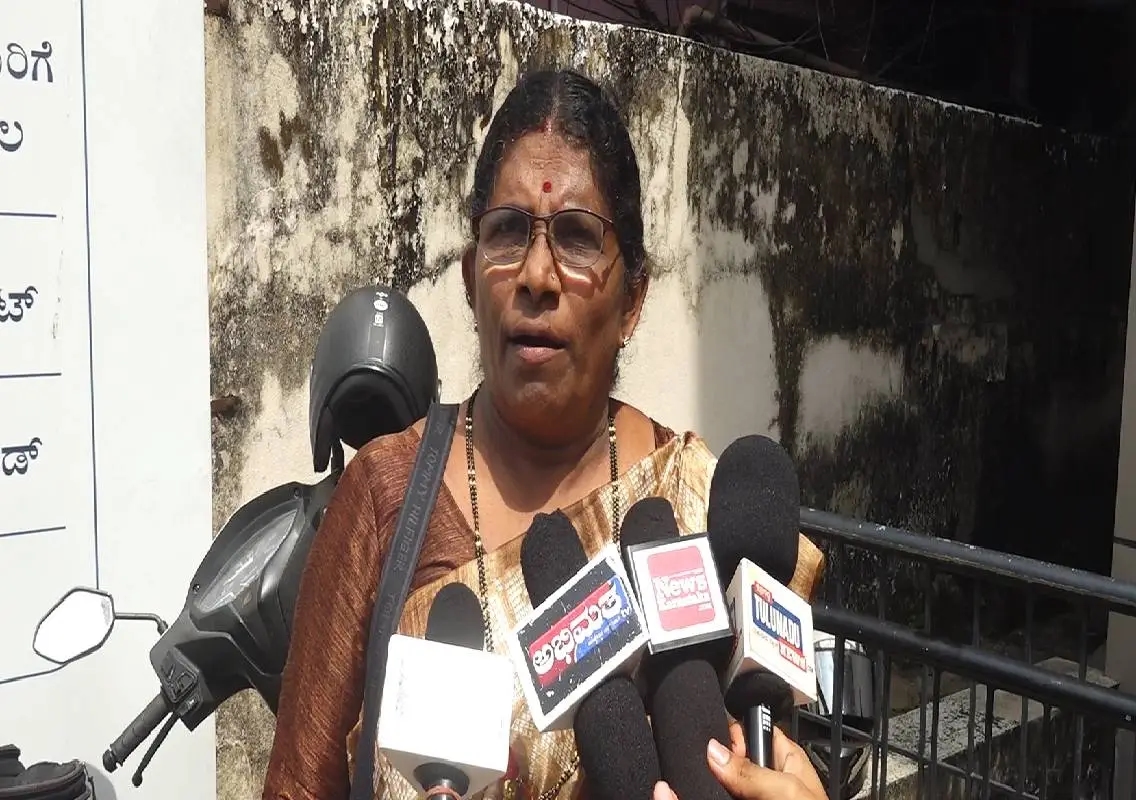


Mangaluru: A woman named Vajrakshi has expressed concern over the rising prices of essential commodities, alleging that the increase has made it increasingly difficult for poor and middle-class families to manage their daily expenses under the Congress government.
Speaking to the media, Vajrakshi said the repeated rise in the prices of basic necessities was placing an additional financial burden on ordinary households. She particularly referred to the reported increase of around ₹8 in the price of milk, stating that even a rise in the cost of an everyday essential could affect families already struggling to meet their expenses.
Questions raised over rising prices
Vajrakshi said people were finding it difficult to purchase all the necessary household items during their regular visits to shops because of the increase in the prices of essential commodities.
She questioned the government’s approach to providing relief to the public, arguing that its claims of standing with poorer sections were not reflected in the experiences of many ordinary families. According to her, the rising cost of everyday necessities was making it harder for people to maintain their household budgets.
She urged the government to take note of the difficulties faced by economically weaker sections and middle-class families and take steps to address the price rise.
Concerns over bus fares
Vajrakshi also criticised the government’s transport-related policies. Referring to the free bus travel facility provided to women, she alleged that the benefit was being accompanied by increases in fares for other bus services.
She said the government should consider the overall financial impact of its decisions on commuters rather than focusing on one facility while other sections of the travelling public face higher expenses.
Her remarks highlighted concerns over the affordability of public transport for people who depend on buses for their daily travel.
Gruhalakshmi beneficiaries raise payment concerns
Vajrakshi further raised questions about the implementation of the Gruhalakshmi scheme, under which eligible women are entitled to receive ₹2,000 every month.
She alleged that although the government had announced the monthly financial assistance, several eligible beneficiaries were still waiting for payments. She said some women had reportedly not received the amount for seven, eight or even ten months.
According to her, women who were expecting the assistance were expressing disappointment over the delays. She called on the government to examine the complaints and ensure that eligible beneficiaries receive the promised financial support without prolonged delays.
The concerns she raised centred on both the regularity of payments and the need to ensure that the benefits of welfare schemes reach the intended recipients.
Demand for action and accountable governance
Vajrakshi urged the state government to take the financial difficulties of poor and middle-class families seriously. She called for measures to address the rising prices of essential commodities and resolve problems faced by beneficiaries of government welfare schemes.
She also stressed that public welfare initiatives should be implemented effectively so that people who depend on them receive the intended benefits.
Her statement brought together three concerns affecting household finances: the rising cost of essential goods, transport expenses and delays in monthly welfare assistance. She appealed to the government to address these issues and ensure that its policies do not add to the financial burden on ordinary citizens.