







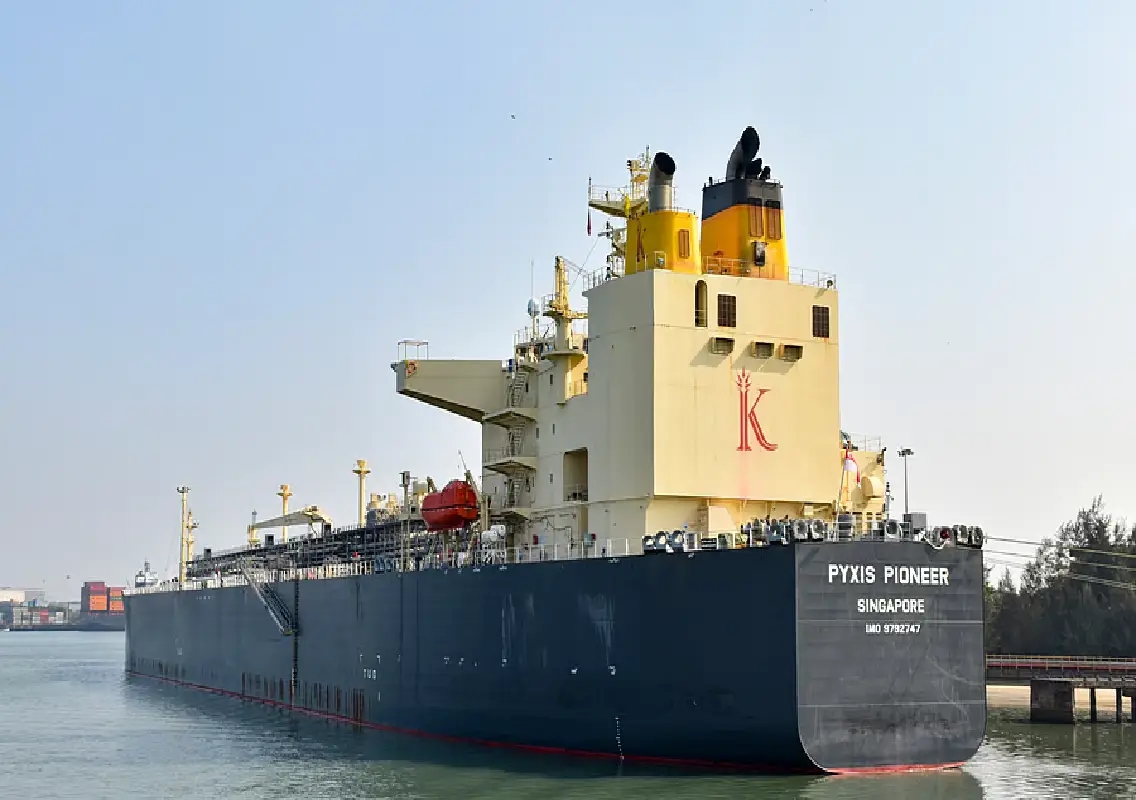


Mangaluru: The New Mangalore Port has witnessed significant maritime activity with multiple crude oil and LPG tankers arriving over the past few days, highlighting the port’s strategic role in India’s energy supply chain.
Crude oil tanker docks at SPM
A massive crude oil tanker, Lila Jamnagar, carrying approximately 2.70 lakh tonnes of crude oil, has arrived at the port and is currently discharging cargo at the Single Mooring Point (SPM). The vessel had sailed from Zhoushan port in China before reaching the Karnataka coast.
The crude oil cargo is being received by Indian Strategic Petroleum Reserves Limited (ISPRL), which plays a crucial role in maintaining the country’s strategic petroleum reserves.
Officials stated that the discharge process at the SPM is progressing as per schedule, ensuring smooth handling of such a large volume of crude oil.
LPG tankers add to port activity
In addition to the crude oil shipment, LPG tanker Aurora, carrying 43,910 tonnes of liquefied petroleum gas, is currently berthed at the port. The vessel is discharging its cargo for Confidence Petroleum India Limited, contributing to the region’s fuel supply.
Another LPG tanker, Al Ain, has also arrived with a cargo of 23,000 tonnes and is awaiting further processing. Port authorities confirmed that operations are being managed efficiently to avoid congestion and ensure timely unloading.
More shipments in pipeline
Sources at the port revealed that another vessel, Jag Vasant, carrying 9,500 tonnes of LPG, is currently in waiting and is expected to berth shortly. The cargo from this vessel is designated for major public sector oil companies, including Hindustan Petroleum Corporation Limited (HPCL), Indian Oil Corporation Limited (IOC), and Bharat Petroleum Corporation Limited (BPCL).
The arrival of multiple tankers within a short span underscores the increasing throughput and operational capacity of the New Mangalore Port, particularly in handling petroleum and gas products.
Strategic importance of the port
The New Mangalore Port continues to serve as a critical hub for importing crude oil and LPG, catering to both strategic reserves and commercial distribution networks. With facilities such as the Single Mooring Point enabling large vessel handling, the port is well-equipped to manage high-volume energy shipments.
Industry observers note that such coordinated arrivals and efficient cargo handling are essential to ensuring uninterrupted fuel supply across southern India.
Conclusion
The simultaneous arrival of crude and LPG tankers at New Mangalore Port reflects robust logistical planning and growing demand for energy resources. As India continues to strengthen its energy security framework, ports like Mangaluru are playing an increasingly vital role in supporting both strategic reserves and domestic consumption needs.