







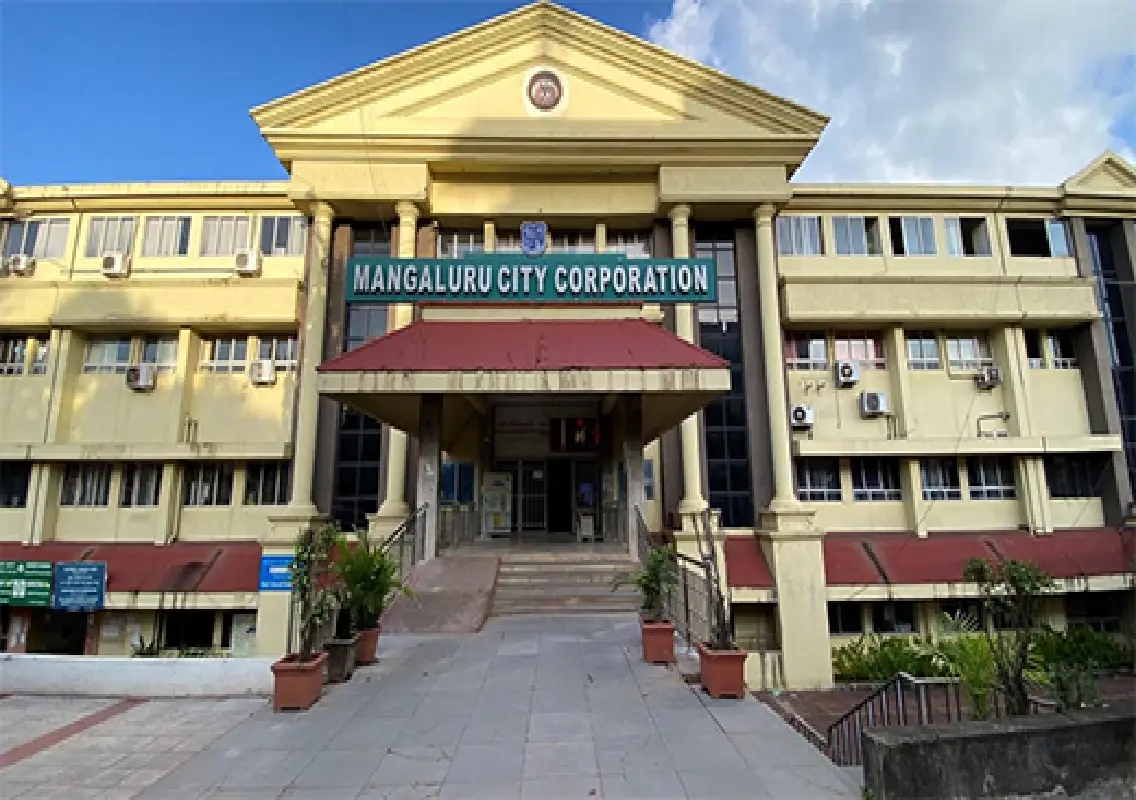


Mangaluru: With work on the Jalasiri 24×7 drinking water supply project nearing completion in the Surathkal zone, the Mangaluru City Corporation (MCC) has initiated the process of handing over operation and maintenance (O&M) responsibilities to the executing agency for the next eight years.
The ambitious Rs 792-crore project, funded by the Asian Development Bank (ADB), includes Rs 204.7 crore earmarked specifically for operation and maintenance. The project is being implemented by the Karnataka Urban Infrastructure Development and Finance Corporation (KUIDFC) through Suez India Pvt Ltd.
Final leg of work in Surathkal
Naresh P. Shenoy, Deputy Commissioner (Development), MCC, said the contractor is currently in the final stages of completing works in the Surathkal zone.
“The process to hand over the O&M of the drinking water supply in Surathkal zone as per the agreement has begun. In some areas, work related to source connections is pending. Those are minor works that the contractor can complete soon. Once they finish the work, the contractor will be able to commence a trial run and check faults. By the end of this month or in the first week of March, the O&M of water supply in Surathkal zone will be handed over to the company,” he said.
Officials clarified that after the pending source connection works are completed, a trial run will be conducted to identify and rectify technical issues before full-scale 24×7 supply is implemented under the O&M framework.
Project timeline and delays
The Jalasiri project for Mangaluru was launched in 2019 under the Karnataka Integrated Water Management Investment Programme (KIWMIP), with the objective of ensuring continuous, pressurised and safe drinking water supply to city residents.
Originally scheduled for completion in 2023, the project encountered significant delays due to the Covid-19 pandemic and various technical challenges. As a result, the contractor was granted multiple deadline extensions.
The delays became a subject of intense debate during MCC council meetings, with several corporators questioning the pace of implementation and the mounting costs. The Rs 792-crore outlay makes it one of the largest urban infrastructure projects undertaken in the city in recent years.
Concerns over water source adequacy
Even as the handover process begins, concerns have been raised about the adequacy of the water source to ensure uninterrupted 24×7 supply in the Surathkal zone.
Former corporator A.C. Vinayaraj stated that without a reliable and sufficient water source, the agency may not be able to guarantee round-the-clock supply. He stressed that MCC must ensure all components of the project are fully completed before formally transferring O&M responsibilities.
He also pointed out that the civic body has been clearing contractor bills on time and should therefore insist on strict compliance with project milestones before the handover.
Eight-year maintenance responsibility
Under the agreement, once O&M is handed over, the agency will be responsible for managing, operating and maintaining the water supply infrastructure in the zone for eight years. This includes distribution networks, pumping stations, reservoirs and associated systems.
Officials said the O&M model is designed to ensure accountability, improve service delivery and minimise leakages and disruptions. Continuous monitoring and performance benchmarks are expected to be part of the contractual obligations.
Residents in Surathkal have expressed cautious optimism, as many areas currently face irregular water supply and low pressure. The promise of 24×7 drinking water has been a long-standing demand, particularly in rapidly growing residential and industrial pockets.
Looking ahead
As the Surathkal zone moves towards trial runs and eventual handover, attention will be focused on whether the project delivers on its core promise of uninterrupted and equitable water supply.
Civic authorities maintain that the remaining works are minor and will be completed shortly. However, critics insist that sustainable source management and quality checks must be prioritised before declaring the project fully operational.
If executed effectively, the Jalasiri initiative could mark a significant milestone in Mangaluru’s urban infrastructure development. The coming weeks will be crucial in determining whether the long-delayed project finally transitions from construction phase to reliable public service.