







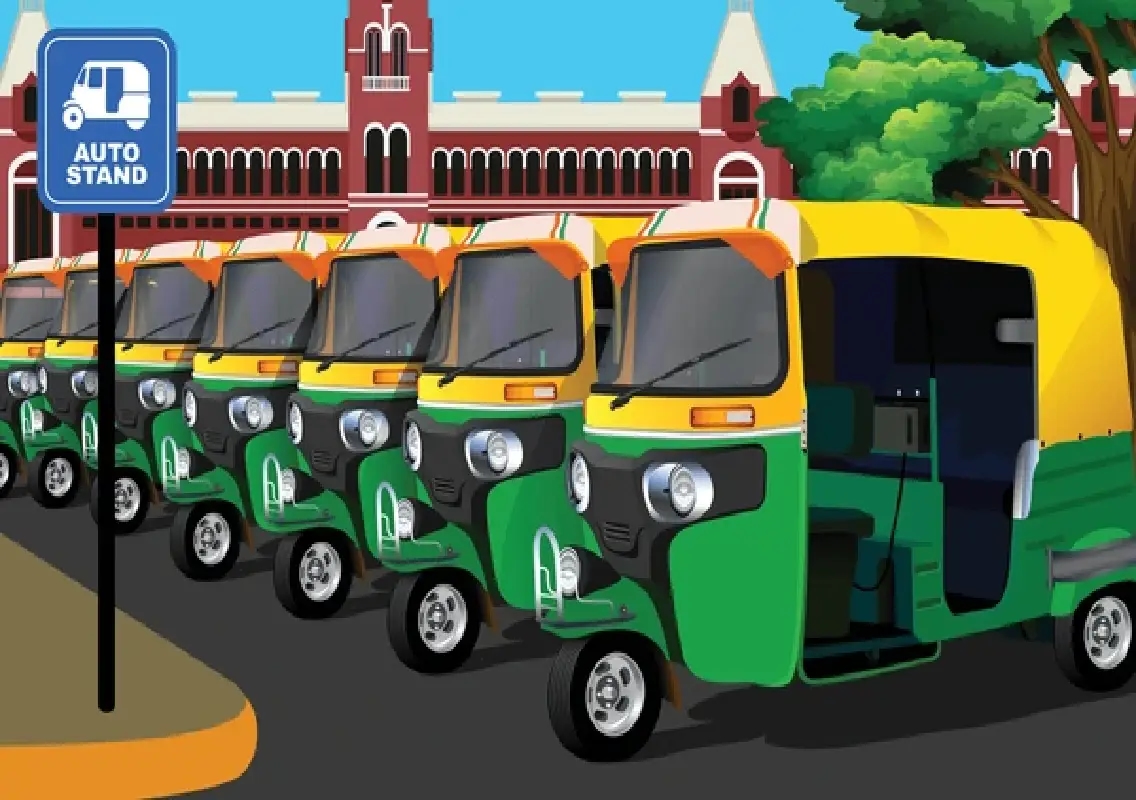


Mangaluru: The Mangaluru City Corporation (MCC) has identified 210 locations across its 60 wards as authorised autorickshaw parking stands, aiming to streamline urban transport and reduce conflicts among drivers. The move follows detailed studies and consultations with autorickshaw drivers, unions, and traffic police officials.
Study and consultation process
The identification of authorised parking locations was carried out after an extensive study involving stakeholders. Officials from the city traffic police, including the Assistant Commissioner of Police (ACP), worked closely with office bearers of autorickshaw drivers’ and owners’ unions to assess feasible parking points across the city.
Based on these findings, a list of recommended locations was prepared and submitted for approval. The revised list was subsequently approved during a council meeting of the city corporation in 2022.
Conditional approval and flexibility
MCC Commissioner Ravichandra Naik stated that the proposal was approved with certain conditions. One of the key provisions allows for modifications to the identified parking locations in case of road development or infrastructure projects in the future.
This flexibility ensures that the parking arrangements can adapt to the city’s evolving urban landscape, particularly with ongoing road widening and concreting works.
Key parking locations and capacity
The revised list includes several major junctions with higher parking capacities to accommodate more vehicles. At Kavoor-Konchadi junction, space has been allocated to park around 30 to 40 autorickshaws. Similarly, Kankanady Junction near the railway station has provisions for parking approximately 35 vehicles.
Other prominent locations such as State Bank Junction and Lady Hill Junction (Brahmasri Narayana Guru Circle) can accommodate around 25 autorickshaws each.
Apart from a few major hubs like Padavinangady, Sultan Battery, Urwa Store Junction, Urwa (opposite Canara High School), AB Shetty Circle, and Central Railway Station (which has two designated spots), most other autorickshaw parks have capacity for fewer than 20 vehicles.
Decline in number of stands over time
Autorickshaw unions have highlighted a significant reduction in the number of stands over the years. While the city once had around 375 autorickshaw stands, this number has now dropped to nearly 115 due to road widening and urban development works.
With more than 7,000 autorickshaws currently registered in the city, the reduction in designated parking spaces has led to congestion and disputes among drivers.
Demand for more parking spaces
Various autorickshaw drivers’ and owners’ organisations, including the Federation of Karnataka Autorickshaw Drivers Union, have been consistently demanding an increase in the number of authorised parking stands.
They argue that the growing number of vehicles, including the recent addition of electric autorickshaws, has made it essential to expand parking infrastructure. The lack of adequate stands often forces drivers to park in unauthorised areas, leading to traffic issues and conflicts.
Benefits of expanded parking network
Officials believe that increasing the number of authorised autorickshaw parks will help bring better order to the city’s transport system. Clearly designated stands can reduce roadside congestion, improve traffic flow, and minimise disputes among drivers over parking space.
It is also expected to enhance commuter convenience, as passengers will be able to locate autorickshaws more easily at designated points across different parts of the city.
Conclusion
The identification of 210 authorised autorickshaw parks marks a significant step towards improving urban mobility management. However, with the rising number of vehicles and evolving city infrastructure, stakeholders emphasise the need for continuous review and expansion of parking facilities to meet future demands.