







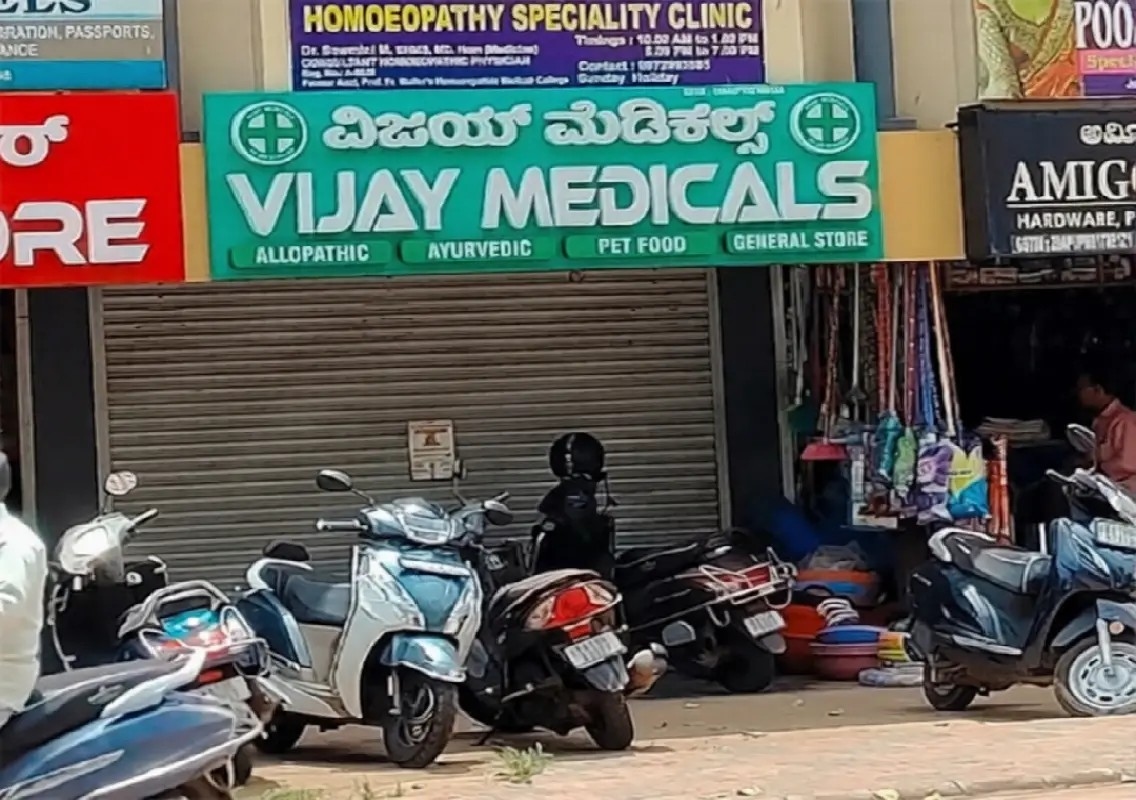


Mangaluru: Private medical shops across the city remained shut on Tuesday following a nationwide shutdown call issued by the All India Organisation of Chemists and Druggists (AIOCD), with a large number of pharmacy owners participating in the protest against the alleged illegal sale of medicines through online e-pharmacies and quick commerce platforms.
The shutdown witnessed a visible response from medical shop owners across the district, with several standalone pharmacies keeping their shutters down throughout the day. According to available information, there are more than 1,100 medical shops operating across the district, and a significant number of them joined the protest in support of the nationwide agitation.
Shutdown receives strong support from pharmacy owners
The bandh call was part of a larger nationwide campaign initiated by chemists and druggists’ associations demanding stricter regulation of online medicine sales and quick commerce delivery platforms. Pharmacy owners have alleged that medicines are increasingly being sold through online channels without adequate checks and regulatory oversight.
Several pharmacists expressed concern over the impact of digital platforms on traditional businesses and patient safety. According to industry representatives, medicines, unlike many other consumer products, require regulated handling, proper prescription verification, and professional supervision before being dispensed.
The protest aimed to draw the attention of authorities towards what participants described as growing irregularities in medicine distribution through online channels. Associations backing the protest have claimed that certain e-pharmacy services operate in ways that bypass existing norms governing the sale and delivery of medicines.
Essential medical services continue despite shutdown
Despite the widespread participation in the shutdown, essential medical access remained available to residents. Medical stores attached to hospitals continued operations, ensuring uninterrupted support for patients requiring immediate medicines and healthcare assistance.
Large pharmacy chains and government-supported outlets also remained functional during the protest. MedPlus stores, Apollo pharmacies, and Jan Aushadhi centres continued serving customers across the city.
The continued functioning of these outlets prevented major inconvenience for emergency patients and those requiring daily medication. Hospital-attached pharmacies especially played an important role in ensuring that treatment and medicine supply for inpatients and emergency cases remained unaffected.
Patients visiting healthcare institutions were able to purchase prescribed medicines without significant disruption. Some customers also turned towards operational pharmacy chains and Jan Aushadhi centres for their requirements during the day.
Concerns over online medicine sales
The central issue behind the nationwide agitation revolves around concerns regarding online medicine sales and rapid delivery platforms. Traditional pharmacy associations have repeatedly raised concerns that medicines should not be treated as standard retail products because of the potential health risks associated with improper dispensing.
Pharmacy representatives have argued that prescription medicines require careful verification and that any lapses in the process could lead to misuse or incorrect medication use. Industry bodies have also stressed the importance of maintaining uniform standards across both physical and digital medicine distribution channels.
Supporters of online medicine delivery, however, have maintained that digital platforms improve accessibility and convenience for consumers, especially for senior citizens, patients requiring regular medicines, and those living in areas with limited access to physical stores.
The debate around regulation of e-pharmacies has continued for several years, with stakeholders from both traditional and digital sectors seeking clarity in policy and operational guidelines.
District sees minimal disruption in healthcare access
While the closure of a large number of standalone pharmacies was evident across the district, healthcare access remained largely manageable due to the functioning of hospital pharmacies and major retail chains.
Residents requiring urgent medicines were able to obtain them through available channels, reducing the possibility of severe disruption during the protest period. However, some customers reported inconvenience due to the closure of neighbourhood medical shops they usually depend upon.
The protest also highlighted the growing transformation taking place in the pharmaceutical retail sector, where traditional businesses and emerging digital platforms are increasingly competing for market space.
With pharmacy associations raising concerns and digital medicine platforms expanding their reach, the issue is expected to remain an important topic for regulators and industry stakeholders in the coming months.