







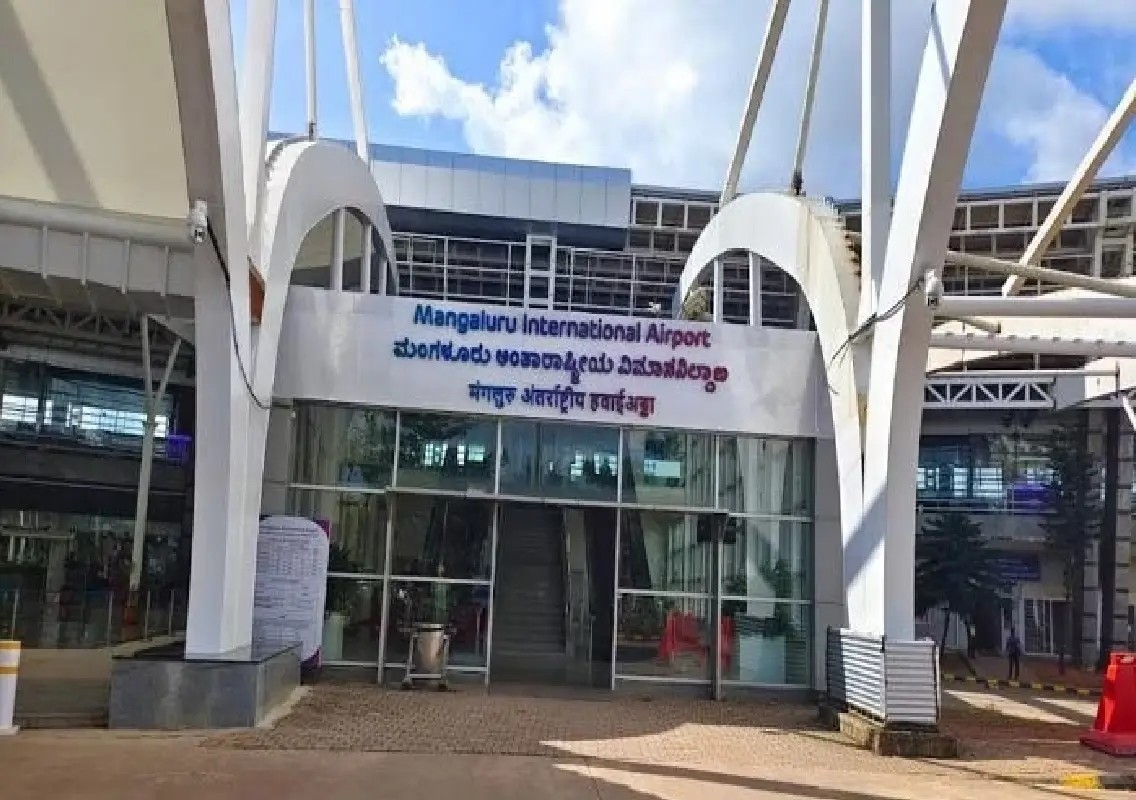


Mangaluru: Mangaluru International Airport Limited (MIA) has clarified its responsibilities regarding stormwater drainage and flooding concerns in areas surrounding Mangaluru International Airport, following a protest held outside the airport by 21 members of Bajpe Town Panchayat and MLA Umanath Kotian on Saturday.
The protest focused on persistent stormwater drainage and flooding issues affecting areas around the airport. In response, MIA said the airport’s responsibilities are clearly defined under its concession agreement with the Airports Authority of India (AAI) and are primarily limited to infrastructure, drainage systems and operations within the airport premises.
Airport says external drainage is outside its jurisdiction
MIA said the airport boundary and the respective responsibilities of the airport operator are defined under the master plan that forms part of the concession agreement with AAI.
According to the airport operator, its primary responsibility covers infrastructure and drainage arrangements located within the airport premises. Infrastructure required outside the airport boundary, including systems intended to mitigate flooding in surrounding localities, falls under the jurisdiction of the respective government departments and local authorities.
MIA also pointed to the regulatory framework governing airport tariffs. It said that under the Airports Economic Regulatory Authority (AERA) framework, an airport operator cannot recover through airport tariffs the cost of civil infrastructure projects undertaken outside the airport premises.
Such expenditure, according to MIA, does not relate directly to the operation, maintenance or development of the airport and therefore cannot be treated as part of the airport’s tariff-supported infrastructure expenditure.
The clarification comes amid concerns raised by residents and local representatives over recurring stormwater drainage problems in areas around the airport.
MIA commissioned NITK technical assessment
While explaining its jurisdiction, MIA said it has not remained indifferent to the concerns of residents and local authorities.
Recognising that the drainage problem is longstanding, the airport operator said it commissioned the National Institute of Technology Karnataka (NITK), Surathkal, in 2024 to conduct a comprehensive technical assessment of stormwater drainage challenges in the areas surrounding the airport.
The assessment was undertaken based on a recommendation from the Dakshina Kannada District Administration.
The Department of Water Resources and Ocean Engineering at NITK subsequently prepared a technical report running to more than 100 pages. Titled Hydrological Assessment of Sub-Watersheds Around Mangaluru International Airport, the study examined the hydrological conditions of the sub-watersheds surrounding the airport and explored measures to address the movement and discharge of stormwater.
The study recommended measures aimed at facilitating the discharge of stormwater from the airport drainage network into the Gurupura River through an external drainage system.
NITK study proposes external drainage system
MIA said the recommendations contained in the NITK study offer a technically assessed pathway for addressing the drainage issue.
However, the proposed solution involves infrastructure outside the airport’s boundary. Its implementation would therefore require intervention by the competent government authorities and local bodies.
The external drainage system would involve activities such as land acquisition, construction of drainage channels and the development of associated infrastructure outside the airport premises.
These activities, MIA said, cannot be undertaken independently by the airport operator because they fall within the jurisdiction and responsibilities of the relevant government agencies and local authorities.
The airport operator has nevertheless expressed its willingness to assist the authorities in moving forward with the recommendations.
Airport offers technical assistance to authorities
MIA said it is prepared to provide the District Administration, local authorities and other government agencies with the necessary technical information and assistance required to implement the recommendations of the NITK study.
It also offered to coordinate with the concerned agencies as part of efforts to develop a long-term solution to the drainage and flooding problem.
The airport said its clarification should not be interpreted as reluctance to address concerns raised by the local community. It highlighted that it has already undertaken measures within its jurisdiction and facilitated an independent technical assessment of the broader drainage issue.
The technical study, according to MIA, was intended to provide authorities with a scientific basis for addressing the larger stormwater management challenge in the area.
Coordinated action needed for long-term solution
MIA stressed that a sustainable solution to the flooding problem would require coordinated action involving multiple agencies, particularly because key components of the proposed infrastructure are located outside the airport premises.
The issue therefore extends beyond the operational boundaries of the airport and requires participation from the District Administration, local bodies, government departments and elected representatives.
The airport operator said it remains committed to working constructively with the Dakshina Kannada District Administration, Bajpe Town Panchayat, elected representatives and other stakeholders.
MIA added that it would continue providing technical and operational cooperation to help find a sustainable, long-term solution to stormwater drainage and flooding concerns in the areas surrounding Mangaluru International Airport.
The latest clarification places the focus on implementing the recommendations of the NITK study and establishing the external drainage infrastructure required to manage stormwater effectively. With the airport stating that it is willing to support the process, the responsibility for taking forward the proposed external works now rests primarily with the competent government authorities and local bodies.