







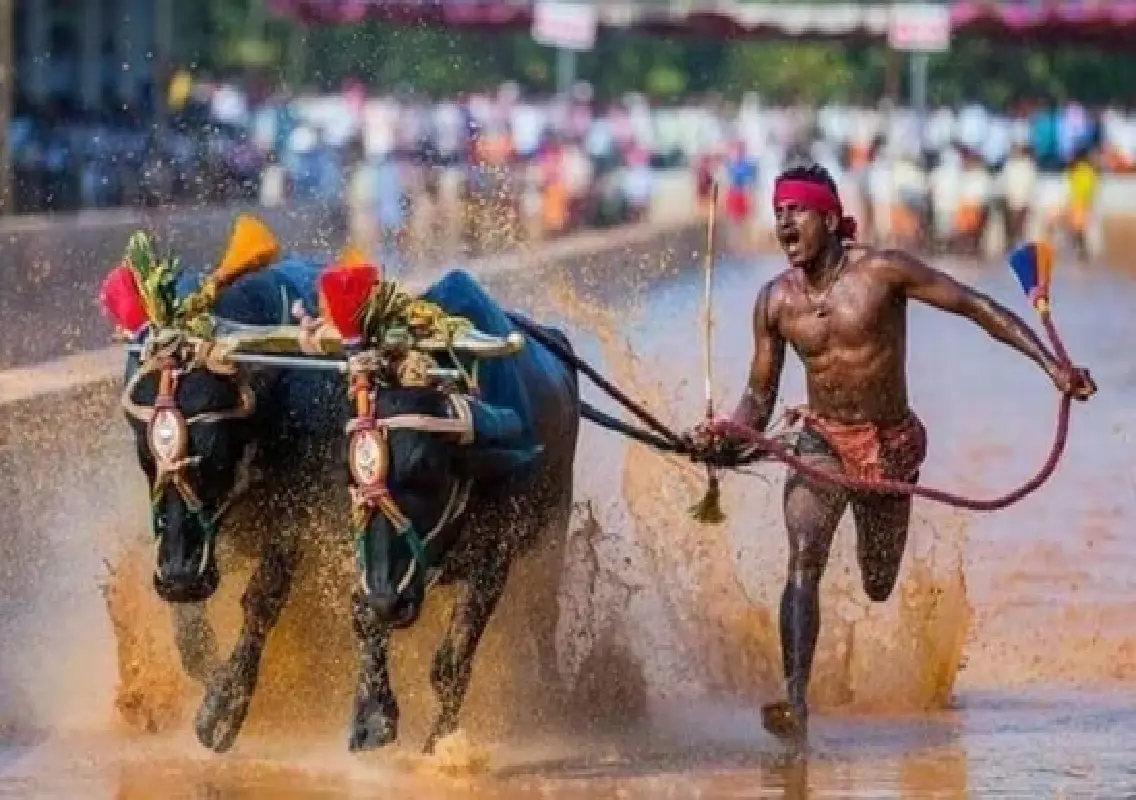


Mangaluru: The Moodbidri Town Municipal Council (TMC) has launched an intensive awareness and implementation campaign to ensure that the upcoming Moodbidri Koti Chennaya Jodukare Kambala, scheduled to be held on January 31, is organised as a complete zero-waste event. The traditional buffalo race, which attracts massive crowds every year, is expected to see around one lakh visitors this season.
The Moodbidri Kambala has been consistently following zero-waste practices since the 2022–23 season. This year’s event is being organised by the Kambala Samithi with the active support of the Moodbidri TMC, along with several civic groups, non-governmental organisations and volunteers.
Appeal to public for active participation
Shilpa S, environmental engineer with the Moodbidri TMC, appealed to the public to actively support the zero-waste initiative. She urged visitors to bring their own cloth bags, food containers and water bottles while attending the event.
“People should avoid single-use plastics and instead use biodegradable carry bags, cups, glasses and spoons. Public cooperation is crucial to make the Kambala a truly zero-waste event,” she said.
The TMC has also requested vendors and stall owners to strictly adhere to eco-friendly practices and refrain from using disposable plastic products.
Municipal stalls to showcase waste management technologies
Shilpa S told The Times of India that special municipal stalls will be set up at the venue to promote sustainable waste management practices. These stalls will sell manure produced from processed waste and feature live demonstrations on dry waste segregation and rainwater harvesting.
“This year, at our stalls, we will introduce the public to various waste management technologies along with the sale of biodegradable products. The municipal stall will showcase two technologies for composting wet waste and highlight the importance of dry waste segregation,” she said.
Information on faecal sludge treatment plants will also be provided to raise awareness about sanitation infrastructure and environmental protection.
Special activities planned to engage children
To ensure that environmental awareness reaches all age groups, the TMC has planned interactive activities for children. A theme-based snake-and-ladder game focusing on dry waste management will be installed at the venue to educate young visitors in an engaging manner.
Officials said such activities are aimed at creating long-term behavioural change by introducing sustainability concepts at an early age.
Drinking water kiosk to reduce plastic waste
As part of efforts to cut down plastic bottle usage, a dedicated drinking water kiosk will be set up at the Kambala venue. Visitors will be encouraged to refill their own water bottles instead of purchasing packaged drinking water.
This measure is expected to significantly reduce plastic waste generation during the event, which witnesses heavy footfall throughout the day.
Plastic-free zone and strict segregation measures
After several preparatory meetings, the organisers have decided to declare the entire Kambala venue a plastic-free zone. Waste-collection bins will be placed across the premises to ensure proper segregation of wet and dry waste.
Bins will also be installed along the approach roads leading to the venue to prevent littering and encourage responsible disposal. A team comprising a senior health inspector and five community mobilisers has been deployed to oversee the implementation of zero-waste practices during the event.
Vendors directed to avoid use-and-throw products
Nagaraj Poojary, secretary of the Kambala Samithi, is leading efforts to ensure that vendors strictly comply with the guidelines. He said stall owners have been instructed not to use use-and-throw plastic products under any circumstances.
Arrangements are being made to serve food to participants and visitors on banana leaves and areca plates, reinforcing the traditional and eco-friendly nature of the event.
Wide collaboration and social media outreach
Several organisations have joined hands with the Moodbidri TMC to support the initiative, including Rotary Club Moodbidri, Netaji Brigade Moodbidri, citizen volunteers, Swachh ambassadors, CDD India and Sahas NGO. Educational institutions will also send student volunteers to assist with waste management and awareness activities.
Social media teams will be present at the venue to collect public feedback and spread awareness about Swachh Survekshan, emphasising the importance of citizen participation in cleanliness drives. The TMC has already begun sharing awareness messages through its official social media handles.
Conclusion
With extensive planning, public outreach and inter-organisational cooperation, the Moodbidri TMC aims to set an example by organising the Koti Chennaya Jodukare Kambala as a completely zero-waste, plastic-free event. Officials believe that sustained public participation and strict enforcement will help make large cultural gatherings environmentally responsible while preserving traditional celebrations.