







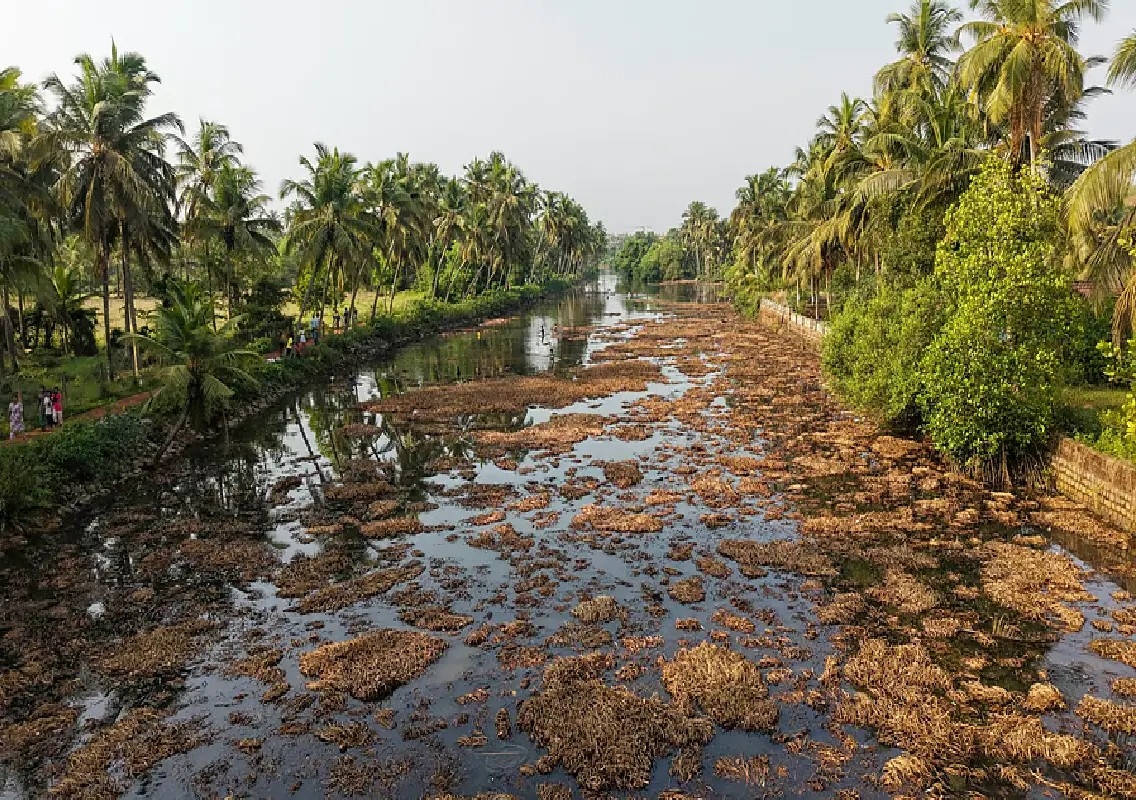


Mangaluru: Rising pollution levels in the Nandini River have begun affecting cultural and religious traditions linked to the river, with the centuries-old fish-catching ritual during the annual fair of Khandige Dharmarasu Sri Ullaya Daivasthana witnessing a sharp decline in participation this year.
Local residents alleged that increasing pollution, untreated sewage discharge and the spread of water hyacinth have severely impacted aquatic life in the river. As a result, fish populations have reportedly reduced significantly, affecting a ritual that has been followed for generations at Khandige in Chelairu.
The annual ritual, which once attracted large crowds from nearby villages and surrounding regions, saw only a small number of participants this year, raising concerns among residents over the deteriorating condition of the river.
Ancient tradition witnesses declining participation
The fish-catching ritual at Khandige Sri Dharmarasu Ullaya Daivasthana has traditionally formed an important part of the annual temple fair and has been observed by devotees for several generations.
Residents said devotees from neighbouring villages gather at the temple during the annual celebrations and offer prayers before taking part in the ritual.
According to local tradition, the event begins after the temple priest drops prasadam into the river, symbolically signalling the commencement of fish catching. Devotees then enter the river and cast fishing nets as part of the ritual practice.
In earlier years, the event attracted hundreds of participants from places such as Kaup, Uchila and Mangaluru. Families and devotees considered fish caught from the Nandini River on that day as prasadam and traditionally shared it among relatives, neighbours and members of the community.
Residents said the event had both cultural and spiritual significance and served as a gathering point for communities from different areas.
Pollution and water hyacinth impact aquatic life
Residents alleged that the worsening pollution in the Nandini River has caused serious environmental damage and directly affected fish populations.
According to local residents, the growth of weeds and water hyacinth has increased substantially in recent years, reducing water quality and impacting aquatic ecosystems.
They further alleged that untreated sewage being released into the river has contributed significantly to the decline in aquatic life.
Local residents claimed that earlier, freshwater fish varieties including Kane, Irpe and Thede were commonly found in the river and caught during the ritual. However, fish availability has reportedly dropped considerably due to deteriorating conditions.
Residents also accused authorities of failing to initiate adequate measures to restore the river and protect its ecosystem.
They alleged that institutions responsible for releasing untreated sewage into the river have not faced effective action from the concerned departments.
Protest held demanding restoration of river
Members of the Nandini Nadi Ulisi Horata Samithi along with members of the public staged a protest at Chelairu Khandige on Friday demanding immediate action to protect and restore the river.
The protesters raised concerns over the worsening state of pollution and called for stronger intervention from authorities.
Sukesh Shetty of the Horata Samithi said efforts to protect the Nandini River should continue until permanent solutions are implemented and the river is restored.
According to him, the movement should not stop until authorities address pollution concerns and take effective corrective measures.
Residents blame authorities for inaction
Chelairu Gram Panchayat former president Jayananda criticised authorities for allegedly failing to act despite repeated representations and public protests.
He stated that residents had submitted multiple petitions to various government departments and elected representatives during the past two years seeking intervention.
However, according to him, no substantial action has been taken to address the issue.
Jayananda held the district administration and officials of the city corporation responsible for the worsening condition of the river.
Committee member Diwakar Samani also expressed concern regarding the decline in public participation in the fish-catching ritual.
He said that thousands of people once gathered at the Nandini River during the annual event, but only a handful participated this year, reflecting the serious deterioration in the river’s condition.
The declining participation in a tradition observed for generations has further intensified concerns among local residents, who believe urgent intervention is needed to preserve both the river ecosystem and the cultural practices associated with it.