







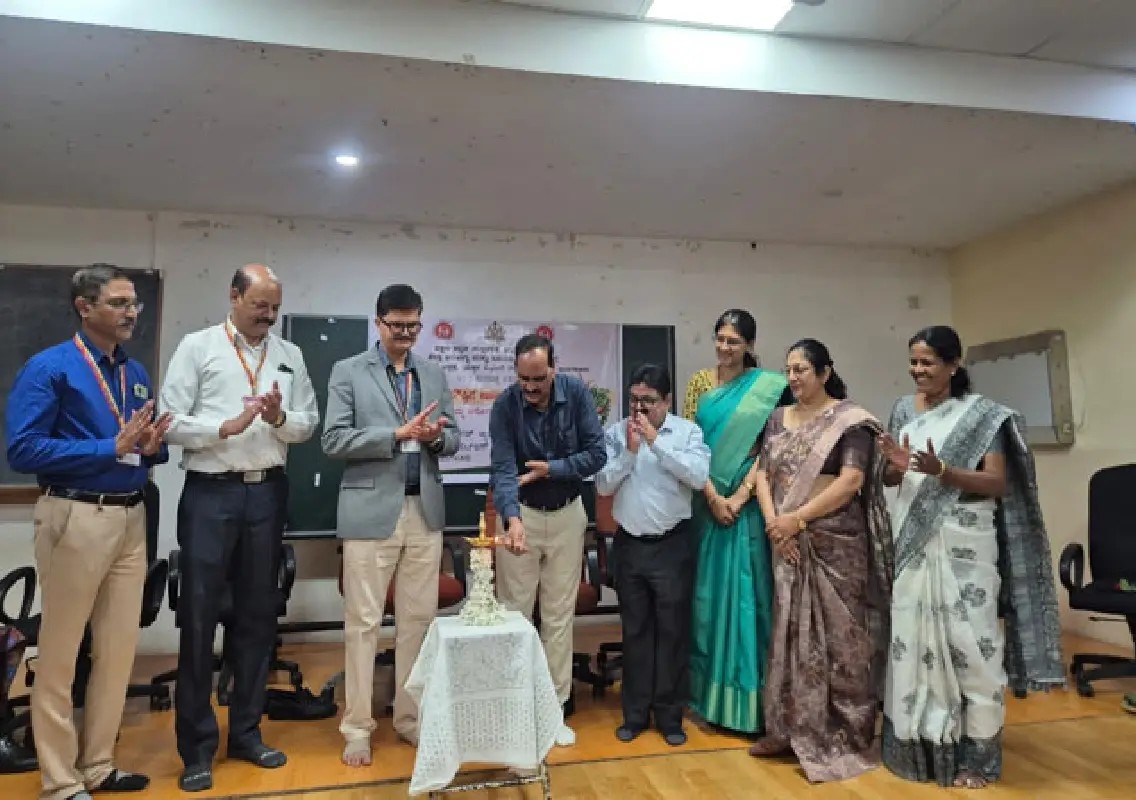


Mangaluru: National Nutrition Week 2026 was inaugurated at the RAPCC Hall of Wenlock District Hospital on Monday, September 7, with a focus on promoting balanced nutrition, child health, personal hygiene and healthy food practices.
The programme was organised jointly by Wenlock District Hospital (RAPCC) and Masood College & School of Nursing under the theme ‘Discover the Power of Nutrition.’ The initiative aimed to create greater awareness about the role of nutrition in healthy growth and development, particularly among children.
Health officials inaugurate nutrition programme
Dr Thimmayya H R, District Health and Family Welfare Officer, inaugurated the programme, while Dr Shivprakash D S, District Surgeon and Superintendent of Wenlock District Hospital, presided over the event.
The programme brought together healthcare professionals, nursing students and other stakeholders to highlight the importance of adequate nutrition and healthy lifestyle practices.
Dr Madhusudan, Resident Medical Officer; Dr Rajesh B, Reproductive and Child Health Officer; Dr Sucheta Rao, Head of the Department of Paediatrics, KMC; and Dr Rajesh B M, Unit Chief, Department of Paediatrics, KMC, were among the chief guests.
Dr Mohammed Abdul Basith, senior specialist; Dr Veena Gretta Tauro, Principal of Masood School & College of Nursing; Puttaraju, AAO, Wenlock District Hospital; and Tresiyamma, Matron, Wenlock District Hospital, were the special guests.
Dr K Krishna, senior specialist, served as the resource person for the programme.
Focus on child nutrition and deficiencies
The programme featured awareness sessions focusing on child nutrition, personal hygiene and nutritional deficiencies.
Special attention was given to children between 24 months and five years of age, a crucial period for physical and cognitive development. Participants were made aware of the importance of providing children with nutritious and balanced meals during this stage of growth.
The sessions also addressed common nutritional deficiencies, including anaemia and vitamin deficiencies, and highlighted the need for early identification and prevention.
Healthcare professionals stressed the importance of ensuring that children receive adequate nutrients through a balanced diet rather than relying on unhealthy or nutritionally poor food choices.
The programme also emphasised the role of parents, caregivers and community health workers in monitoring children’s nutritional status and encouraging healthy eating habits from an early age.
Hygiene highlighted as part of nutrition
Personal hygiene was another key focus of the programme. Participants were educated about maintaining cleanliness and adopting hygienic practices while preparing, serving and consuming food.
The organisers highlighted the close relationship between hygiene and nutrition, noting that unhygienic food preparation and poor personal hygiene can increase the risk of infections and affect children’s health and nutritional status.
The sessions encouraged families and caregivers to follow safe food-handling practices and ensure that children develop healthy hygiene habits.
Adequate play, rest and regular health monitoring were also highlighted as important components of healthy childhood development.
Role play and educational games engage participants
The programme used several interactive activities to make nutrition education more engaging and practical.
Role plays and educational games were organised to communicate key messages about healthy eating, hygiene and child health in an accessible manner.
Nutritious food displays were also arranged, providing participants with practical examples of healthy food choices.
Food-preparation demonstrations further helped explain how nutritious meals can be prepared using simple ingredients and appropriate cooking methods.
The activities were designed to move beyond conventional awareness sessions and provide participants with practical knowledge that can be applied in homes and community settings.
Anganwadi food preparation demonstration
One of the key attractions of the programme was a practical Anganwadi food preparation demonstration.
The demonstration focused on preparing nutritious, hygienic and affordable food using locally available ingredients. It highlighted how simple and economical ingredients can be combined to provide children with meals that meet their nutritional needs.
The demonstration also reinforced the importance of hygiene during food preparation, including maintaining cleanliness and following safe practices while handling ingredients and cooked food.
The organisers said such practical demonstrations can help caregivers and community workers understand how nutritious food can be prepared without relying on expensive ingredients.
Importance of healthy habits emphasised
The programme concluded with a reminder that nutrition is only one part of ensuring healthy childhood development.
Good nutrition, personal hygiene, adequate physical activity, sufficient rest and regular health monitoring together play an important role in helping children grow and develop properly.
The organisers stressed that building healthy food habits at an early age can have long-term benefits. Parents, caregivers, healthcare workers and educational institutions all have an important role in creating an environment where children have access to nutritious food and are encouraged to follow healthy routines.
The National Nutrition Week programme at Wenlock District Hospital thus combined expert guidance, awareness activities and practical demonstrations to promote better understanding of nutrition and child health.
The event reinforced the message that affordable, locally available nutritious food, combined with good hygiene and regular health monitoring, can contribute significantly to preventing nutritional deficiencies and supporting healthy child development.