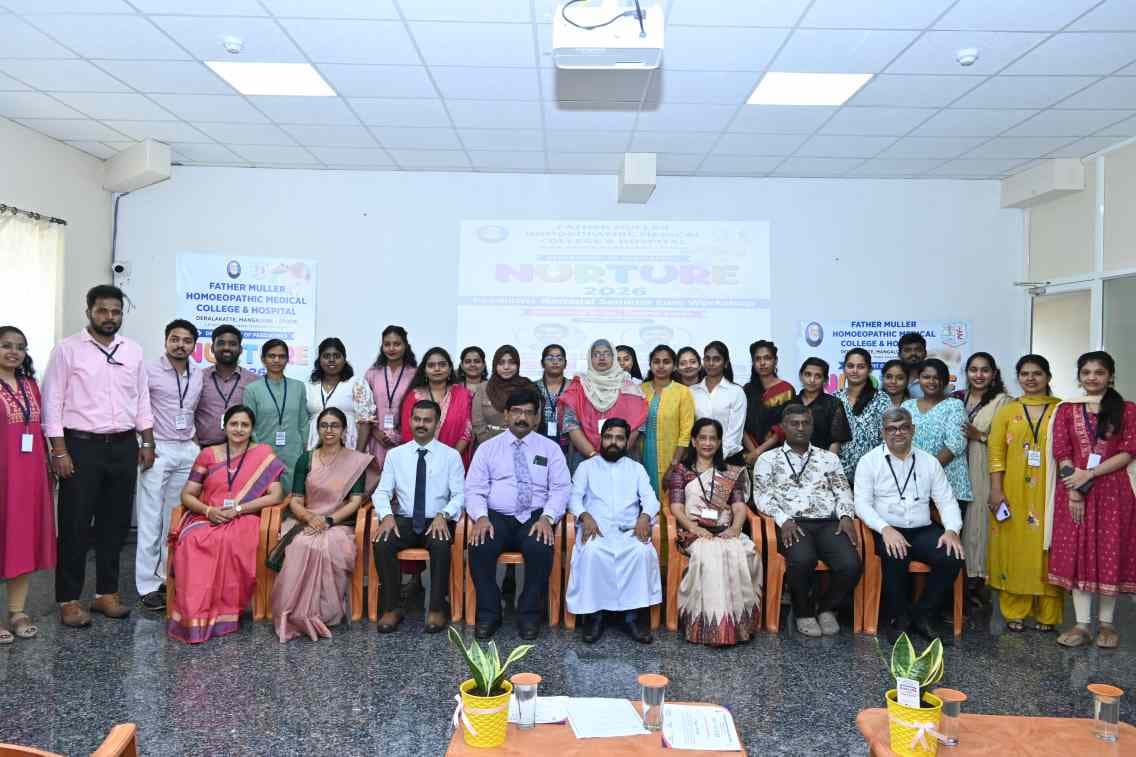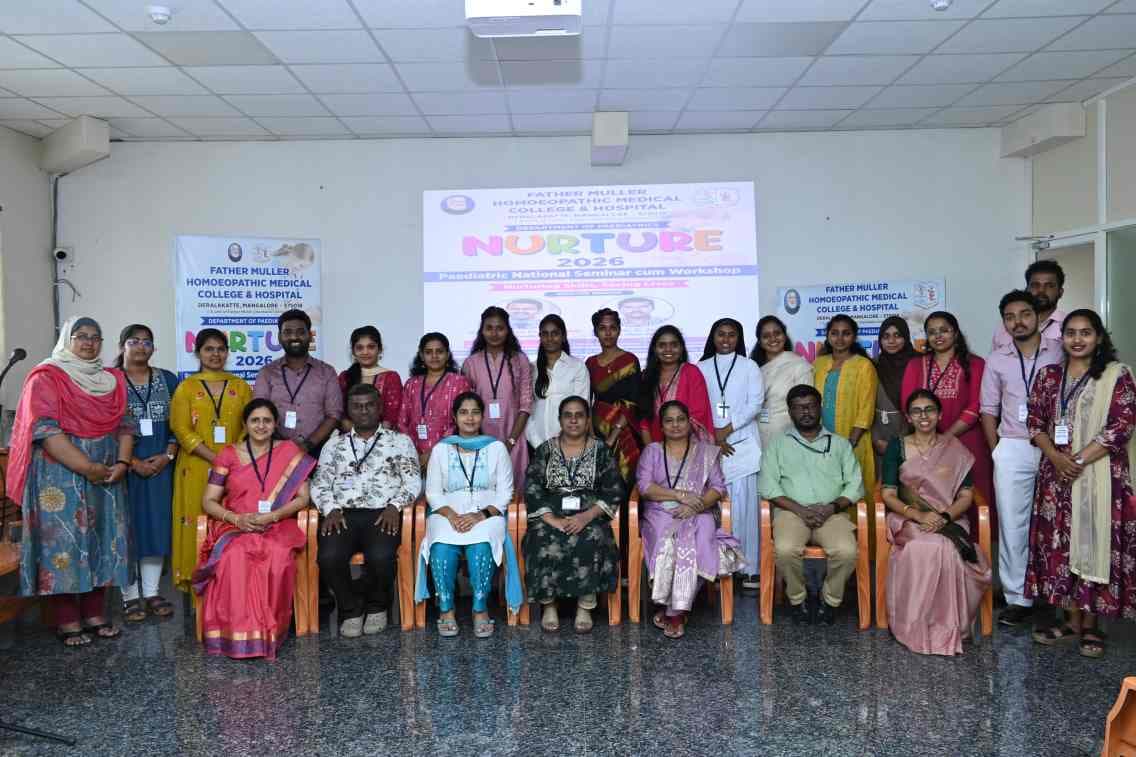


Mangaluru: The Department of Paediatrics, Father Muller Homoeopathic Medical College and Hospital, organised NURTURE 2026 – Paediatric National Seminar cum Workshop on August 8 at the Father Muller Seminar Hall, bringing together paediatric postgraduates and medical professionals for an academic and skill-based programme focused on child healthcare.
The one-day seminar and workshop combined expert-led academic sessions with practical training in essential paediatric procedures. The programme was designed to strengthen the knowledge and clinical skills of delegates while encouraging a focused approach to paediatric care.
Programme inaugurated at Father Muller Homoeopathic Medical College
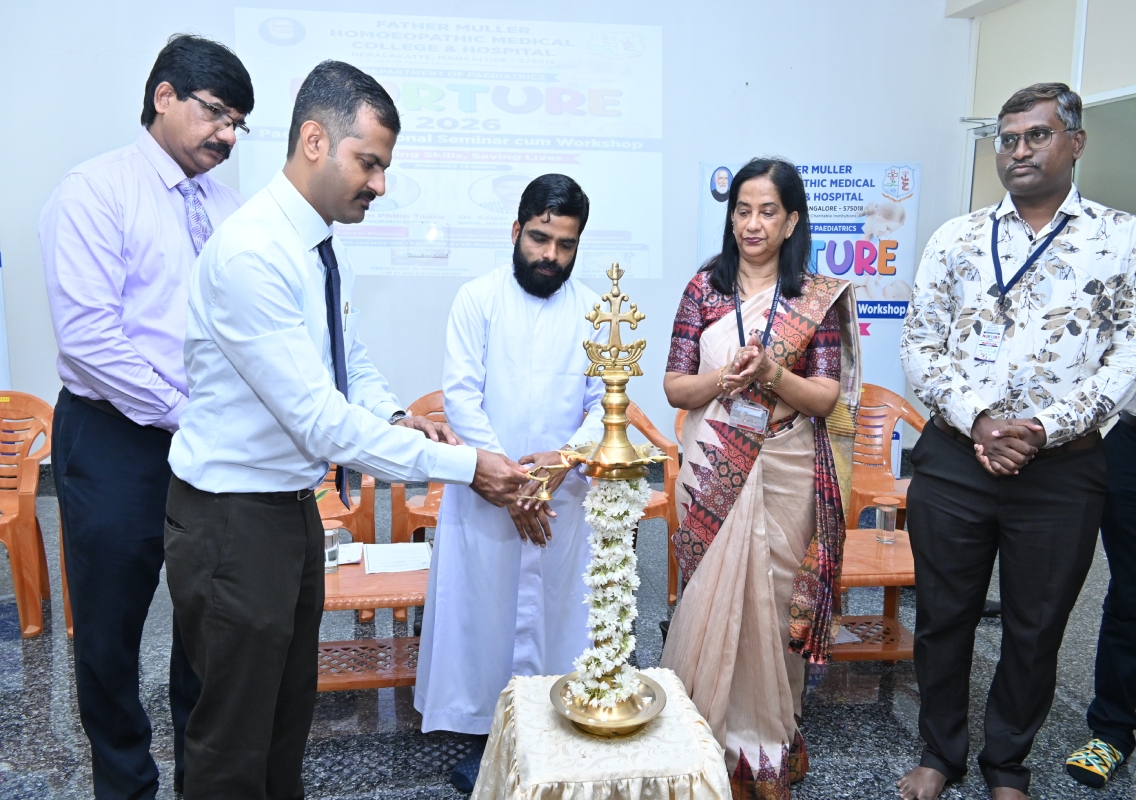
The programme was inaugurated by Rev. Fr. Donald Nilesh Crasta, Administrator, Father Muller Homoeopathic Medical College, in the presence of Dr ESJ Prabhu Kiran, Principal; Dr Vilma Meera D’Souza, Vice Principal; Dr Girish Navada, Medical Superintendent, and resource persons Dr Preetham Philip Tauro and Dr Sagar S. Jambagi.
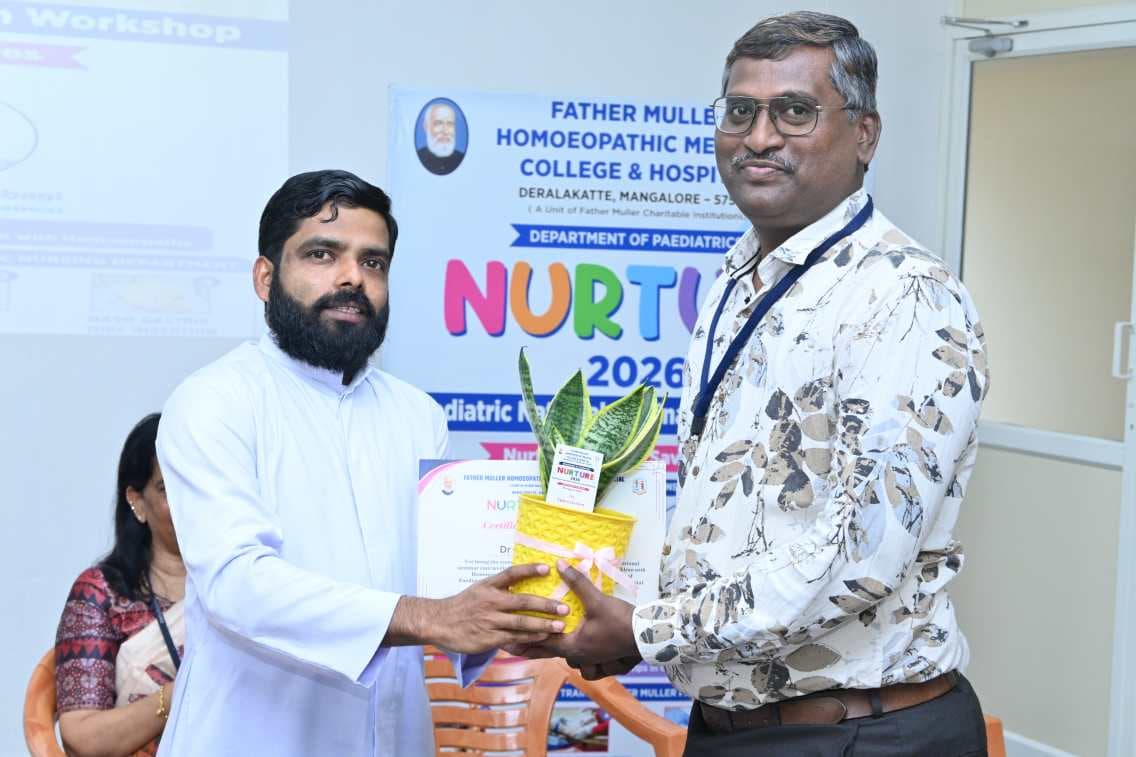
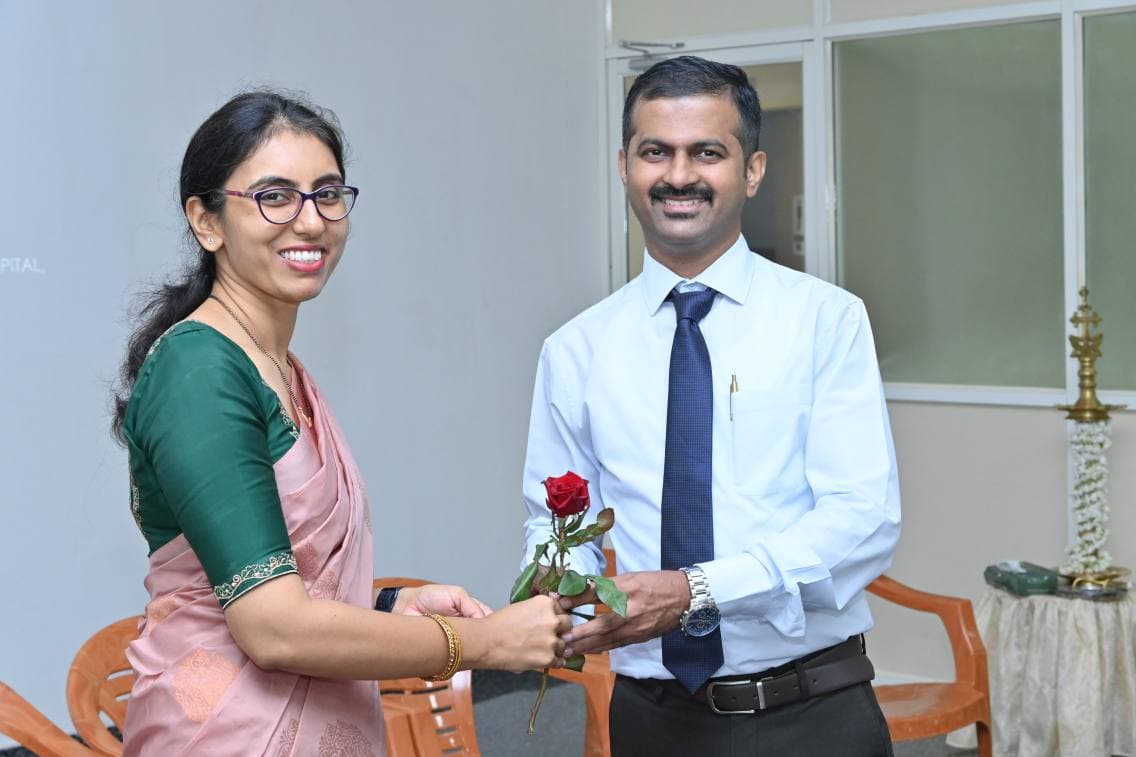
Dr ESJ Prabhu Kiran welcomed the gathering and the resource persons were formally welcomed and honoured by Rev. Fr. Donald Nilesh Crasta.
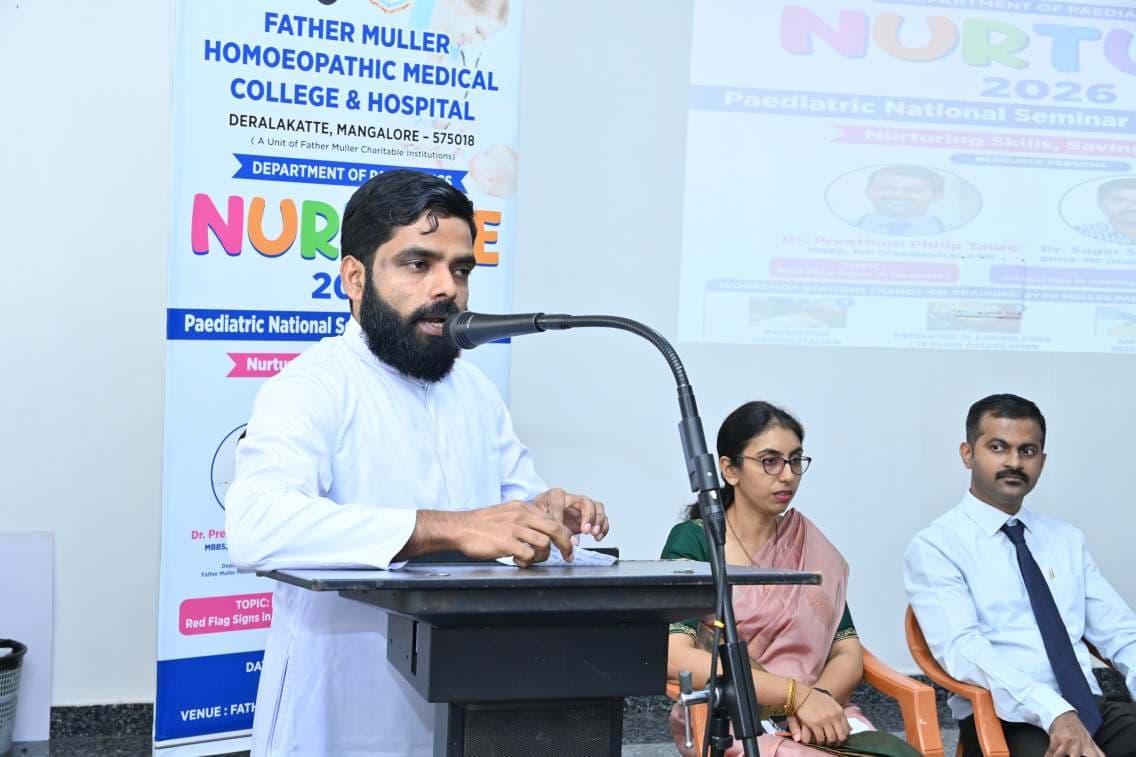
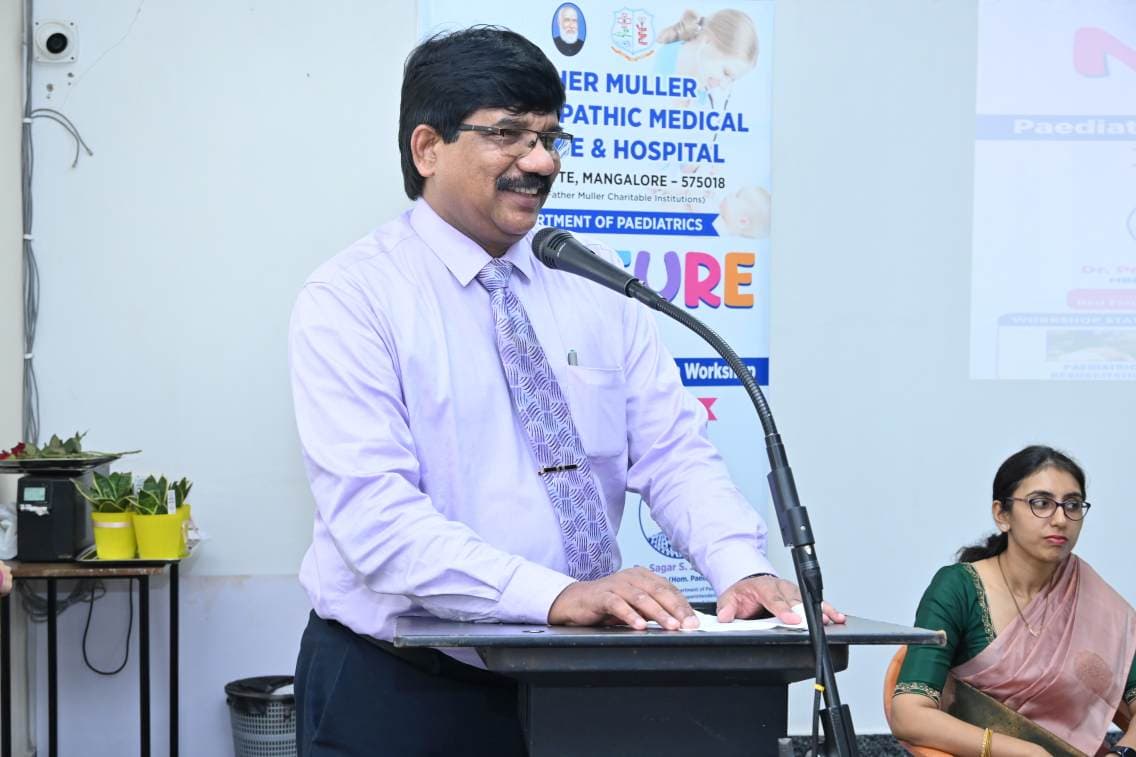
The inaugural ceremony commenced with the symbolic lighting of the lamp. Addressing the gathering, Rev. Fr. Donald Nilesh Crasta highlighted the value of conducting focused, small-group workshops with clearly defined objectives. He also drew attention to the significance of the term ‘Nurture’ in paediatric care, emphasising the importance of providing appropriate care and attention to children.
The programme concluded with a vote of thanks by Dr Reshel Noronha, Organising Secretary and Head of the Department of Paediatrics.
Expert sessions focus on neonatal warning signs and homoeopathic care
The academic component of NURTURE 2026 featured sessions by experts from the fields of paediatrics and homoeopathic medicine.
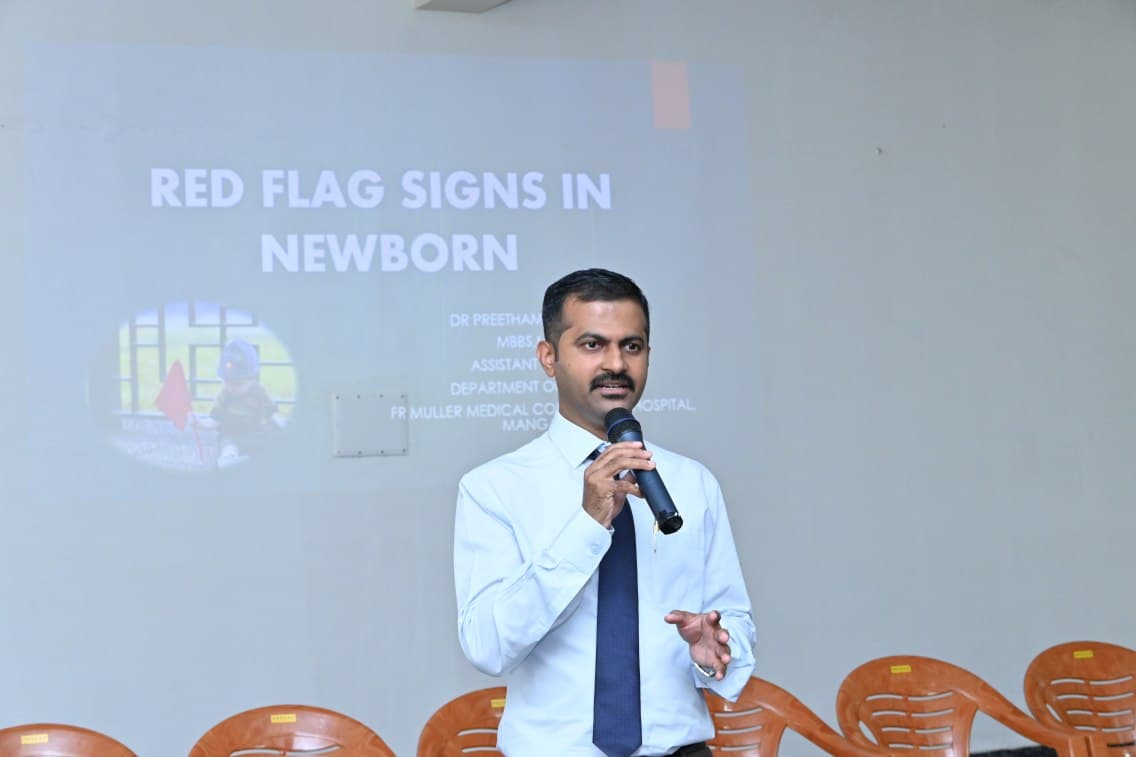
The first academic session was led by Dr Preetham Philip Tauro, MBBS, MD (Paed), DNB, Consultant Paediatrician, Father Muller Medical College, Kankanady. He spoke on ‘Red Flag Signs in Neonates’, focusing on critical symptoms and warning signs that need to be closely monitored in newborns.
The session highlighted the importance of recognising concerning signs at an early stage so that appropriate intervention can be initiated when necessary. Early identification of such symptoms is particularly important in neonatal care, where timely clinical attention can play a crucial role.
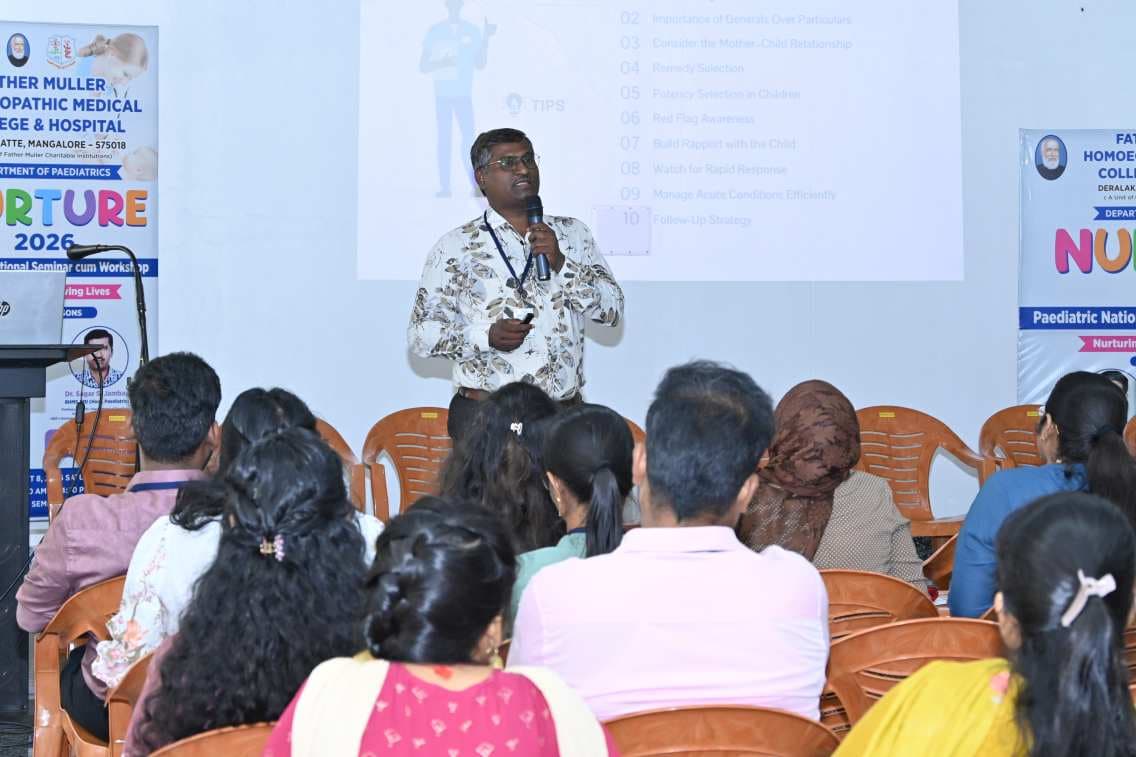
The second academic session was conducted by Dr Sagar S. Jambagi, BHMS, MD (Hom Paed), DMS, and Head of the Department of Paediatrics, HKE’s Homoeopathic Medical College, Gulbarga.
He presented a session titled ‘Clinical Tips in Treating Children with Homoeopathy’, stressing the importance of keen observation while assessing and treating paediatric cases. He also discussed various materia medica relevant to paediatric cases.
Both academic sessions received positive feedback from the participating delegates and provided opportunities for the postgraduates to broaden their clinical understanding.
Hands-on workshop strengthens practical paediatric skills
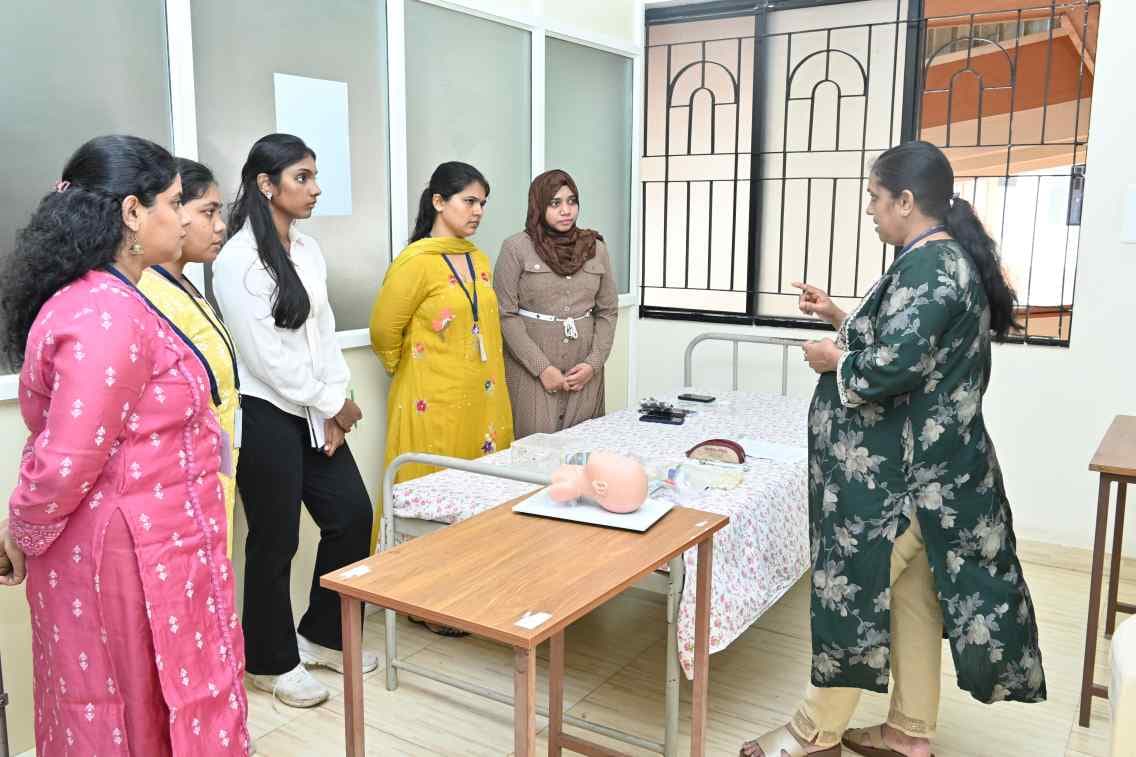
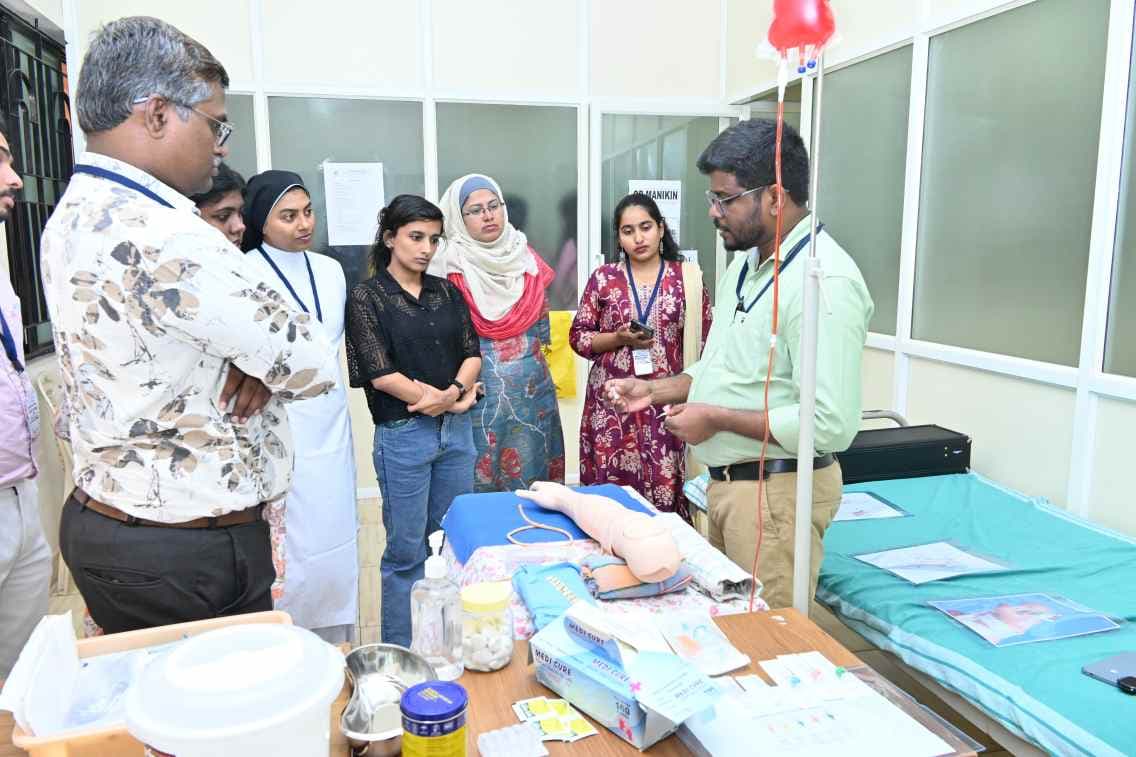
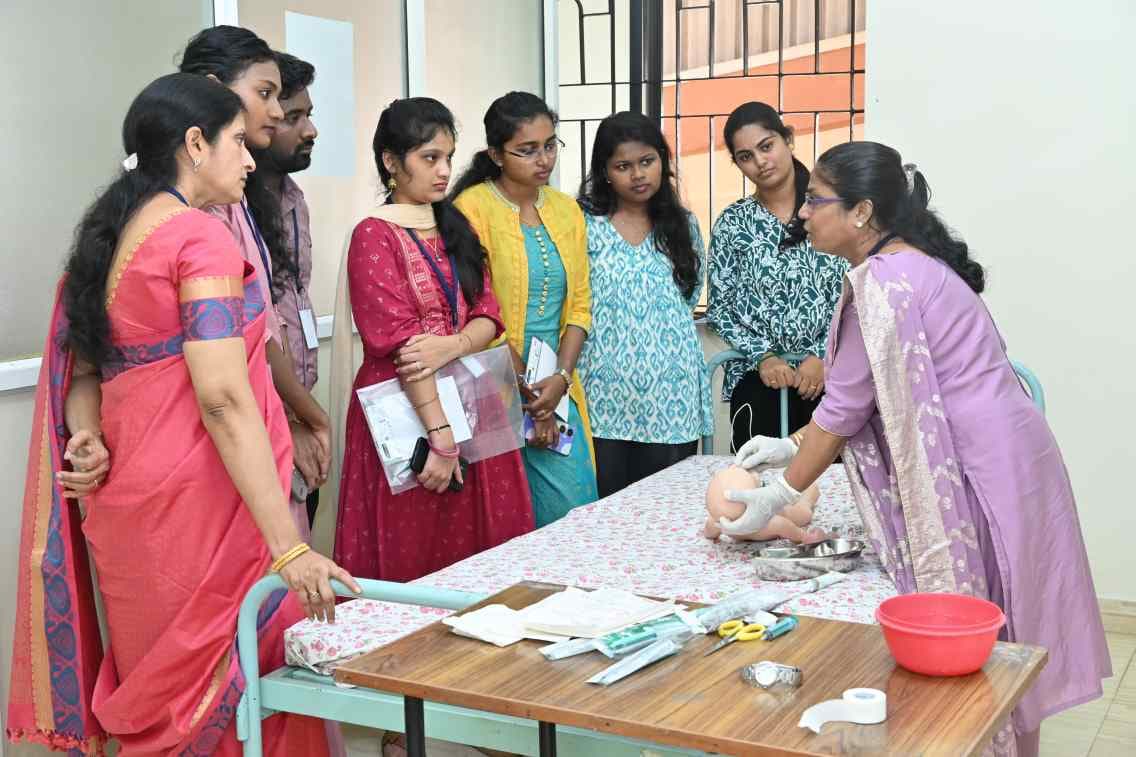
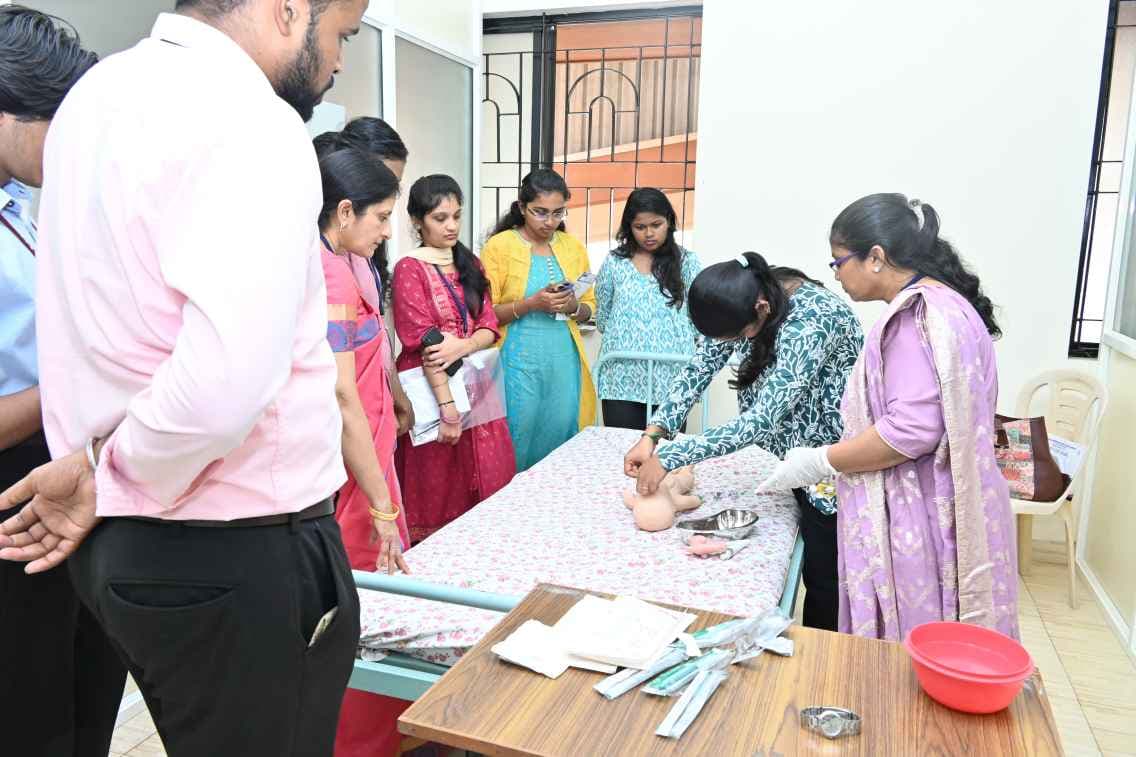
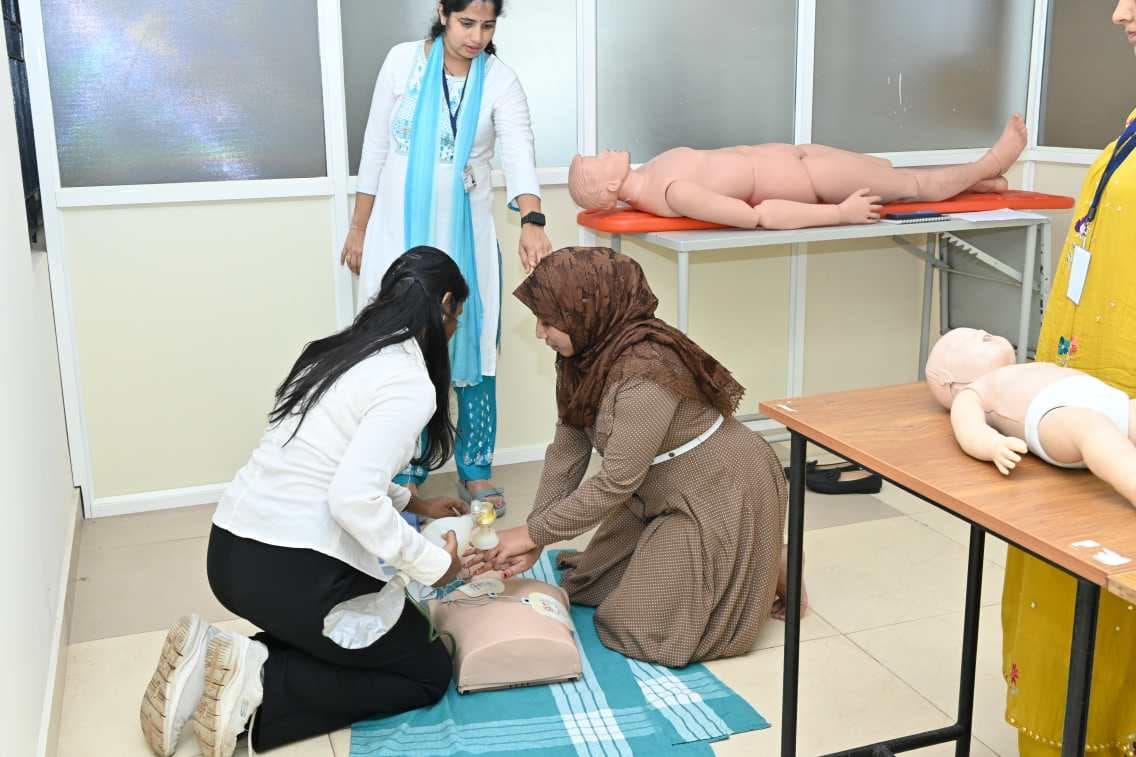
The afternoon session of NURTURE 2026 shifted the focus from classroom learning to practical training through a dedicated Paediatric Hands-on Workshop.
The workshop covered four important areas of paediatric clinical practice:
- Paediatric resuscitation
- Paediatric airway insertion
- Paediatric nasogastric tube insertion
- Paediatric IV cannulation and fluid calculation
The practical sessions were conducted by Ms Preema Reshma Pinto, Prof. Wilma Shalini Noronha, Mrs Anitha Nancy D’Souza, and Mr Manoj P. S. from the Father Muller Paediatric Nursing Department.
To ensure active participation and effective learning, delegates were divided into teams and rotated through different workstations. Each team spent approximately 30 minutes at every station, allowing participants to gain practical exposure to the procedures covered during the workshop.
The hands-on format enabled the postgraduates to understand essential paediatric procedures more effectively and strengthen their practical skills. The workshop also provided an opportunity for participants to learn through guided demonstrations and direct engagement with the different clinical procedures.
Postgraduates showcase academic work
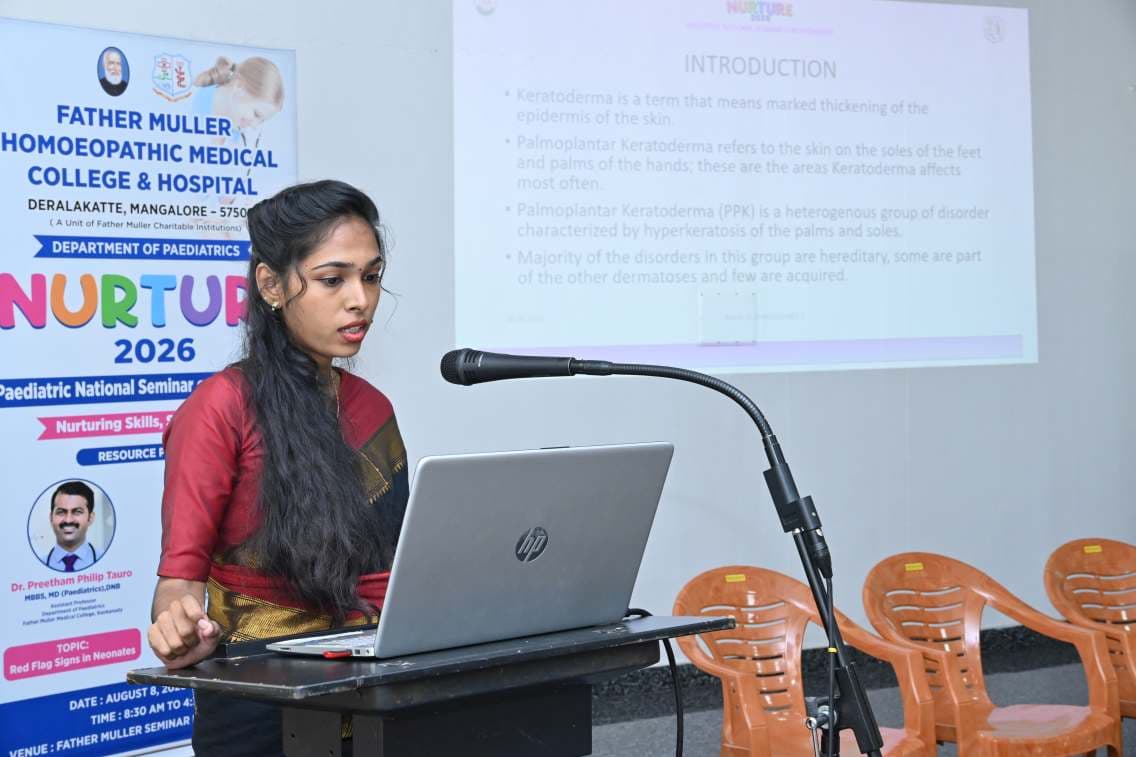
NURTURE 2026 also provided a platform for paediatric postgraduates to present their academic work through paper and poster presentations.
The paper presentations were moderated by Dr Jyoshna Shivaprasad, Professor, Department of Paediatrics, and Dr Shreyank S. Kotian, Assistant Professor, Department of Surgery.
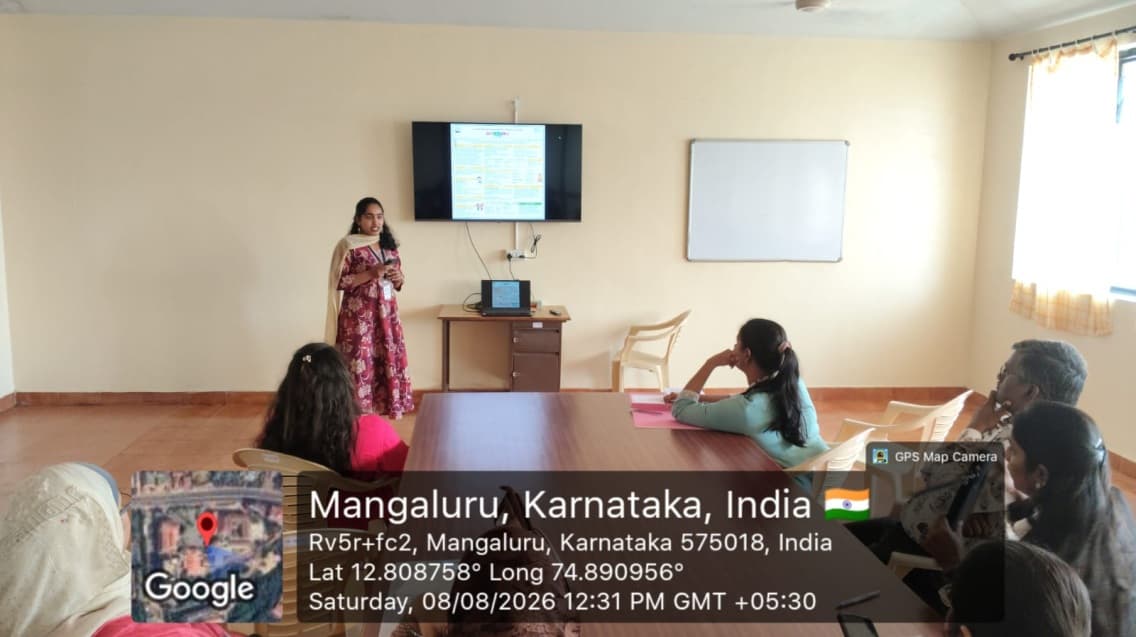
The poster presentations were moderated by Dr Meenu Maria Mathew, Associate Professor, Department of Obstetrics and Gynaecology.
The presentations added an academic dimension to the programme, encouraging postgraduates to engage in scholarly activities and share their work with fellow delegates and faculty members.
Delegates participate from across Karnataka and Tamil Nadu
NURTURE 2026 attracted delegates from various homoeopathic medical colleges across North Karnataka and Kanyakumari. Their participation contributed to the academic exchange and collaborative learning environment created during the seminar and workshop.
By bringing together participants from different institutions, the programme provided an opportunity for postgraduates to interact with peers, learn from experienced resource persons and strengthen their understanding of paediatric healthcare.
The combination of academic presentations, practical training and postgraduate presentations made the programme a comprehensive learning experience.
Focus on strengthening paediatric education
The seminar reflected the importance of combining theoretical knowledge with practical exposure in the education of healthcare professionals. While the academic sessions addressed neonatal warning signs and clinical approaches in paediatric homoeopathy, the hands-on workshop focused on essential procedures that require practical understanding and confidence.
The initiative also demonstrated the value of interdisciplinary participation, with resource persons and trainers from paediatric medicine, homoeopathy, nursing, surgery and obstetrics and gynaecology contributing to different components of the programme.
NURTURE 2026 ultimately provided paediatric postgraduates with an enriching opportunity to improve their clinical knowledge, develop practical skills and engage in academic presentations. The programme concluded as a meaningful academic and skill-based experience, reinforcing the importance of continuous learning and practical training in paediatric healthcare.