







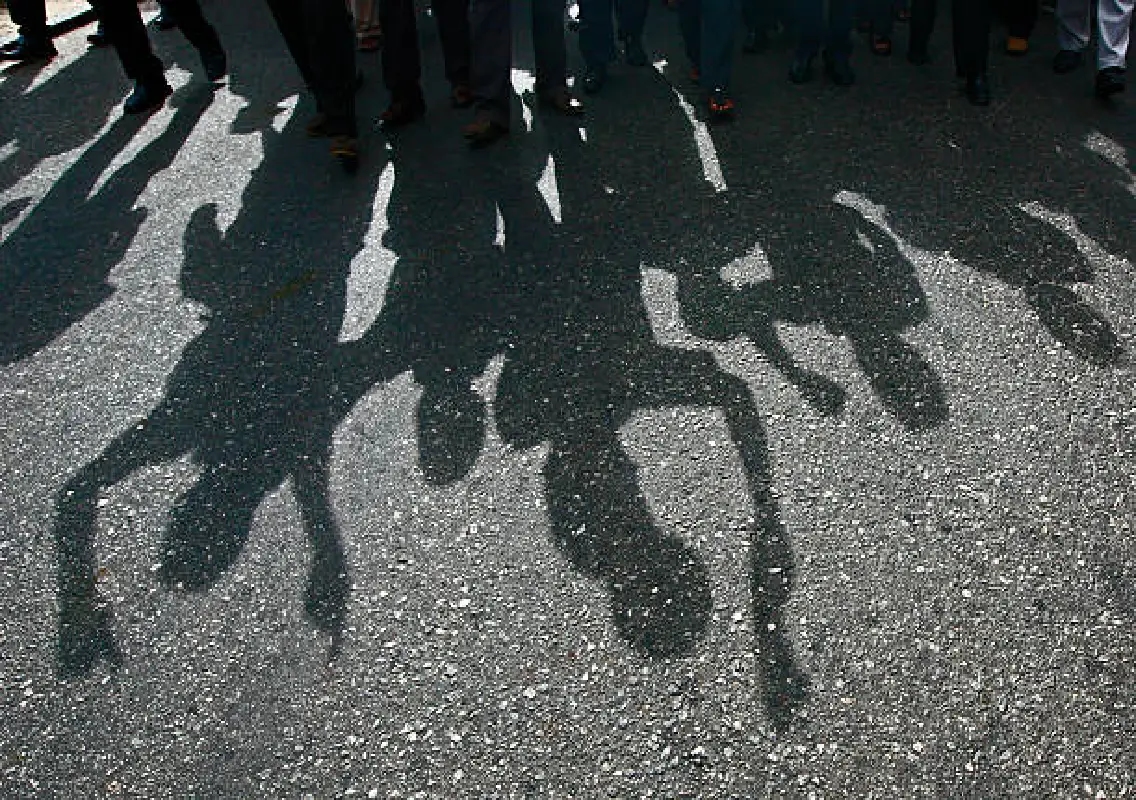


Mangaluru: A coalition of like-minded organisations staged a protest near the Clock Tower on Monday, condemning the United States for its alleged actions against the sovereign nation of Venezuela. The demonstrators accused the US of attacking Venezuela, abducting its President Nicolás Maduro and his wife, and waging what they described as an undeclared war aimed at asserting geopolitical and economic dominance.
The protest saw participation from political activists, labour leaders, representatives of community organisations and civil society groups, who raised slogans opposing US interventionism and called for respect for the sovereignty of nations. The demonstrators also appealed to the Indian government to take a principled stand against what they termed as acts of aggression and violations of international law.
CPM leader alleges attack linked to oil politics
Addressing the gathering, CPM district secretary Muneer Katipalla alleged that the United States had launched an attack on the small South American nation of Venezuela as part of its efforts to dominate the global oil market. He claimed that Venezuela, being rich in oil reserves, has long been targeted by powerful countries seeking control over strategic energy resources.
Katipalla described the alleged abduction of President Nicolás Maduro and his wife as an “inhuman act” and said such actions set a dangerous precedent in international relations. He accused the US of undermining global peace by resorting to violence, sanctions and coercive tactics against countries that do not align with its political or economic interests.
“The sovereignty of any nation must be respected. Interfering in the internal affairs of another country and using force to achieve economic or political goals only leads to instability and suffering of innocent people,” he said.
Labour leader condemns global conflicts
Labour leader Sukumar Thokkottu said the United States has, over the years, created conflicts and wars in several countries across the world to gain control over natural resources, particularly oil. He alleged that many of these conflicts were justified through false accusations and propaganda, resulting in large-scale destruction and humanitarian crises.
He claimed that countries in Asia, Africa and Latin America have suffered due to such interventions and said Venezuela was the latest example of this trend. Thokkottu demanded that India, as a major democracy and an emerging global power, oppose such actions and support the principles of non-alignment, peace and sovereignty.
“India should raise its voice against unjust wars and economic exploitation. Remaining silent amounts to supporting oppression,” he said.
Speakers stress solidarity with Venezuela
Representatives from various social and community organisations also addressed the protest, expressing solidarity with the people of Venezuela. Vasudeva Uchil, representing a community organisation, said international disputes should be resolved through dialogue and diplomacy, not through military aggression or economic strangulation.
Dalit leader M. Devadas said the working class and marginalised communities across the world suffer the most during wars and conflicts triggered by powerful nations. He said protests such as these were necessary to build public opinion against imperialism and to promote global justice.
Several speakers emphasised that sanctions, military threats and covert operations destabilise democratically elected governments and infringe upon the rights of people to choose their own leadership.
Call for peace and non-intervention
The protesters urged the international community to uphold the principles of the United Nations Charter, including respect for sovereignty, territorial integrity and peaceful coexistence. They also called for an end to unilateral actions and demanded that disputes be addressed through multilateral forums.
Activists said public awareness and mass movements were essential to counter what they described as misinformation and one-sided narratives surrounding international conflicts. They stressed that ordinary citizens must remain vigilant and vocal against injustice, irrespective of geographical boundaries.
Wide participation from activists
The protest witnessed the presence of a large number of leaders and activists from different backgrounds. Those present included Yadav Shetty, Balakrishna Shetty, Dr Krishnappa Konchady, B.K. Imtiaz, Jayanti Shetty, Prameela, Bharathi Bolara, Pramodini, Yogitha Suvarna Vilasini, Suhasini, Sunil Kuthar, Jagadish Bajal, P.G. Rafiq, Bilal Bengre, Krishna Tannirubavi, Nagesh, Rakesh Kundar, Vishwanath Manjanadi, Rafiq Harekal, K.H. Iqsal, Nagesh Kotyan, Thimmappa Konchady, Srinath Kulal, Rohidas Bhatnagar, Muzaffar Ahmed, M.N. Shivappa, Michael D’Souza, Ramesh Ullal and Ramesh Suvarna Mulki.
Participants said the turnout reflected growing concern among citizens about global conflicts and the need to oppose imperialist policies through democratic means.
Conclusion
The protest concluded with a call for global peace, justice and respect for national sovereignty. Organisers said similar programmes would be held in the future to educate the public on international issues and to express solidarity with nations facing external aggression.