







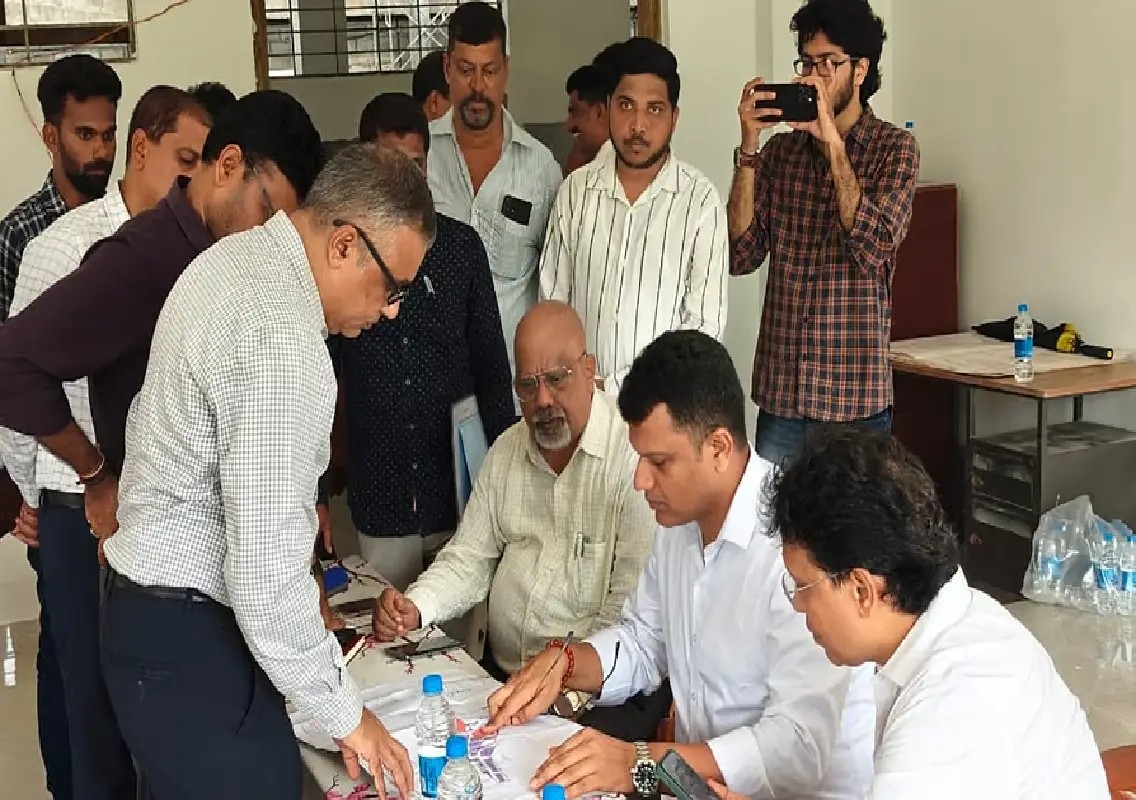


Mangaluru: Dakshina Kannada MP Captain Brijesh Chowta on Wednesday inspected the ongoing works at the Plastic Park project in Ganjimutt and directed officials to complete all pending infrastructure works within the stipulated timeframe to facilitate the early commencement of commercial operations.
MP reviews key infrastructure works
During the visit, Chowta reviewed the progress of critical infrastructure facilities, including road connectivity, power supply and water supply systems. He was accompanied by Mangaluru City North MLA Dr Y Bharath Shetty. The leaders held detailed discussions with officials of the Karnataka Industrial Areas Development Board (KIADB) regarding the current status of the project and the timeline for its completion.
The MP instructed KIADB officials to ensure that all remaining works are completed without delay and to make necessary arrangements for the project to become fully operational at the earliest. He emphasised that the Plastic Park would play a crucial role in strengthening the industrial and economic landscape of Dakshina Kannada district.
Long-pending project enters final phase
Spread across 104 acres, the Plastic Park project was originally sanctioned during the tenure of late D Ananth Kumar when he served as the Union Minister for Chemicals and Fertilizers. However, despite its significance, the project remained stalled for several years due to a legal dispute related to the acquisition of 9.33 acres of land.
Following his election as Member of Parliament, Chowta reviewed the project’s status and identified several factors that had slowed down its implementation. To ensure progress, he directed KIADB to move forward with a revised project plan by utilising the available land while temporarily excluding the disputed portion.
The MP also communicated with the KIADB Chief Engineer, urging immediate implementation of the revised development plan to prevent further delays.
Administrative approvals revived construction
A major breakthrough came in November 2024 when official approval was granted for the revised plan of the Central Institute of Petrochemicals Engineering and Technology (CIPET) Administrative Building. The approval paved the way for construction activities to resume after a prolonged period of uncertainty.
Subsequently, legal hurdles that had affected the project for years were resolved in October 2025. The dismissal of a writ appeal effectively removed the major obstacles that had hindered the development of the Plastic Park.
With the legal issues settled, the project gained fresh momentum. In March 2026, the government approved the revised layout plan for the Plastic Park, enabling authorities to proceed with the next phase of development.
Industrial plot allotment process underway
In another significant development, KIADB issued an official notification in April 2026 inviting applications from entrepreneurs for the allotment of industrial plots within the Plastic Park.
The move is expected to attract investment from plastic manufacturing and allied industries, creating opportunities for both established businesses and emerging entrepreneurs. The availability of dedicated industrial infrastructure is likely to encourage the establishment of manufacturing units and support industries in the region.
Chowta noted that the project is progressing rapidly and reiterated its importance for the district’s future growth. According to him, the Plastic Park will not only generate substantial employment opportunities for local youth but also accelerate industrial development across Dakshina Kannada.
Project expected to boost employment and investment
The Plastic Park is expected to emerge as a major industrial hub along Karnataka’s coastal belt. Industry stakeholders believe the project has the potential to attract significant investments, strengthen the manufacturing ecosystem and enhance the district’s industrial competitiveness.
The project is also expected to create large-scale direct and indirect employment opportunities, benefiting thousands of young job seekers in the region. Improved industrial infrastructure could further encourage ancillary industries and logistics-related businesses to establish operations nearby.
As construction progresses and plot allotments move forward, the Plastic Park is poised to become a key driver of economic growth in Dakshina Kannada. With legal challenges resolved and infrastructure development advancing steadily, the project is entering a crucial phase that could transform the industrial landscape of the coastal district in the coming years.