







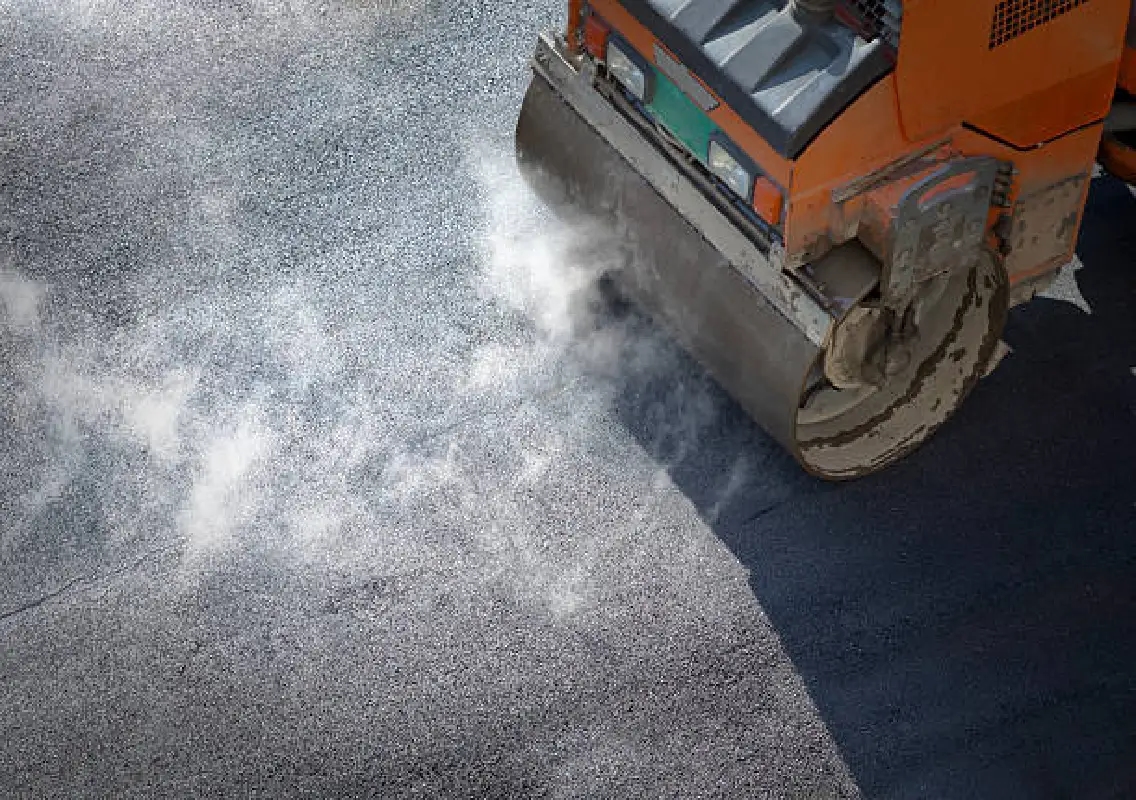


Mangaluru: In a notable step towards sustainable waste management, authorities in Puttur have successfully utilised plastic waste to construct a road leading to a Material Recovery Facility (MRF) at Bolodi in Kedambadi. The initiative, led by the local administration, highlights an innovative approach to tackling plastic waste while improving rural infrastructure.
The 105-metre-long and 5.5-metre-wide road has been laid using plastic-mixed bitumen, a technique that is increasingly gaining attention for its durability and environmental benefits. The project was executed with a grant of ₹15 lakh provided by the Taluk Panchayat, according to officials.
Sustainable solution to plastic waste
The road construction makes use of plastic waste collected from various gram panchayats across Puttur, Kadaba, and Sullia. This waste is first segregated and processed at the Material Recovery Facility in Kedambadi.
At the MRF, dry waste is sorted, and plastic materials are separated and bundled using specialised machinery. Instead of being transported to recycling units, a portion of this processed plastic is repurposed locally for road construction, offering both economic and environmental advantages.
Officials noted that around 8 per cent of plastic is mixed with bitumen in the road-laying process. This not only reduces dependency on conventional materials but also provides a productive use for non-biodegradable waste that would otherwise contribute to pollution.
Improved durability and cost efficiency
Plastic-mixed roads are known for their enhanced strength and resilience. Compared to conventional asphalt roads, they perform better under heavy rainfall and can withstand greater vehicular pressure—an important factor in regions like coastal Karnataka, which experiences significant monsoon activity.
The technology also results in savings of up to 10 per cent in bitumen usage. Typically, for one kilometre of road construction, around 10 tonnes of bitumen are required. However, by incorporating plastic waste, the requirement can be reduced to nine tonnes of bitumen and one tonne of low-density polyethylene (LDPE) plastic.
The process involves shredding plastic waste into small pieces and heating it to temperatures between 165°C and 170°C. The heated plastic is then blended with bitumen before being used in road surfacing. For the Kedambadi project, approximately one tonne of plastic waste was utilised.
Role of Kedambadi MRF
The Material Recovery Facility at Kedambadi plays a crucial role in enabling such initiatives. With a processing capacity of around seven tonnes of dry waste per day, the facility serves as a central hub for waste collection and segregation in the region.
By systematically managing waste from multiple gram panchayats, the MRF ensures a steady supply of recyclable materials. The integration of infrastructure projects like road construction with waste management systems demonstrates a circular economy approach, where waste is treated as a resource rather than a liability.
Previous initiatives in the region
This is not the first time plastic waste has been used in road construction in the coastal belt. About five years ago, under the Pradhan Mantri Gram Sadak Yojana, around 10 km of trial roads were laid using LDPE plastic in Udupi district.
More recently, in 2025, nearly 170 tonnes of plastic waste collected from various gram panchayats in the district were utilised to construct 50 km of service roads stretching from Talapady to Nanthoor and from Surathkal to Sasthana.
Additionally, a pilot project conducted during a workshop at the Ujire MRF had earlier demonstrated the feasibility of constructing a 100-metre road using plastic-mixed bitumen.
Growing interest in eco-friendly infrastructure
The success of the Kedambadi project has drawn attention from local authorities and environmental experts alike. Officials believe that such initiatives could be scaled up across other regions, especially in areas struggling with plastic waste management.
By combining infrastructure development with environmental responsibility, the project sets a precedent for sustainable practices at the grassroots level. It also aligns with broader national efforts to reduce plastic pollution and promote recycling.
Conclusion
The plastic road initiative in Kedambadi stands as a practical example of how innovation can address two pressing challenges—waste management and infrastructure development. As more regions adopt similar methods, the dual benefits of cleaner surroundings and stronger roads could significantly impact rural development across India.