







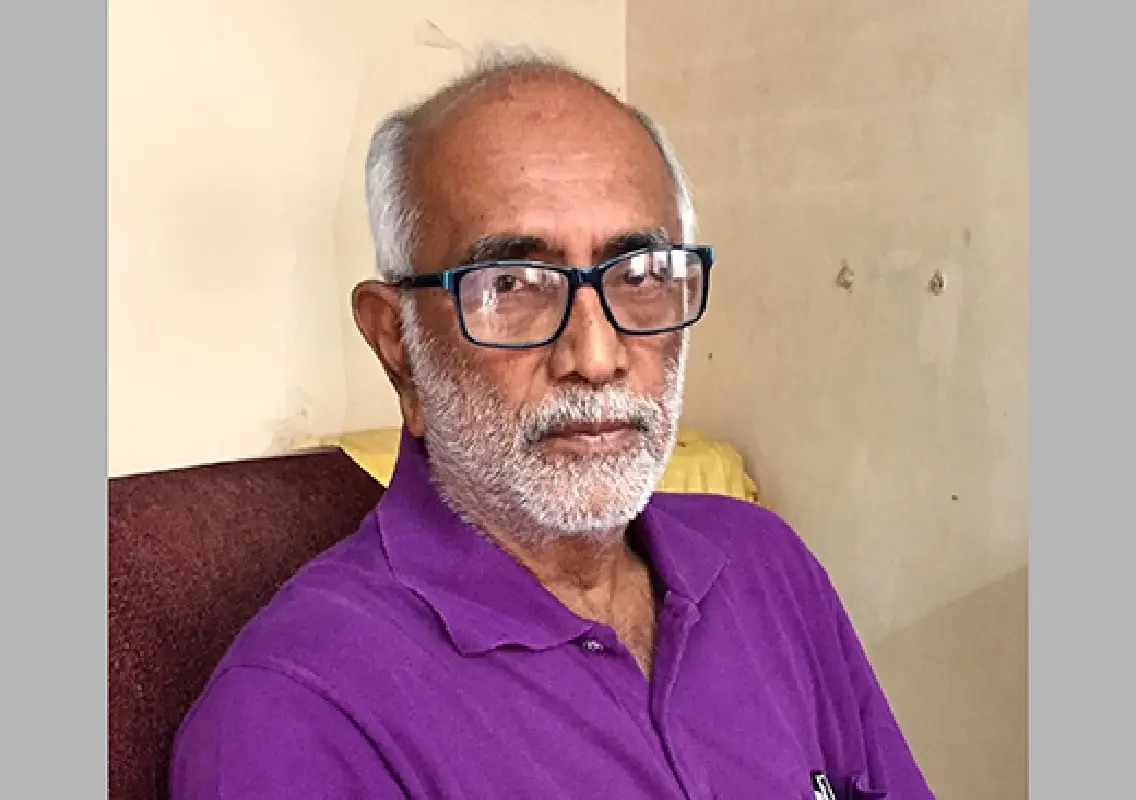


Mangaluru: Noted social activist and rationalist Prof. Narendra Nayak on Thursday filed a formal complaint at the Urwa Police Station regarding an objectionable and allegedly fabricated video circulated on Facebook, seeking a detailed investigation and appropriate legal action against those responsible. The complaint pertains to a video that, according to him, falsely portrays him in misleading contexts and damages his reputation.
In his written complaint dated January 15, 2026, Prof. Nayak stated that the video was uploaded on January 14 on a Facebook page belonging to one Pro. Pavitra Kanchan. He alleged that the content was artificially created, defamatory in nature and intended to malign him publicly. The post, he said, also attracted several defamatory and abusive comments from various Facebook users, compounding the damage to his reputation.
Allegations of defamation and misuse of technology
Prof. Nayak submitted that the video in question was not genuine and had been manipulated to falsely associate him with views and actions he does not endorse. Calling it a clear case of defamation, he said such content not only harms his personal reputation but also interferes with his long-standing public work and activism.
Along with the complaint, he submitted a downloaded copy of the video and screenshots of the Facebook post, including the comments section, as supporting material. He urged the police to examine the origin of the video, the intent behind its creation, and the role played by those who shared or commented on it.
“This video curtails my fundamental right to express my opinion,” Prof. Nayak stated in his complaint, adding that the defamatory portrayal was aimed at silencing and discrediting him.
Profile of a prominent rationalist
Prof. Narendra Nayak is a nationally recognised rationalist, humanist and social activist. He is the President of the Federation of Rationalist Associations of India and a Trustee of the Aid Without Religion Trust (Regd). Over the years, he has been a prominent voice against superstition, pseudoscience and blind faith, advocating the promotion of scientific temper and rational thinking.
He is widely known for exposing spiritual frauds, miracle-mongers, fake godmen and religious charlatans, often drawing sharp reactions from right-wing groups and religious fundamentalists. His work has included public lectures, mass awareness campaigns and legal interventions aimed at protecting citizens from exploitation in the name of faith.
Role in social justice movements
Prof. Nayak has also played a significant role in various social justice movements. Most recently, he was actively associated with efforts to seek justice for slain Right to Information (RTI) activist Vinayak Baliga, a case that had drawn national attention. His consistent activism and outspoken views have made him a frequent target of online abuse and trolling.
According to his complaint, the latest Facebook video is part of a continuing pattern of targeted harassment aimed at undermining his credibility and intimidating him into silence.
History of threats and police protection
The complaint also comes against the backdrop of a troubling history of violence against rationalists in India. Since 2013, several nationally renowned rationalists, including Narendra Dabholkar, Govind Pansare and M. M. Kalburgi, were murdered, allegedly by right-wing extremist groups. Following these incidents, concerns over the safety of rationalist activists intensified across the country.
Prof. Nayak himself was placed under police protection after his name reportedly appeared on a hit list of prime suspects in the murder of journalist Gowri Lankesh. The Karnataka government had provided him security at state expense for nearly seven years, starting from 2016, in view of the perceived threat to his life.
Police action and acknowledgement
The Urwa Police have registered the complaint and issued a formal acknowledgement to Prof. Nayak. Police officials said the matter would be investigated in accordance with the law, including examining the authenticity of the video, the Facebook account from which it was uploaded, and the intent behind its circulation.
Officials indicated that provisions related to defamation, misuse of social media platforms and information technology laws could be invoked based on the findings of the investigation.
Rising concern over deep fakes
The case has once again drawn attention to the growing menace of fabricated photos and videos, commonly referred to as “deep fakes”. With the increasing availability of artificial intelligence (AI)-based tools online, creating realistic but false audio-visual content has become easier, raising serious concerns about privacy, reputation and public trust.
Experts warn that deep fakes pose a significant threat to public figures, journalists, activists and ordinary citizens alike, as such content can be weaponised to spread misinformation, incite hatred or damage reputations within minutes of being uploaded online.
Call for accountability
Concluding his complaint, Prof. Nayak urged authorities to treat the issue with seriousness and ensure accountability for those misusing technology to defame individuals. He also stressed the need for stronger safeguards and public awareness to prevent the misuse of social media platforms for harassment and intimidation.
The case is expected to add to the ongoing debate on regulating digital content and tackling the misuse of AI-driven tools while protecting freedom of expression and individual rights.