







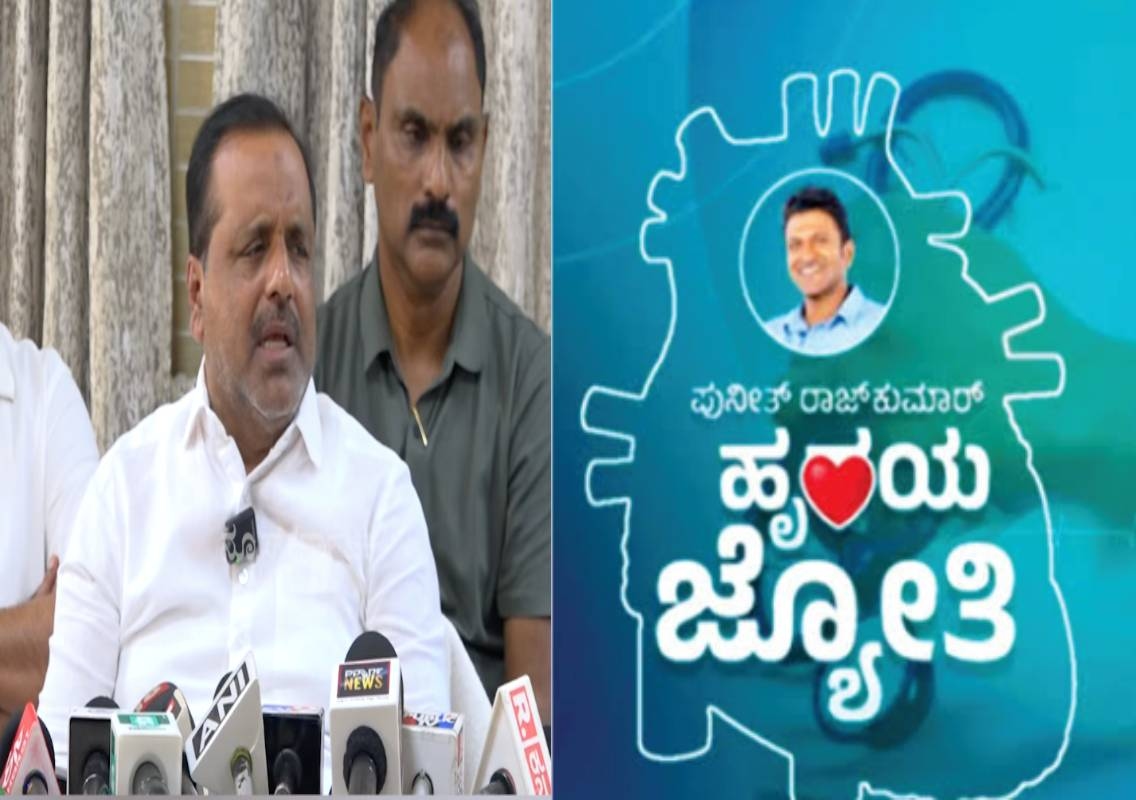


Mangaluru: The Karnataka government is expanding the Puneeth Hrudayajyothi scheme across the state to prevent deaths caused by sudden heart attacks, Health Minister U.T. Khader said.
Speaking at a press conference at the Circuit House in Mangaluru, Khader said the scheme, which is currently operational in selected district and taluk hospitals, has already benefited thousands of patients by enabling early detection and emergency treatment of heart attacks.
He said the programme is currently functioning at 86 centres across various districts and taluks in Karnataka. So far, 14,94,578 ECG tests have been conducted under the scheme, while treatment has been provided to 22,579 patients diagnosed with ST-elevation myocardial infarction (STEMI), helping save their lives.
Free ECG tests and emergency heart treatment
Khader explained that people experiencing chest pain or other symptoms associated with heart conditions can visit their nearest taluk hospital and undergo an ECG examination free of cost.
If the ECG report indicates a possible heart attack, patients are given an emergency life-saving injection to help restore blood flow and stabilise their condition. They are subsequently referred to district hospitals or registered private hospitals for further treatment, including angioplasty, wherever required.
The minister said the expansion of the scheme would help patients receive timely medical attention, particularly in areas where access to specialised cardiac care is limited.
Early identification and immediate treatment are crucial in heart attack cases, as delays can increase the risk of complications and death.
Government to introduce single-use dialysis filters
The minister also announced changes to the state’s government dialysis services to improve patient safety and treatment quality.
He said Karnataka currently has 169 government dialysis centres equipped with 639 dialysis machines. These centres collectively conduct approximately five lakh dialysis sessions every year.
At present, dialyser filters are cleaned and reused. However, considering patient safety and the quality of treatment, the government has decided to introduce a one-time-use policy for dialyser equipment in government dialysis centres.
Khader said necessary measures were being taken to implement the decision. The move is intended to improve safety standards for patients suffering from kidney failure and requiring regular dialysis.
AI-based machines for breast cancer screening
The government has also decided to procure artificial intelligence-based machines for breast cancer screening, Khader said.
The machines, estimated to cost around Rs 30 lakh each, will be provided to all district hospitals in Karnataka.
The initiative aims to improve early detection of breast cancer, which continues to affect a large number of women. The government plans to create awareness among women in rural areas with the support of ASHA workers, Auxiliary Nurse Midwives (ANMs) and Community Health Officers (CHOs).
Women showing possible symptoms will be offered free screening using the AI-based machines and referred for appropriate treatment based on the findings.
The minister said the initiative would help strengthen screening facilities at the district level and improve access to early diagnosis, particularly for women living in rural and underserved areas.
Mobile AI technology planned for oral cancer detection
Khader also said the government was planning to introduce a mobile-based artificial intelligence system to detect oral cancer in the coming days.
The proposed technology is expected to help identify suspicious symptoms through mobile-based screening, making early detection more accessible.
Oral cancer screening through such technology could support health workers in identifying people who need further medical examination and treatment.
The government intends to use technology-driven screening to strengthen its cancer prevention and early diagnosis programmes.
Preventive injections for haemophilia patients
The minister further announced a preventive treatment initiative for people suffering from haemophilia under the Kusuma Sanjeevini scheme.
Haemophilia is a genetic bleeding disorder in which the blood does not clot properly, leaving patients vulnerable to prolonged or spontaneous bleeding.
At present, patients are generally given expensive Factor VIII or Factor VII injections after bleeding begins, depending on their medical condition.
Under the proposed initiative, haemophilia patients holding Below Poverty Line (BPL) cards will receive preventive injections every month to reduce the risk of bleeding episodes.
Khader said the preventive approach would help control bleeding before it occurs, reduce the need for emergency treatment and lower the financial burden on patients and their families.
The initiative is expected to improve the quality of life of haemophilia patients while helping the government manage the high cost of treating complications.
Focus on strengthening public healthcare
The announcements highlight the state’s efforts to expand access to emergency cardiac care, improve dialysis safety, strengthen cancer screening and provide preventive treatment for people with inherited bleeding disorders.
Khader said the government was taking steps to make essential healthcare services more accessible through public hospitals and district-level medical facilities.
The expansion of the Puneeth Hrudayajyothi scheme, along with the proposed screening and preventive treatment initiatives, is expected to benefit patients across Karnataka, particularly those who depend on government healthcare facilities.