


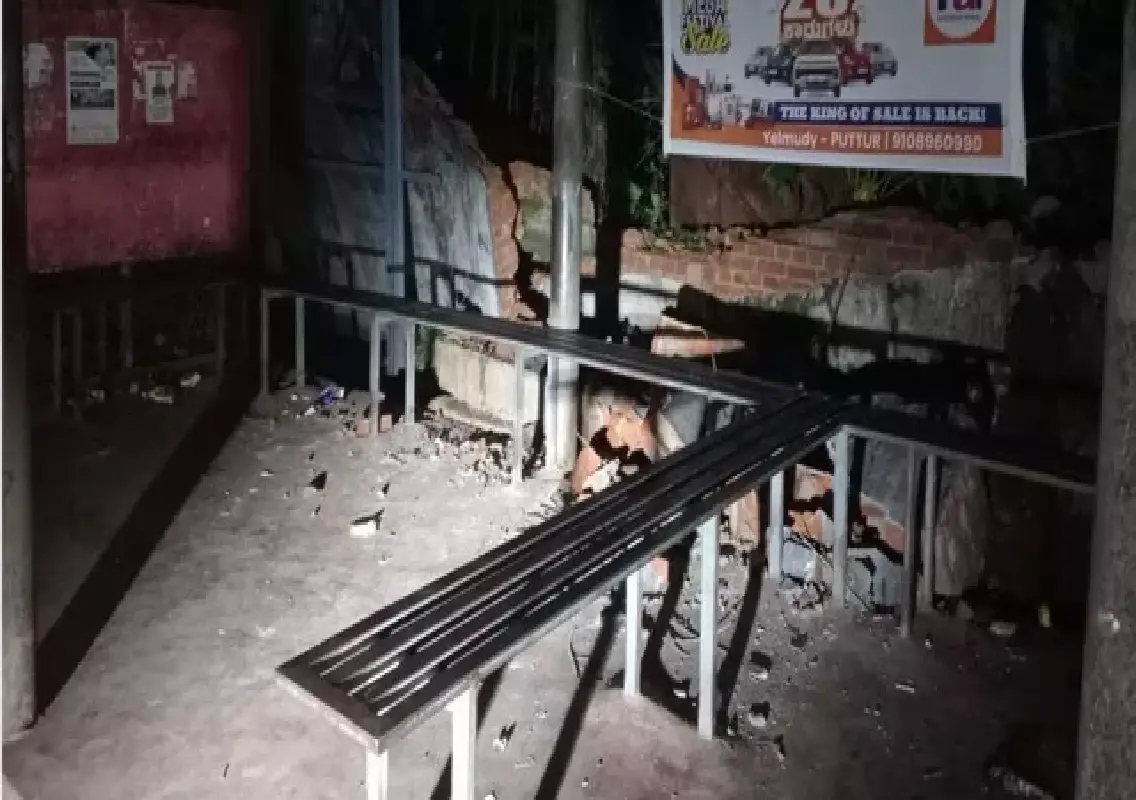


Puttur: Passengers waiting for buses at the bus stand here had a narrow escape on Saturday night when a compound wall of the BSNL office collapsed onto an adjoining passenger shelter following heavy rain. Fortunately, no injuries were reported.
The incident has raised concerns over commuter safety, as a substantial portion of the collapsed wall remains dangerously tilted against a nearby advertising hoarding, while the pillars supporting the passenger shelter are reportedly in a deteriorated condition.
The sudden collapse startled commuters waiting at the shelter, forcing them to rush away from the spot to avoid being struck by falling debris.
Heavy rain weakens compound wall
The compound wall, which stood more than eight feet high, had been constructed to protect the premises housing the BSNL office and its telecommunications tower.
According to the information available, heavy rain over the past two days weakened the foundation of the wall, eventually causing a section of it to collapse onto the adjoining passenger waiting area.
The incident occurred close to the bus stand, where passengers regularly gather while waiting for buses to their destinations. The proximity of the wall to the shelter increased the risk to commuters using the facility.
Although no injuries were reported, the incident has highlighted the dangers posed by deteriorating structures near busy public transport facilities, particularly during periods of sustained rainfall.
The collapse also raises questions about the stability of the remaining portion of the wall and the need to assess the surrounding structures before further damage occurs.
Remaining wall poses further danger
While one section of the compound wall collapsed completely, a substantial portion remains in a precarious position.
The tilted section is resting against an iron pillar supporting a large advertising hoarding installed nearby. Its unstable position has raised fears that it could collapse further at any moment.
If the remaining portion gives way, it could cause additional damage to the passenger shelter and endanger people waiting nearby.
The situation is particularly concerning because the bus stand is a public transport point where commuters may congregate throughout the day. Unless the unstable section is secured or removed, passengers could remain exposed to the risk of further collapse.
The incident underscores the importance of inspecting damaged walls and other structures after heavy rainfall, especially where they adjoin passenger shelters, roads or other public-use facilities.
Deteriorating passenger shelter adds to concerns
The condition of the passenger shelter itself has emerged as another major safety concern.
A local businessman has drawn attention to the deteriorating condition of the waiting facility, stating that the bases of all the pillars along the front of the shelter have become completely hollow.
These pillars support the structure where commuters sit and rest while waiting for buses. Their reported condition raises concerns about the shelter’s structural stability and its ability to provide a safe waiting space.
The damage to the pillar bases, combined with the recent wall collapse, has brought the overall condition of the facility into focus.
Passenger shelters are important public amenities, particularly for people who depend on buses for daily travel. Commuters may spend considerable time at these facilities, making structural safety essential.
A detailed inspection would help establish the extent of the damage and whether repairs or other immediate measures are required to prevent a possible mishap.
Urgent safety measures needed
The wall collapse has highlighted the need for prompt attention to both the unstable compound wall and the weakened passenger shelter.
The remaining tilted section of the wall poses an immediate concern because of the possibility of further collapse. The reported deterioration of the shelter pillars also warrants examination to determine whether the structure can continue to be used safely.
Restricting access to dangerous sections, securing unstable masonry and assessing the shelter’s structural condition would help reduce the risk to commuters.
The incident also serves as a reminder that heavy rain can expose weaknesses in walls, foundations and other structures, particularly when maintenance has been inadequate or damage has gone unnoticed.
Although Saturday night’s incident ended without injuries, the potential consequences could have been more serious had the wall collapsed when more passengers were gathered beneath the shelter.
The condition of the remaining wall and the shelter’s pillars has therefore placed commuter safety at the centre of concerns at the Puttur bus stand. Timely inspection and necessary repairs are essential to prevent further damage and ensure that passengers can use the waiting facility without being exposed to avoidable risks.