







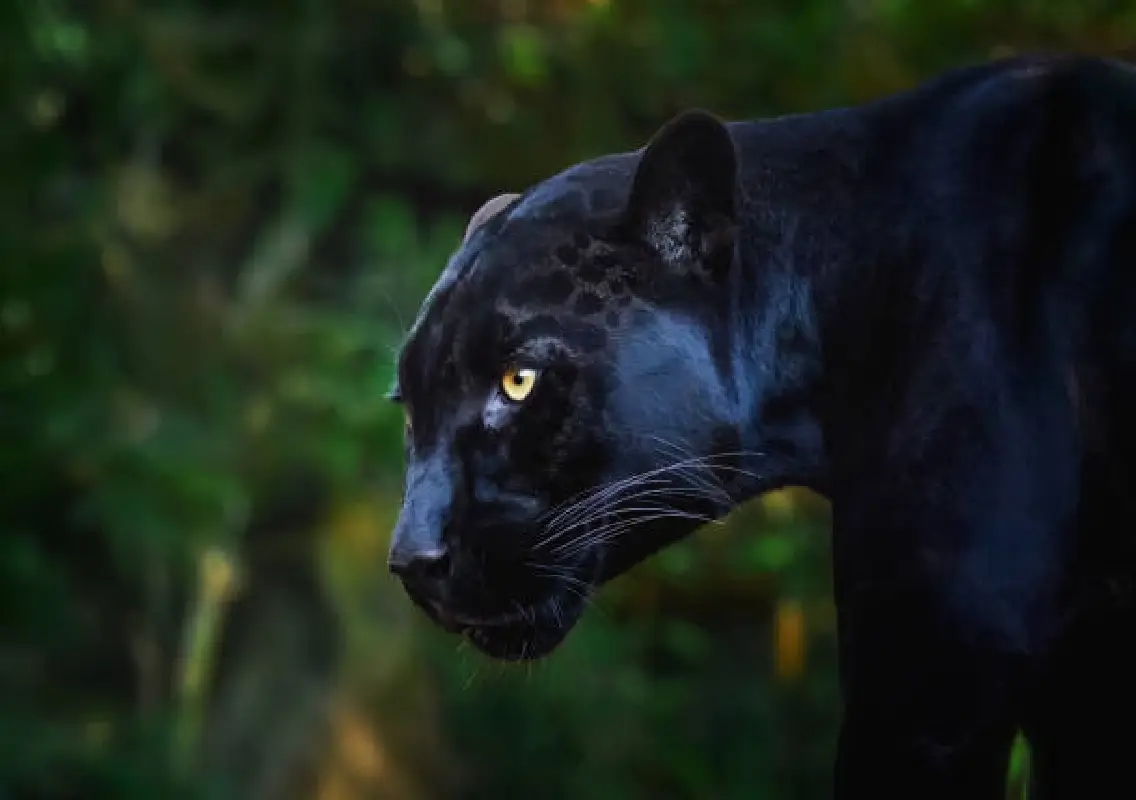


Beltangady: A rare black leopard was captured in a cage placed by the Forest Department at Manila in Shirlal village of Beltangady taluk in Dakshina Kannada district on Saturday, October 10, attracting the attention of local residents.
The cage had been installed by officials of the Venur Forest Range a few days earlier near the house of Padmanabha in Manila following concerns about the animal’s presence in the area. The leopard was found trapped in the cage on Saturday, prompting villagers to gather at the spot to catch a glimpse of the rare big cat.
Forest officials confirmed that the captured leopard was healthy. The department will arrange for a veterinary examination before releasing the animal into a protected forest area.
Black leopard found trapped in cage at Manila
The capture took place at Manila in Shirlal village, where Venur Forest Range personnel had placed a cage near a residential property as part of their efforts to capture the animal safely.
The appearance of the black leopard had drawn attention in the locality, with residents keen to know more about its movements. The animal was eventually trapped in the cage installed by the department.
Following the capture, Forest Department personnel reached the spot and assessed the animal’s condition. Local residents also gathered near the site, making the incident a subject of considerable interest in the village.
Black leopards are uncommon, and sightings of these animals often attract attention because of their distinctive dark coats. Their presence in forested landscapes highlights the importance of protecting wildlife habitats and ensuring that encounters between animals and people are handled carefully.
Leopard to undergo veterinary examination
Venur Range Forest Officer Bharat U G said the captured leopard was healthy.
According to the official, the animal will undergo a health examination by veterinary doctors associated with the Forest Department. Following the examination, it will be safely released into a protected forest area.
The assessment will help officials determine the animal’s physical condition before it is returned to a suitable habitat. The department’s planned course of action is intended to ensure the safety of the leopard while addressing concerns arising from its presence close to a residential area.
The safe handling and release of wild animals are important aspects of wildlife management, particularly when large carnivores are found near human settlements.
Forest personnel and local residents assist in operation
Several Forest Department personnel from the Venur Range took part in the operation following the leopard’s capture.
The team included Aladangady section Deputy Range Forest Officer Hariprasad, patrol forest guard Manjunath B S, forest watcher Venakappa Naik and Poovappa Naik. Local residents also participated in the operation.
The coordinated effort helped officials manage the situation after the animal was found in the cage. Forest personnel are responsible for handling such incidents in accordance with wildlife safety procedures and ensuring that the animal is not harmed during capture, examination or relocation.
The department’s decision to conduct a veterinary examination before releasing the leopard reflects the need to assess the health of wild animals after such incidents.
Rare sighting highlights importance of wildlife protection
The capture of the black leopard at Manila has drawn attention to the presence of wildlife in the Beltangady region of Dakshina Kannada.
Leopards are adaptable wild cats that can inhabit forests and other landscapes with adequate prey and shelter. However, when they venture close to houses or other human-use areas, concerns can arise over the safety of both residents and the animal.
Black leopards are not a separate species. Their dark appearance is generally associated with melanism, a genetic condition that causes increased pigmentation. In leopards, this can make the coat appear almost entirely black, although the characteristic spots may still be visible under suitable lighting.
The animal’s capture and proposed release into a protected forest area underline the importance of allowing trained forest personnel to manage wildlife encounters. Residents are advised not to crowd, provoke or attempt to approach wild animals, as such behaviour can endanger people and cause stress to the animals.
The Forest Department is expected to proceed with the veterinary assessment and release the leopard after confirming that it is fit to return to the wild.