







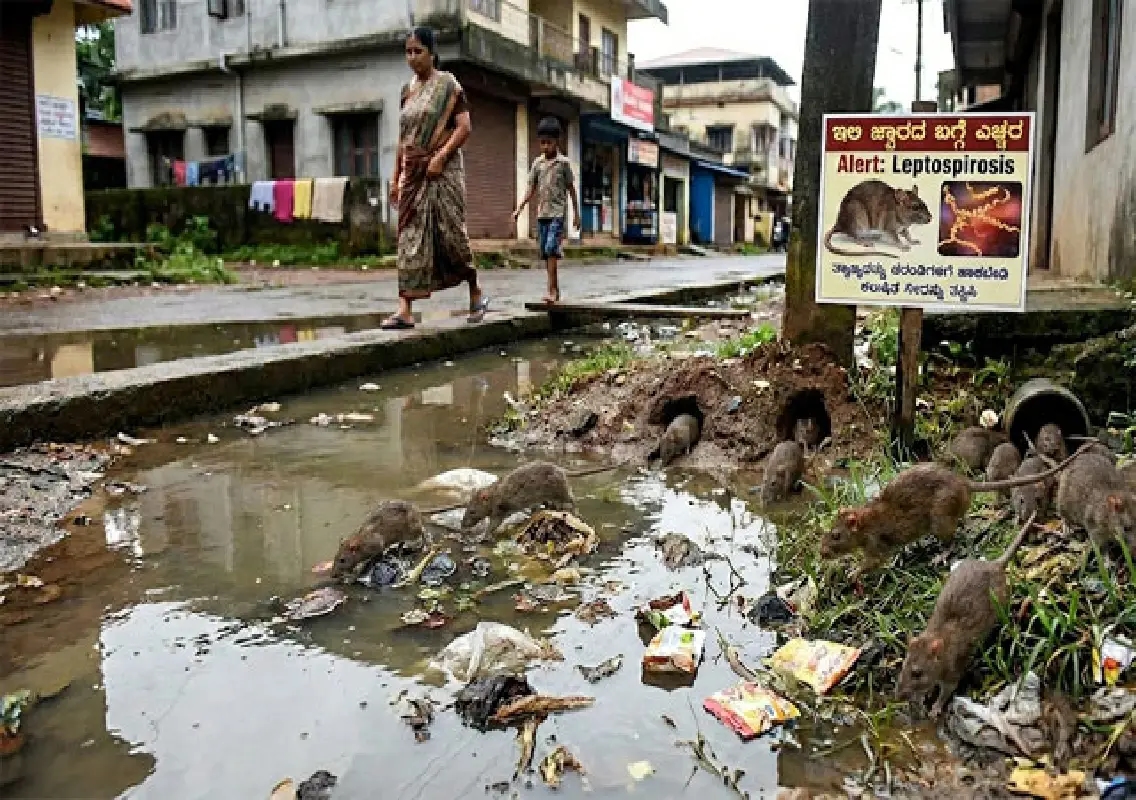


Mangaluru: The coastal districts of Dakshina Kannada and Udupi are witnessing a fluctuating yet concerning trend in leptospirosis, commonly known as rat fever, with a total of 1,700 confirmed cases reported over the past three years. Health officials have raised alarms as the monsoon season approaches, a period known to significantly increase the risk of transmission.
Rising cases across districts
According to official data, Dakshina Kannada (DK) district recorded 751 cases, while Udupi district reported a higher number at 949 cases during the same period. In the current year alone, 13 cases have already been reported in DK and 11 in Udupi, indicating the persistent presence of the disease in the region.
Health authorities have noted that Dakshina Kannada continues to remain among the districts where leptospirosis cases are frequently reported, particularly during the rainy season.
Monsoon increases infection risk
Experts warn that the onset of the monsoon creates ideal conditions for the spread of the infection. Floodwaters often force rodents out of their burrows, increasing the likelihood of human exposure to contaminated environments.
Leptospirosis is caused by bacteria that are shed in the urine of infected animals, especially rats. When this urine mixes with floodwater or stagnant pools, it creates a significant health hazard. Individuals who come into contact with such contaminated water are at risk of infection, particularly through cuts or abrasions on the skin.
Urban areas more affected
Interestingly, urban areas in both districts are reporting higher case numbers compared to rural regions. Health experts attribute this trend to poor sanitation practices, improper waste disposal, and the accumulation of food waste in public spaces.
The disposal of leftover food from restaurants into open drains has been identified as a key factor attracting rodents and stray animals. This, in turn, increases the chances of contamination and disease spread in densely populated urban localities.
Awareness and preventive measures
In response to the rising concern, the Health Department has intensified awareness campaigns across both districts. ASHA workers, health safety officers, and Multi-Purpose Workers (MPWs) are conducting door-to-door visits to educate residents about symptoms, risks, and preventive measures.
Officials are urging people to avoid contact with stagnant water, especially during and after rainfall. Parents have been specifically advised not to allow children to play in puddles or flooded areas.
Symptoms and treatment
Leptospirosis is generally treatable, and most patients recover with timely medical intervention. However, health authorities caution that around 20 per cent of cases can become severe if left untreated, potentially leading to complications such as multi-organ failure.
Common symptoms include fever, headache, muscle pain, vomiting, and jaundice. Early diagnosis and prompt treatment are crucial in preventing complications.
Importantly, officials have clarified that the disease does not spread from person to person. Transmission occurs only through exposure to water or soil contaminated with the urine of infected animals.
Public advisory
With the monsoon season fast approaching, health authorities have urged the public to maintain high standards of hygiene and sanitation. Measures such as proper waste disposal, wearing protective footwear in flooded areas, and avoiding direct contact with potentially contaminated water can significantly reduce the risk.
Officials have reassured residents that effective medication is available and that leptospirosis is completely curable if treated in time.
Conclusion
The steady presence of leptospirosis cases in Dakshina Kannada and Udupi underscores the need for sustained public awareness and improved sanitation practices. As the monsoon nears, proactive measures by both authorities and citizens will be crucial in preventing a surge in infections and ensuring public health safety in the coastal belt.