







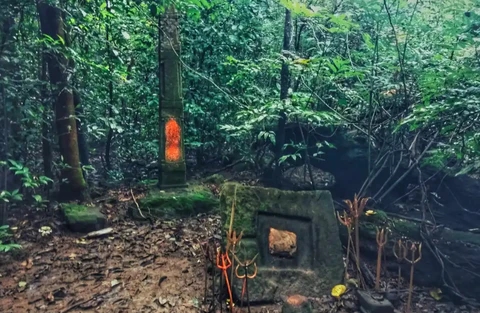


In a unique community-driven conservation effort, a recent project was launched to identify and revive tree species tied to Daivaradhane, the traditional worship of demi-gods in coastal Karnataka. Spearheaded by Ganesh Shendye, assistant professor of botany at IDSG Govt College, Chikkamagaluru, the initiative seeks to restore the spiritual and ecological significance of Daivasthanas (sacred shrines) and Nagabanas (serpent shrines), many of which are now threatened by urbanization.
“The Western Ghats, believed to have been shaped by Lord Parashurama, were once dotted with sacred groves and nagabanas that served as natural biodiversity reserves,” said Shendye. “This project is not just about ecological conservation; it’s also a cultural revival.”
Historically, the region’s local traditions showcase the deep connections between deities and plant life. Places like Pijthyaru Barkke, once abundant with wild jackfruit trees, and Tumbejala Guthu, known for thumbe flowers, highlight this profound bond. Even the names of many deities are derived from plants, further emphasizing this sacred connection.
To revive this tradition, Shendye’s team is working closely with Daivaaradhakas (priests), Daivanarthakas (ritual performers), and community elders who possess knowledge of folk narratives such as paddhanas and sandhis. Each deity is associated with specific plants used in worship. For example, Guliga Daiva is offered rituals under the kasaraka (Strychnos nux-vomica), while Rakteshwari Daiva uses hondala (Adenia hondala), betel leaves, areca nuts, and sandalwood. Even the materials used in shrine roofs are sourced from trees like jackfruit and peacock chaste.
So far, over 40 culturally significant species have been documented. These include timber trees like wild jackfruit, champak, and sacred fig, along with ritual offerings such as paddy, sugarcane, betel leaves, turmeric, and fishtail palm. Sacred flowers like jasmine, hibiscus, and jungle geranium are also included in the list, alongside medicinal plants like sandalwood, vetiver (Lavancha), and black pepper (Karimenasu). Additionally, natural dyes and face-paint ingredients derived from Garcinia morella and Indian laurel are part of the cultural heritage being preserved.
One of the flagship projects launched is the creation of a man-made sacred forest at Laila village near Belthangady, in collaboration with Chitpavan Brahmanara Balaga. This forest, named Chitpavan, uses traditional stratification techniques and features native plants that were once integral to community rituals. “This project is about preserving the ecological wisdom of our ancestors while keeping alive the sacred bond between nature and spirituality,” Shendye emphasized.
Through this innovative effort, the team hopes to not only protect the environment but also revive the spiritual and cultural practices that have historically shaped the region’s relationship with nature.
Read also: