







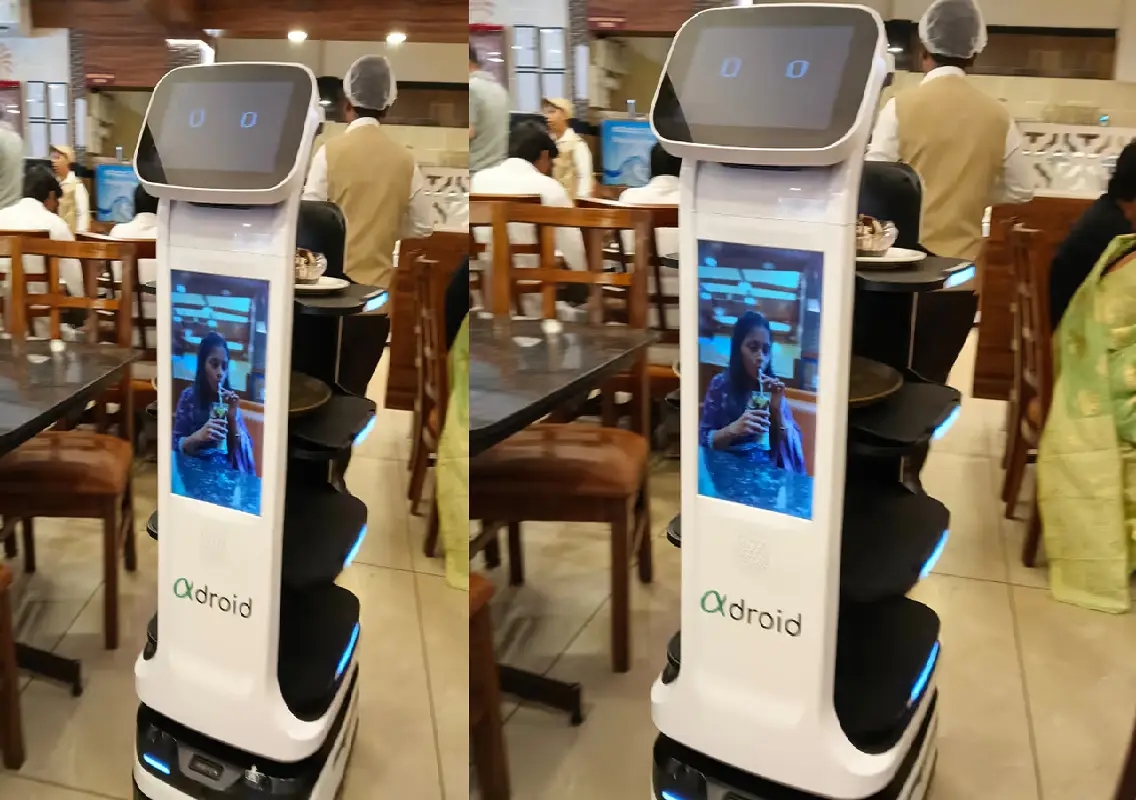


Mangaluru: In a notable example of technology reshaping everyday experiences, a city-based hotel has introduced a robot waiter, marking a first for the coastal Karnataka region. The innovation has quickly captured public attention, attracting curious customers eager to witness automated service in action.
The initiative reflects a growing trend of integrating robotics into the hospitality sector to enhance efficiency and elevate customer experience, while still retaining a human touch in service delivery.
Robot deployed at Pakashala hotel
The robot waiter has been introduced at Pakashala, a popular eatery located on KS Rao Road. Manufactured in Japan, the robot reportedly cost around ₹3 lakh and is equipped with advanced sensor-based technology.
Designed for smooth mobility, the robot moves on small wheels and features four racks, allowing it to carry multiple food trays at once. Its sleek design and automated functionality have made it a key attraction for visitors.
Smart navigation and mapped routes
To ensure efficient service, the hotel has digitally mapped routes to all its 35 tables. Staff members place food items on the robot and input the designated table number through a display panel.
Once programmed, the robot autonomously navigates through the dining space, delivering orders directly to customers without requiring manual guidance. This system helps streamline operations, especially during peak hours.
Handles multiple orders with ease
The robot is capable of carrying approximately 15 to 20 dishes in a single trip, making it suitable for busy restaurant environments. It operates in different modes depending on the type of food being served.
While the ‘Food Mode’ is used for standard items, the ‘Soup Mode’ is specifically designed for liquids such as soups and juices. In this mode, the robot moves at a slower pace to prevent spillage and ensure safe delivery.
Safety features ensure smooth operation
Equipped with intelligent sensors, the robot can detect obstacles in its path and respond accordingly. If a person or object comes in front of it, the robot automatically halts and resumes movement only when the path is clear by at least three feet.
After completing each delivery, it returns to its designated position, ready for the next order. These safety features ensure seamless interaction with customers in a dynamic restaurant environment.
Human role remains important
Despite the introduction of automation, human staff continue to play a crucial role in the service process. Employees are responsible for placing food on the robot and assisting customers in collecting their orders from the trays.
This hybrid approach ensures that while efficiency is improved through technology, the personalised aspect of hospitality is not lost.
Plans for future expansion
The robot requires approximately four hours of charging and can operate continuously for 10 to 12 hours. It has already been in service for the past three months, receiving positive feedback from customers.
According to hotel manager Praveen, there are plans to expand automation further by introducing additional robots in the future, including units designed for cleaning purposes.
Conclusion
The introduction of a robot waiter in Mangaluru marks a significant step in the adoption of automation within the local hospitality industry. By combining technology with traditional service, the initiative offers a glimpse into the future of dining experiences. As more establishments explore similar innovations, robotics could soon become a common feature in restaurants across the region.