







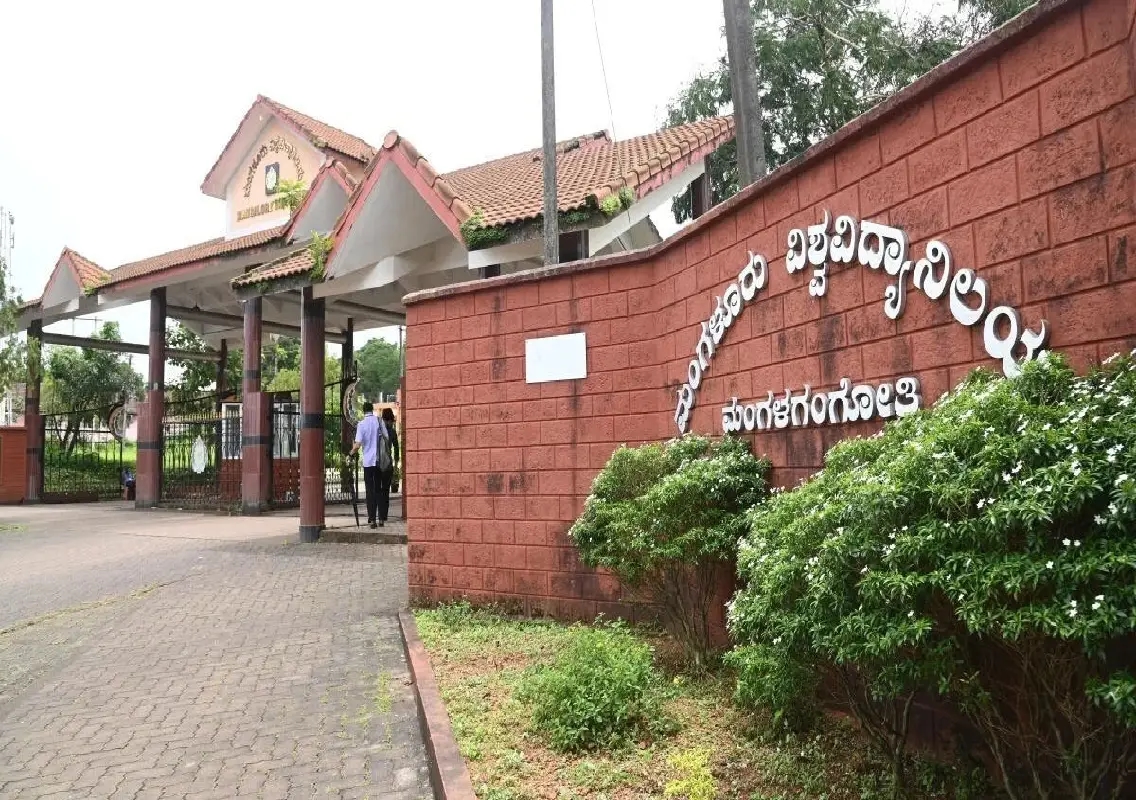


Mangaluru: As Mangalore University prepares for its 44th Annual Convocation, the process of selecting recipients for honorary doctorates (honoris causa) has come under renewed scrutiny. Members of the university syndicate have alleged that the statutory procedure was bypassed while forwarding names for consideration.
According to sources within the university, 14 names were sent to the Governor of Karnataka, who serves as the Chancellor of the university, for consideration for the conferment of honorary doctorates. Syndicate members claimed that the move followed directives from the Chancellor’s office but deviated from the procedure prescribed under the Karnataka University Act, 2000 and the university statutes.
Allegations of procedural deviation
A syndicate member, speaking on condition of anonymity, alleged that the body was not allowed to exercise its mandated role of screening and shortlisting candidates.
“In the recent meeting, we were directed to forward all 14 names to the Governor. As per the rule book, the syndicate scrutinises applications and recommends three names to the Governor for consideration,” the member said.
Under Section 69 of the Karnataka University Act, 2000, honorary degrees are to be conferred upon individuals who have made distinguished contributions in specified fields. The Act also outlines the process through which candidates are to be evaluated and recommended.
Syndicate members stated that although the 14 proposals were placed before the syndicate at a recent meeting, there was no detailed discussion or merit-based evaluation before the names were forwarded. While the syndicate resolved to comply with the directive received, it reportedly recorded its observation that standard procedure requires it to scrutinise applications and formally recommend three achievers from different fields.
Criticism over past selections
The issue has gained prominence in light of criticism faced by the university in recent years for conferring honorary doctorates on affluent businessmen rather than individuals widely recognised for exceptional contributions in academia, social service, science or public life.
One syndicate member alleged that the latest list included businessmen, scientists and other personalities, but there was no structured deliberation on their eligibility or achievements as per statutory norms.
The member further claimed that the syndicate had suggested the name of Harekala Hajabba, a Padma Shri awardee known for his contributions to education and social service in coastal Karnataka, but the proposal was not taken up for consideration.
“It is disheartening that the syndicate and the Vice-Chancellor had no effective say in the selection, despite having the authority. If any controversial choice is made, it could embarrass the university,” the member said.
University yet to respond
Vice-Chancellor P.L. Dharma had earlier maintained that the university would ensure transparency in the selection process and adhere strictly to statutory provisions. However, he was unavailable for comment regarding the present controversy.
University sources said that during the last convocation, MU had received 11 applications for honorary doctorates. The number of proposals this year increased to 14, leading to questions about whether due scrutiny was conducted before forwarding the entire list.
As the 44th Annual Convocation approaches, the controversy has cast a shadow over what is otherwise a significant academic event. With statutory provisions and institutional credibility at stake, stakeholders within the university community are calling for clarity and adherence to due process in awarding honorary degrees.
How the Chancellor’s office responds and whether the final list reflects the statutory mandate of recognising distinguished contributions across fields will be closely watched by the academic community.