







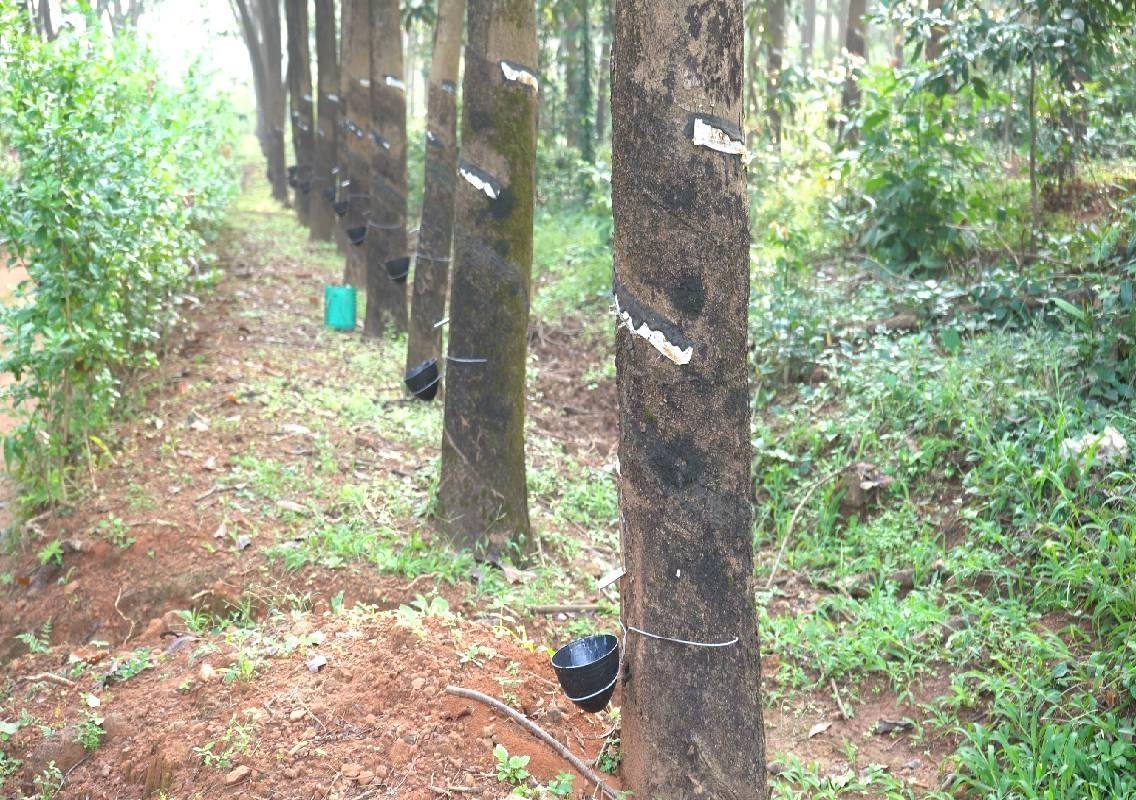


Mangaluru: Rubber growers in coastal Karnataka have been left disappointed after prices dropped sharply in November, reversing the upward trend witnessed in recent months. The price of Grade rubber, which had crossed Rs 300 per kg in October, fell to Rs 280 per kg by November 19.
Grade rubber was priced at Rs 302 per kg in October. By November 19, it had declined by Rs 22 to Rs 280 per kg. Scrap rubber prices also witnessed a significant fall, dropping by Rs 26 per kg during the same period.
The sudden decline has upset growers who had been expecting better returns. The fall comes at a time when cultivation expenses, labour wages and maintenance costs continue to rise, adding to concerns about farm income.
International developments influence rubber prices
The decline in rubber prices is believed to be linked to developments in the international market. Fluctuations in crude oil prices, increased rubber production in Thailand and a slowdown in China’s automobile industry are among the factors that may have contributed to the fall.
Agricultural market expert Dr Vishweshwar Vermudi said the reduction in international crude oil prices, higher rubber production in Thailand and the slowdown in China’s automobile sector could have influenced rubber prices.
Since natural rubber is traded in an interconnected global market, changes in international demand and supply can affect prices in domestic markets as well. Developments in major rubber-producing countries and industrial economies therefore remain important factors in determining local prices.
Growers concerned over rising cultivation costs
The price decline has come as a setback for rubber growers who were anticipating better returns following the earlier increase. The fall of Rs 22 per kg in Grade rubber within a relatively short period has affected their expectations and financial calculations.
Growers are also facing higher expenses related to production, labour and plantation maintenance. When market prices decline while cultivation costs remain high, the gap between expenditure and income becomes a major concern for farmers.
The reduction in scrap rubber prices has added to the disappointment. With both Grade and scrap rubber witnessing a decline, growers are closely watching market movements before making decisions regarding the sale of their produce.
Global demand and supply to determine future prices
The future direction of rubber prices will largely depend on international market conditions, particularly the balance between demand and supply.
Developments in the automobile industry, crude oil prices and production levels in major rubber-producing countries are expected to influence market movements in the coming weeks.
For growers in coastal Karnataka, a recovery in prices would provide some relief amid rising cultivation and maintenance expenses. However, uncertainty in the international market continues to make price movements difficult to predict.
The recent decline has highlighted the vulnerability of local rubber prices to global developments, leaving growers hopeful that market conditions will improve in the coming months.