







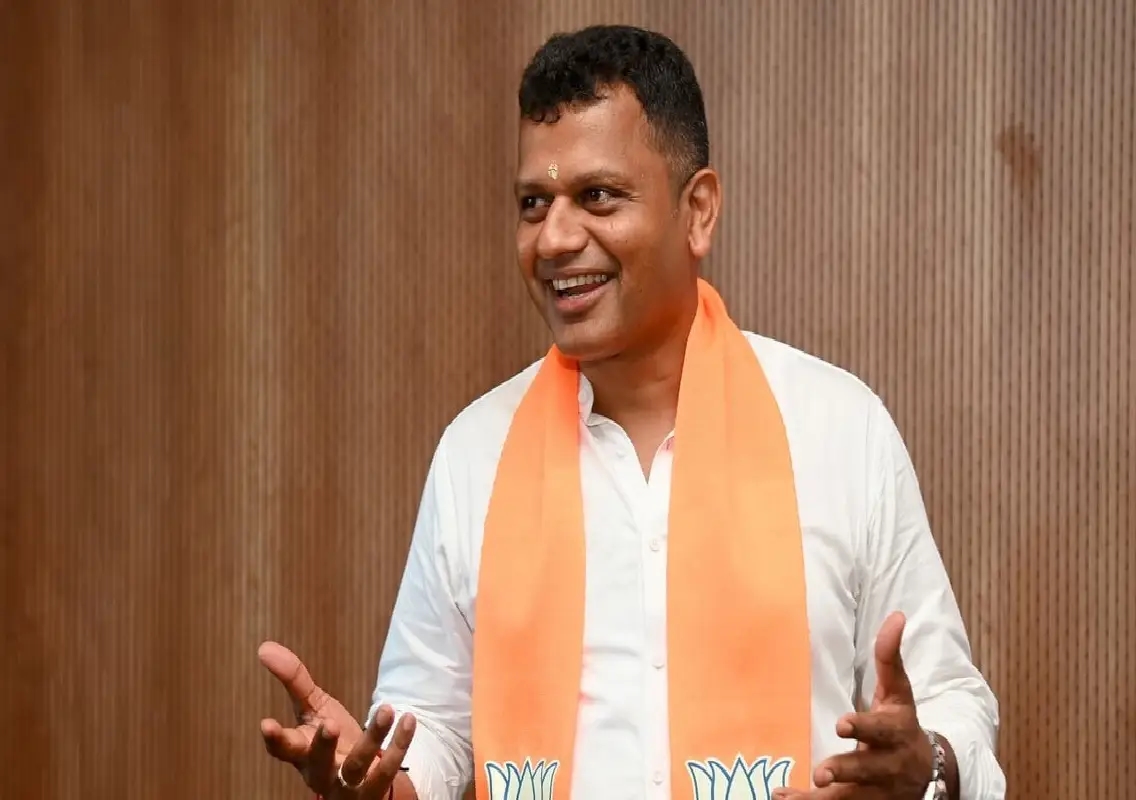


Mangaluru: The completion of electrification works on the challenging 55-km Sakleshpur–Subrahmanya ghat section has been hailed as a major milestone in strengthening railway infrastructure in Karnataka’s coastal region. Dakshina Kannada Member of Parliament Capt Brijesh Chowta said the project fulfils a long-pending demand of the region and would significantly improve rail connectivity between Bengaluru and Mangaluru, particularly by addressing one of the most critical bottlenecks on the route.
Addressing the issue in a press statement, Capt Chowta said the electrification of the ghat section would have far-reaching benefits for passenger movement, freight operations and overall economic activity in the coastal belt. He described the project as a key step towards modernising railway infrastructure in this part of the state.
Long-pending demand of the region
The Sakleshpur–Subrahmanya stretch runs through the Western Ghats and is widely considered one of the most technically demanding sections in the Indian Railways network. Characterised by steep gradients, sharp curves, tunnels and heavy monsoon conditions, the route has traditionally posed significant operational challenges.
For decades, trains on this ghat section depended on diesel traction, which limited speed, reduced efficiency and increased maintenance requirements. Electrification of the stretch had been a long-standing demand from passengers, traders, industries and port users who rely on the Bengaluru–Mangaluru rail corridor for connectivity.
Capt Chowta said the completion of the project would significantly accelerate railway infrastructure development in the region. “The electrification of the ghat section is expected to facilitate smoother train services, improve freight movement to the coast, support port operations and provide a major boost to commercial activities,” he stated.
Strategic importance of the rail corridor
The Bengaluru–Mangaluru rail corridor is one of the most strategically important routes in Karnataka, serving both passenger and freight traffic. It connects the state capital with the coast and plays a vital role in transporting goods, including bulk cargo and containers, from New Mangaluru Port to the hinterland.
According to the MP, the Sakleshpur–Subrahmanya ghat section has long been a capacity and operational bottleneck on this corridor. With electrification now completed, the route can support the use of powerful electric locomotives, enabling better haulage capacity and more reliable services.
He pointed out that improved freight movement would directly contribute to port-led development and strengthen supply chains for industries located in the coastal and central parts of the state.
Improved efficiency and reliability
Electrification of the ghat section is expected to bring significant operational benefits. Electric traction offers better acceleration, braking and load-handling capabilities, which are especially important on steep gradients and curved tracks. This is likely to reduce travel time between Bengaluru and Mangaluru and improve punctuality of both passenger and freight trains.
Capt Chowta also highlighted the environmental advantages of the shift from diesel to electric traction. Reduced fuel consumption and lower carbon emissions would align with Indian Railways’ broader goal of achieving net-zero carbon emissions by 2030.
Appreciation for leadership and workforce
The MP expressed gratitude on behalf of the people of the district to Prime Minister Narendra Modi, Railway Minister Ashwini Vaishnaw and Minister of State for Railways V Somanna for taking a special interest in implementing the project. He said their support ensured that the long-pending work was completed within the stipulated timeframe.
He also acknowledged the efforts of railway engineers, officials and staff who worked under difficult technical and geographical conditions in the Western Ghats to complete the electrification safely and efficiently.
Continued push for rail development
Improving the Mangaluru–Bengaluru rail link has been a priority for Capt Chowta since he assumed office. Soon after his election, he submitted a detailed memorandum to the Railway Ministry seeking doubling and electrification of the Padil–Subrahmanya–Sakleshpur route.
He has also raised questions in the Lok Sabha on measures to enhance capacity, speed and operational efficiency on the corridor. During parliamentary discussions and meetings with railway officials, he consistently highlighted the strategic importance of the route for passenger convenience and economic growth.
Way forward
With the electrification of the Sakleshpur–Subrahmanya ghat section now complete, attention is expected to turn to further modernisation works such as track doubling, signalling upgrades and station redevelopment along the corridor. These initiatives are expected to further strengthen rail connectivity between the coast and the hinterland.
In conclusion, the completion of this challenging electrification project marks a significant step forward for railway infrastructure in coastal Karnataka, promising improved connectivity, enhanced economic activity and more sustainable rail operations.