







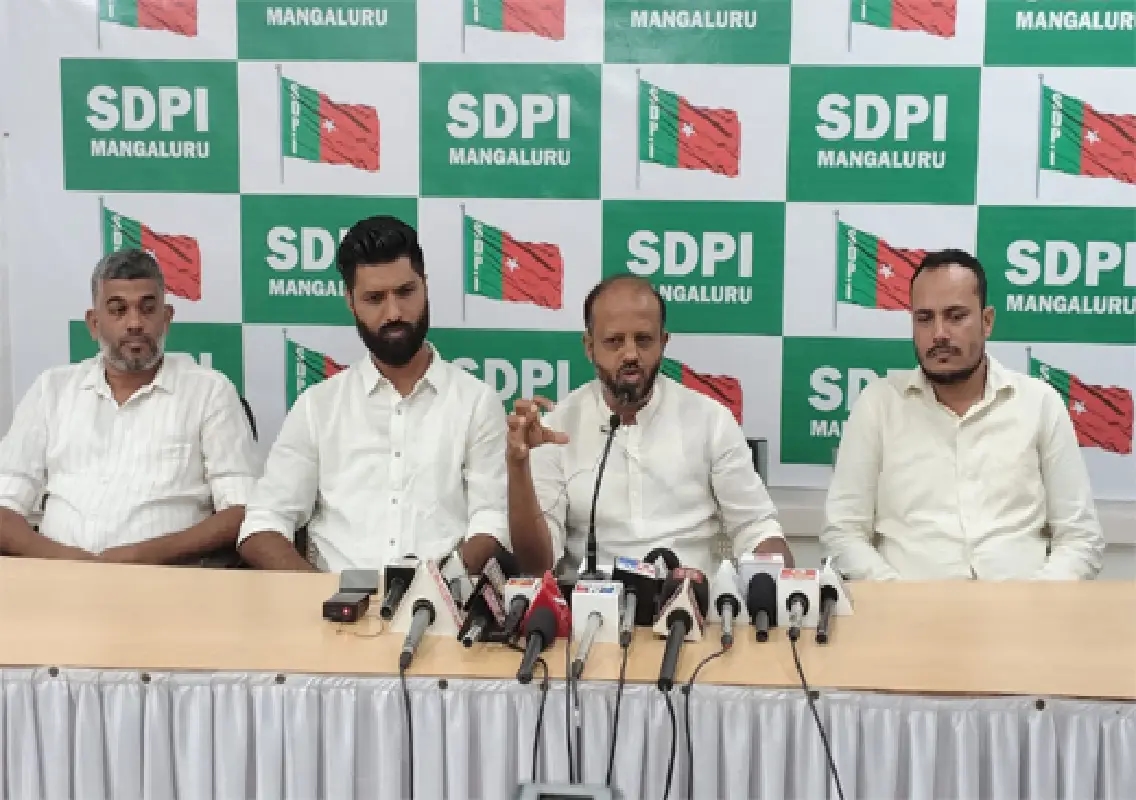


Mangaluru: Social Democratic Party of India (SDPI) Dakshina Kannada district president Anwar Sadath has sharply criticised MP Brijesh Chowta for his recent comments in Parliament, where the MP allegedly linked the party to banned organisations. Addressing the media on Sunday, Sadath said that the remarks were irresponsible and based on incorrect assumptions.
SDPI leader calls MP’s statements “baseless”
Speaking to reporters, Sadath said that the MP had implied that the SDPI was carrying out activities of a banned outfit, a statement he termed misleading and damaging. “A Member of Parliament should know how to speak responsibly. Instead, he made baseless allegations,” Sadath said.
He argued that such statements have the potential to create unnecessary tension and confusion among the public, especially when made on a national platform.
SDPI highlights its political presence in Dakshina Kannada
Sadath asserted that the SDPI, founded in 2009, has been functioning as a democratic political party and has grown steadily over the last decade. “We are now the third-largest political party in Dakshina Kannada,” he said, adding that several local workers of other parties, including the BJP, were reportedly unhappy with Chowta’s statements.
The district president emphasised that the SDPI operates openly within the constitutional framework and that attempts to link it with banned organisations were politically motivated.
Warning against statements that may affect public sentiment
Sadath cautioned that remarks made in Parliament carry significant weight and should be handled responsibly. “Statements like these endanger public sentiment. If such comments continue, the people may react strongly,” he said.
He accused authorities of unfairly targeting SDPI leaders, pointing out that investigative agencies had arrested party members in the past based on what he claimed were unfounded allegations.
Criticism of MP’s performance
Continuing his criticism, Sadath questioned Chowta’s contributions to Dakshina Kannada after being elected. He alleged that instead of addressing developmental issues or fulfilling electoral promises, the MP was attempting to create confusion among citizens by making unnecessary references to political opponents.
To highlight the seriousness of such political rhetoric, he referred to previous incidents of political violence in the region and neighbouring districts, stating that careless statements could lead to heightened tensions.
Conclusion
The SDPI’s strong response indicates escalating political friction in Dakshina Kannada, a region known for its sensitive political dynamics. While MP Brijesh Chowta’s remarks in Parliament have triggered a sharp counter from the SDPI, the broader impact of this exchange may unfold in the coming weeks as political parties engage in public discourse ahead of upcoming local and national political activities.