







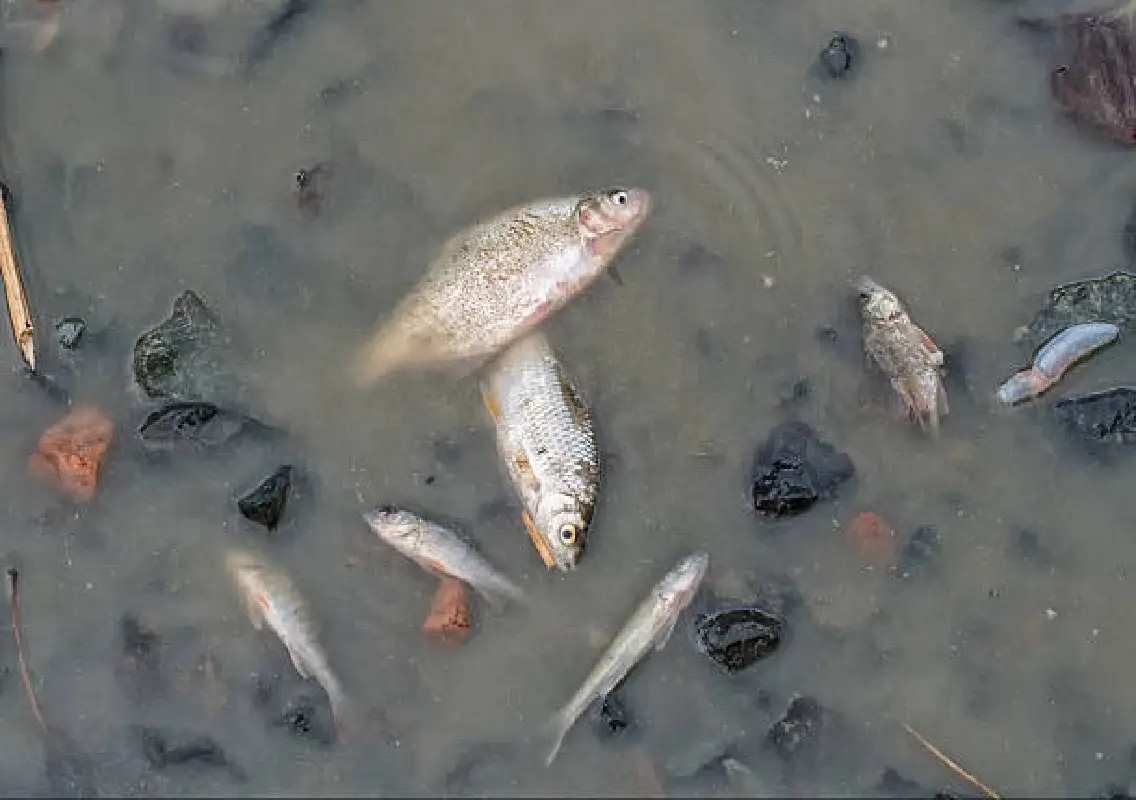


Mangaluru: The mass death of fish reported near Raikatte Bridge was likely caused by untreated sewage inflow, stagnant water, and depletion of dissolved oxygen levels, according to findings from an inspection conducted by the Regional Office of the Karnataka State Pollution Control Board.
Officials said complaints regarding dead fish and blackened water in a storm water drain near the bridge were received on February 9. The drain eventually joins the backwaters of the Gurupura River, raising concerns about pollution affecting aquatic life.
Inspection reveals sewage entering backwaters
According to the regional officer of the Karnataka State Pollution Control Board in Mangaluru, officials conducted an inspection on the same day the complaint was received.
During the inspection, authorities observed sewage flowing through the storm water drain into the backwaters of the Gurupura River. The water in the drain had turned blackish in colour, and several dead fish were found along the drain and adjoining river area.
Preliminary observations indicated that the fish deaths were likely caused by the depletion of dissolved oxygen in the water, a condition that can occur when organic waste and pollutants accumulate in stagnant water bodies.
To determine the exact cause, water samples were collected from different locations in the affected area and sent to the regional laboratory of KSPCB in Mangaluru for detailed analysis.
No industrial discharge detected
Officials clarified that no industrial effluent discharge was detected from industries located in the nearby Baikampady Industrial Area during the inspection.
Authorities examined possible sources of pollution and confirmed that industries in the Baikampady cluster were not releasing untreated effluents into the water body at the time of inspection.
Meanwhile, the Department of Fisheries collected fish samples from the affected area for testing. The results of these tests are still awaited and are expected to provide further clarity on the precise cause of the fish deaths.
Construction work affecting natural water flow
Officials also noted that construction work related to bridges in the area may have contributed to the environmental conditions that led to the fish kill.
Construction activities were underway for the Kuloor Bridge and the bridge connecting Sultan Battery and Tannirbhavi Beach.
The construction of the Sultan Battery–Tannirbhavi bridge, spanning approximately 350 metres, involved filling certain portions of the river with soil. According to officials, this process disrupted the natural flushing of water during high and low tides in the river stretch up to the Maravoor Vented Dam.
The restricted water movement reduced the natural exchange of fresh and tidal water, which normally helps maintain oxygen levels in the river.
Stagnation and high temperatures worsened conditions
The inspection report indicated that the combination of untreated sewage inflow and limited freshwater movement created stagnant, cesspool-like conditions in parts of the river.
During the summer months, higher temperatures accelerate biological and chemical processes in polluted water bodies. These reactions consume large amounts of dissolved oxygen, leaving insufficient oxygen for aquatic organisms such as fish.
Officials stated that because proper flushing did not occur during tidal movements, anoxic conditions developed in the affected area. As a result, oxygen levels dropped sharply, leading to the mass death of fish.
Sewage from surrounding areas identified as contributor
The report also highlighted that several surrounding residential and commercial areas contribute wastewater to the storm water drains that ultimately flow into the river.
Areas identified include Raikatte, Kuloor, Baggundi Lake, Kodikere, Kudumburu Colony, and Angaragundi. In addition, godowns and commercial establishments in the Baikampady Industrial Area also contribute sullage.
Officials noted that these localities currently lack adequate underground drainage systems and sewage treatment plants, allowing untreated wastewater to enter natural water bodies.
The matter is also linked to ongoing environmental concerns being examined by the National Green Tribunal, where related cases about pollution and sewage discharge are being heard.
Authorities direct corrective measures
Following the inspection, the Karnataka State Pollution Control Board issued directions to relevant authorities to take corrective steps.
Mangaluru Smart City Limited was instructed to install culvert pipes to improve water flow and ensure proper tidal flushing of the backwaters.
The Mangaluru City Corporation was directed to identify sources of sewage entering the Gurupura River through storm water drains and submit an action taken report.
In addition, the Karnataka State Coastal Zone Management Authority has been asked to clarify whether the ongoing bridge construction project is complying with the conditions of the Coastal Regulation Zone (CRZ) rules.
Situation shows improvement after intervention
Officials said that following these directions, Mangaluru Smart City Limited has already installed culvert pipes in the affected stretch to restore tidal water movement.
As a result, authorities reported that the condition of the backwaters and the river arm where the fish deaths occurred has improved in recent days.
Environmental monitoring will continue to ensure that sewage inflow is controlled and that similar incidents do not occur in the future.