







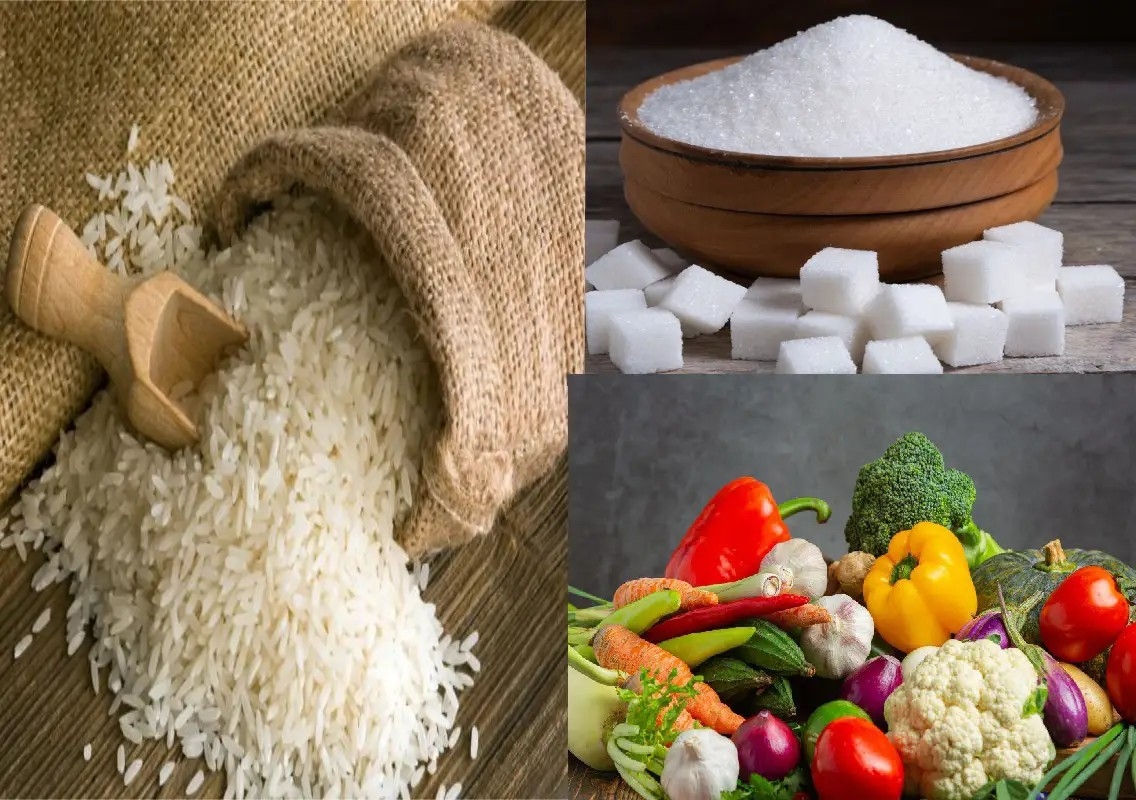


Mangaluru: The arrival of the Shravana festival season after Ashadha has brought celebrations across Karnataka, but a sharp increase in the prices of essential commodities is putting pressure on household budgets. A reported rain deficit linked to the El Nino effect has affected agricultural output, leading to a steep rise in the prices of rice, sugar, jaggery and vegetables.
According to traders and market sources, crop yields have reportedly fallen by around 50 per cent in some affected areas due to inadequate rainfall, disrupting the supply of essential food commodities. With the festival season increasing demand, consumers are now facing higher grocery bills at a time when the cost of several other daily necessities has also risen.
Rice, sugar and jaggery have recorded significant increases over the past few months, while the prices of several vegetables in coastal markets have also moved upwards.
Rice prices rise amid paddy cultivation concerns
Rice, one of the most essential staples in South Indian households, has seen a notable price increase since April and May.
Rice that was sold at around Rs 50 to Rs 55 per kg during April and May is now being sold for Rs 65 to Rs 70 per kg in many markets.
The rise has been linked to a substantial decline in paddy cultivation following the monsoon deficit. Reports indicate that nearly 40 per cent of the state’s total paddy cultivation target remains unsown, raising concerns among farmers, traders and consumers about future supplies.
While Dakshina Kannada and Udupi districts have reportedly completed around 70 per cent of their sowing and planting activities, several major paddy-growing districts have witnessed inadequate cultivation.
Raichur, Davanagere, Shivamogga, Bidar, Ballari and Koppal are among the districts where the sowing situation has reportedly remained a concern due to insufficient rainfall.
The impact is also being felt in coastal Karnataka. A 30 kg bag of boiled rice, locally known as Kuchalakki, which cost between Rs 1,450 and Rs 1,500 in May, has now reached around Rs 1,800.
Mill owners have warned that rice prices could come under further pressure by the end of the year if production and supply concerns continue.
The increase is not confined to Karnataka, with neighbouring Kerala and Tamil Nadu also witnessing a sharp rise in rice prices.
Sugar and jaggery prices also climb
The rain deficit has also reportedly affected sugarcane cultivation, contributing to concerns over sugar and jaggery production.
Sugar, which was priced between Rs 48 and Rs 50 per kg during April and May, crossed Rs 68 per kg by August 20.
The rise represents a significant increase in a commodity that is widely used in households and sees additional demand during the festival season.
Jaggery prices have followed a similar trend. The commodity, which was available at around Rs 45 per kg earlier, is now being sold for between Rs 72 and Rs 75 per kg.
The increase in the prices of both sugar and jaggery is adding to the financial burden on families preparing for Shravana festivities and other upcoming celebrations.
Vegetables add to household burden
Along with groceries, the prices of several vegetables have also increased sharply in coastal markets.
Beans are currently being sold at around Rs 65 per kg, while elephant foot yam is priced at approximately Rs 55 per kg.
Yardlong beans have reached around Rs 70 per kg, and ivy gourd is being sold for between Rs 55 and Rs 60 per kg.
Carrots have touched around Rs 70 per kg, while onions are priced between Rs 55 and Rs 60 per kg.
Garlic remains among the most expensive kitchen essentials, selling at around Rs 230 to Rs 250 per kg in coastal markets.
Brinjal and sweet potatoes are being sold at approximately Rs 60 per kg.
The rise in vegetable prices, combined with higher costs for rice, sugar and other groceries, has significantly increased the overall expenditure on food for many households.
Festive budgets under pressure
Consumers are already dealing with higher expenses on electricity, petrol, diesel and other everyday requirements.
The increase in food prices has further strained household budgets, particularly during a period when families traditionally spend more on festivals, special meals and religious observances.
Traders say the cumulative increase in essential commodity prices is likely to cast a shadow over this year’s festive season.
Arun Raj, a grocery trader in Mangaluru, said prices of essential commodities have increased substantially over the past few years.
“Compared to 2020-21, the prices of essential commodities have increased by 30 to 40 per cent. In 2020, one kg of sugar was Rs 35, and now it has surged to Rs 68. The prices of other groceries have seen a similar upward trend,” he said.
The continuing rise in prices has left consumers concerned about how much more household expenses could increase in the coming months.
With the festival season under way and the future agricultural situation dependent largely on rainfall and crop output, families are hoping that supplies improve and price pressures ease.
For now, however, the sharp increase in the cost of rice, sugar, jaggery and vegetables is forcing many households to carefully reassess their budgets, putting a financial strain on what is traditionally a season of celebration.