







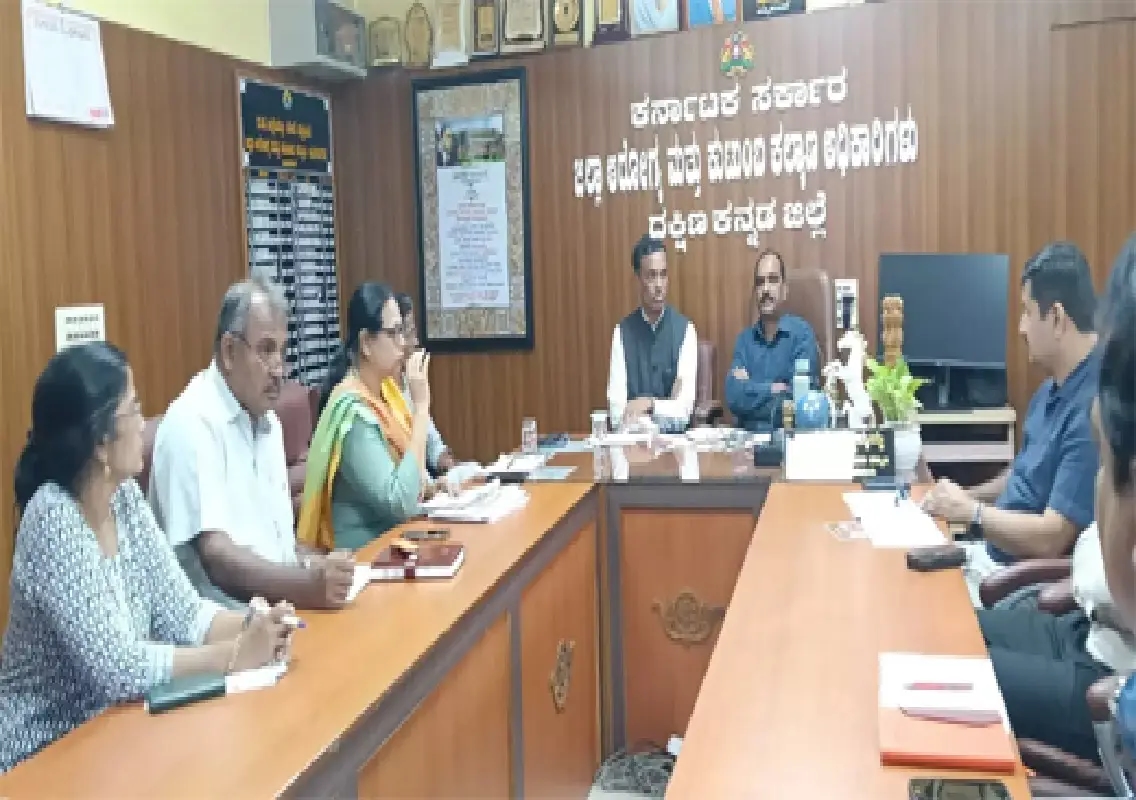


Mangaluru: Emphasising that every child has a fundamental right to life, Karnataka State Commission for Protection of Child Rights member K.T. Tippeswamy has directed district officials to take stringent measures and intensify awareness efforts to prevent female foeticide and illegal sex determination practices in Dakshina Kannada district.
He issued the directions while chairing a review meeting on the implementation of the Pre-Conception and Pre-Natal Diagnostic Techniques (PCPNDT) Act at the District Health and Family Welfare Office in Mangaluru on Wednesday.
Strict enforcement of PCPNDT Act stressed
Tippeswamy instructed health officials and enforcement authorities to initiate strict action against individuals and institutions found violating provisions of the PCPNDT Act, particularly in cases involving foetal sex determination and female foeticide. He underlined that continuous monitoring of hospitals, private nursing homes and scanning centres is essential to ensure compliance.
He said that the law must be enforced not only through inspections and notices but also through sustained vigilance and accountability mechanisms. Regular surprise checks and follow-up inspections were suggested to prevent repeat violations and to ensure that all mandated records are properly maintained.
Officials were told to ensure that all ultrasound and scanning centres operating in the district are compulsorily registered under the Act and that documentation is kept up to date without exception.
Mandatory display of helpline and prohibition boards
Highlighting the importance of public awareness, Tippeswamy directed authorities to ensure that the Child Helpline number 1098 is prominently displayed in all government offices, educational institutions and private nursing homes across the district.
He also instructed that all hospitals — both government and private — must install clear signboards in local languages stating that sex determination tests are prohibited under the PCPNDT Act and that violation is a punishable offence. The signage should be visible to patients and attendants to discourage illegal enquiries and practices.
Officials were asked to verify compliance with these display requirements during routine inspections and audits.
Reward scheme for informants to be publicised
Tippeswamy called for wider publicity of the government’s incentive scheme that offers a reward of ₹1 lakh to informants who provide credible information about hospitals or centres that promote or conduct illegal sex determination tests or encourage foeticide.
He said awareness of the reward scheme can play a crucial role in community participation and help authorities detect hidden violations. Health department staff, ASHA workers and anganwadi workers were advised to spread information about the scheme at the grassroots level.
Focus on record maintenance and audits
During the meeting, Tippeswamy reiterated that maintaining Form F records is mandatory for all registered scanning centres under the PCPNDT Act. Proper documentation helps authorities track pregnancies and diagnostic procedures and acts as a safeguard against misuse of technology.
District Family Welfare Officer Dr Deepa Prabhu informed the committee that 69 notices had been issued between March 2025 and January 2026 for violations detected under the PCPNDT Act in Dakshina Kannada district.
She said inspections of scanning centres are being conducted regularly and notices are issued wherever deficiencies are observed. Corrective measures are being enforced within stipulated timelines.
Dr Prabhu added that so far, no irregularities have been found in Form F records during inspections, and periodic audits are being carried out to maintain compliance standards.
Capacity building and local studies underway
To strengthen implementation, district-level workshops are being organised for hospital owners, radiologists and gynaecologists to familiarise them with the provisions and legal responsibilities under the PCPNDT Act.
At the taluk and village levels, training and awareness sessions are being conducted for ASHA workers, anganwadi staff and other frontline health workers so they can educate families and identify suspicious trends early.
Officials also reported that villages with unusually low or high sex ratios have been identified for closer study. A detailed study is being undertaken through the Community Health Department of K.S. Hegde Medical College Hospital to understand the reasons behind sex ratio imbalances and recommend corrective interventions.
Suggestions on birth certificate safeguards
Referring to broader child protection concerns, Tippeswamy noted that penalties could be imposed under Section 18 of the 2020 child protection law in cases involving the sale of children and trafficking. He suggested that the government could consider a system where birth certificates are issued only if pregnant women produce their mother card during scanning and antenatal care, to strengthen tracking and accountability.
Multi-department participation
The meeting was attended by District Health and Family Welfare Officer Dr H.R. Thimmayya, District Advisory Committee chairperson Dr Amrutha Bhandari, District Inspection and Monitoring Committee member Dr Sundari, Dr Anith Raj, advisory committee members Dr Nanjesh Kumar, Dr Chidanand Murthy and Vasanth Peraje, among others.
Officials concluded that coordinated enforcement, medical community cooperation and sustained public awareness will be key to eliminating female foeticide and ensuring equal protection for every child.