







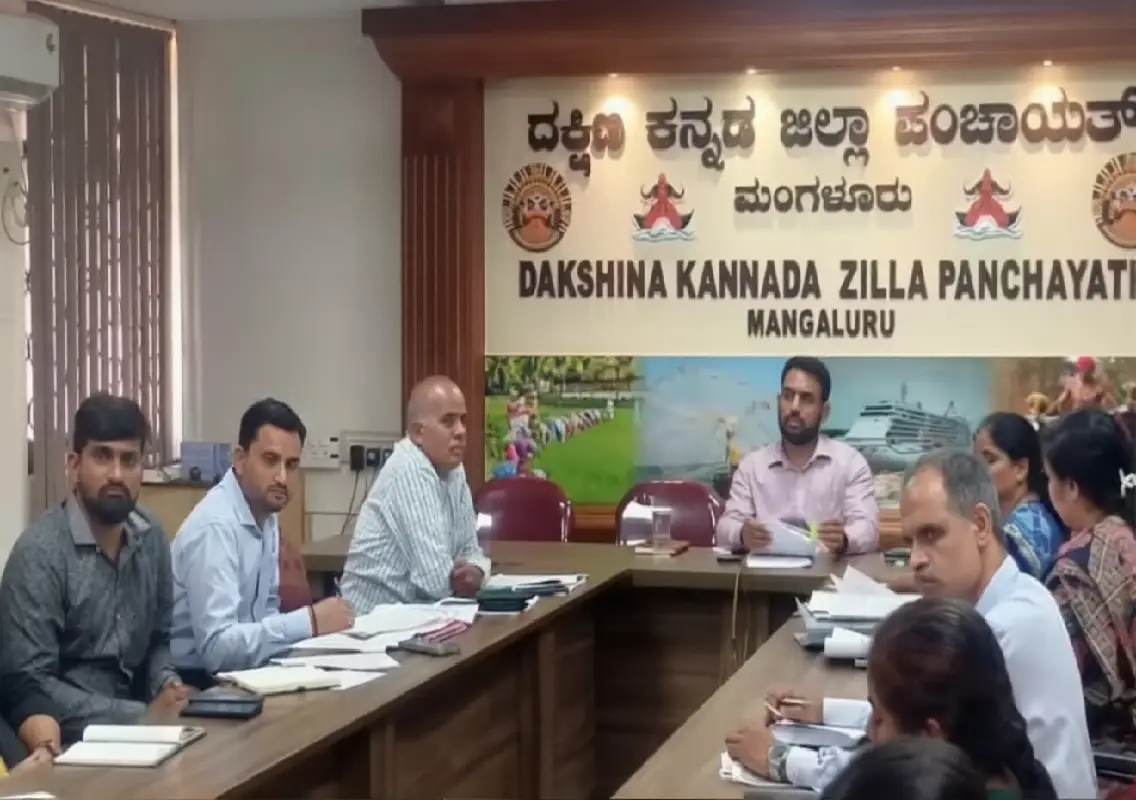


Mangaluru: In a bid to strengthen cleanliness and waste management in rural areas, Dakshina Kannada Zilla Panchayat (ZP) CEO Narwade Vinayak Karbhari has directed officials to take strict action against those involved in illegal waste dumping and burning. The instructions were issued during a video conference held with taluk panchayat executive officers and gram panchayat development officers.
The meeting focused on improving sanitation standards across gram panchayat (GP) limits and ensuring effective implementation of waste management systems in the district.
Fines and FIRs for violations
During the meeting, the CEO instructed officials to identify individuals responsible for dumping waste on roads and in public places, as well as those involved in burning waste within GP limits. Strict penalties are to be imposed on violators.
He further directed that if offenders fail to pay the imposed fines, an FIR should be registered at the local police station without delay. “Immediate action should be taken against offenders in each taluk, and a report must be submitted,” he emphasised.
Officials have been asked to set clear targets for fine collection and ensure strict enforcement across all gram panchayats.
Focus on ‘Clean Saturday’ drives
The CEO also highlighted the importance of the ‘Clean Saturday’ initiative, which is conducted on the first and third Saturdays of every month. Under this programme, gram panchayats have been instructed to clean all road edges within their jurisdiction regularly.
The move aims to maintain consistent cleanliness and prevent the accumulation of waste in public spaces.
Plans for waste management infrastructure
Addressing gaps in infrastructure, Karbhari noted that 63 gram panchayats in the district currently do not have a ‘Swachh Sankeerna’ unit for waste processing.
He directed officials to prepare plans for constructing such units with a minimum area of 1,000 sqft. The construction is to be undertaken using untied funds from taluk panchayats along with available grants in gram panchayats.
This step is expected to significantly improve waste segregation and processing at the local level.
Phase-wise implementation of waste management
As part of a phased approach to strengthen waste management, 92 gram panchayats have been identified in the first phase. Out of these, 48 GPs have been instructed to immediately enter into agreements with authorised waste management agencies.
This collaboration is intended to ensure scientific disposal and handling of waste, reducing environmental and health risks in rural areas.
Crackdown on single-use plastics
The CEO also stressed the need to strictly enforce the ban on single-use plastics. Officials have been directed to conduct regular inspections and raids in gram panchayat areas to curb the production, storage, supply, sale, and distribution of banned plastic items.
In addition to imposing fines on violators, authorities have been asked to promote the use of eco-friendly alternatives and create awareness among the public about the harmful effects of plastic pollution.
Officials attend review meeting
The meeting was attended by several key officials, including ZP Deputy Secretary Jayalakshmi Rayakod, Planning Officer E Jayaram, Environmental Officer Maheshwari Singh, and district coordinators of the Swachh Bharat Mission.
Their participation underscored the coordinated effort being made across departments to improve sanitation and waste management in the district.
Conclusion
The directives issued by the Dakshina Kannada ZP CEO signal a more stringent and structured approach towards tackling waste management challenges in rural areas. With strict enforcement measures, infrastructure development, and public awareness initiatives, authorities aim to create cleaner and healthier villages. Effective implementation at the grassroots level will be crucial in achieving long-term sustainability and environmental protection.