







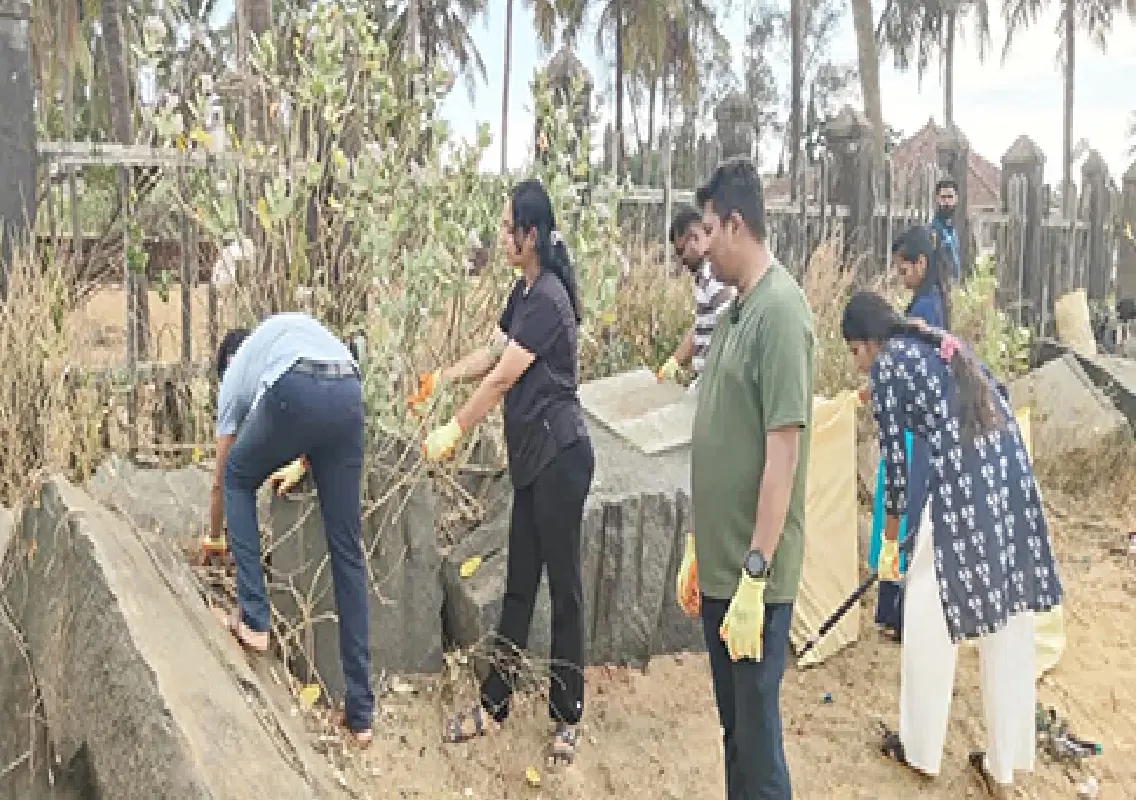


Mangaluru: The Anti Pollution Drive (APD) Foundation, in association with environmental conservation organisation Plastic Fischer, organised a beach clean-up campaign at Ullal Beach on Sunday, January 11, 2026, reaffirming their commitment to environmental protection, sustainable practices and community engagement along the coastal belt.
The initiative saw enthusiastic participation from more than 50 student volunteers drawn from St. Aloysius College, Roshni Nilaya and the Centre for Postgraduate Studies and Research of St. Agnes College. United by a shared concern for the environment, the volunteers worked in coordinated teams to clean the shoreline and adjacent areas, demonstrating strong civic responsibility and environmental awareness.
Collective effort to clean the coastline
The clean-up drive resulted in the collection of nearly 20 large bags of waste from the beach and nearby stretches. The waste comprised plastic debris, broken glass pieces, discarded footwear and various other non-biodegradable materials that are commonly found accumulating along coastal areas due to irresponsible disposal and tidal action.
Volunteers carefully segregated waste at the collection points, ensuring that hazardous materials such as broken glass were handled safely. The effort highlighted the scale of pollution affecting coastal ecosystems and the urgent need for regular interventions to prevent further degradation of marine and shoreline environments.
Organisers said the active involvement of students was particularly encouraging, as young people play a crucial role in shaping sustainable habits and influencing community behaviour towards environmental conservation.
Spotlight on plastic pollution
The campaign focused on raising awareness about the growing threat posed by plastic pollution to marine ecosystems, coastal livelihoods and public health. Plastic waste, organisers pointed out, not only harms marine life through ingestion and entanglement but also affects fishing communities and tourism-dependent economies.
Environmental experts associated with the drive explained that plastics discarded on beaches often break down into microplastics, which enter the marine food chain and eventually pose risks to human health. They stressed that while clean-up drives are essential, they must be complemented by long-term waste management solutions and behavioural change at the community level.
The clean-up served as an educational exercise for the participating students, many of whom said the experience had deepened their understanding of the environmental cost of single-use plastics and improper waste disposal.
Role of Plastic Fischer in waste recovery
Plastic Fischer, known as the world’s first company focusing exclusively on river plastic recovery, took responsibility for collecting the entire waste generated during the clean-up drive. The organisation follows a structured and scientific approach to plastic waste recovery and management.
According to organisers, Plastic Fischer will carry out detailed segregation and processing of the collected waste to ensure responsible disposal and recycling wherever possible. Materials suitable for recycling will be diverted from landfills, while non-recyclable waste will be disposed of following environmentally safe procedures.
By partnering with professional waste recovery organisations, APD Foundation aimed to ensure that the clean-up drive did not end at collection alone but translated into sustainable waste management outcomes.
Presence of key stakeholders
Several representatives from Plastic Fischer were present during the campaign, including Karsten Hirsch, Chief Executive Officer; Chris Lombardi, Marketing Manager; and Arjun Nayak, Operations Excellence Manager. They interacted with volunteers and appreciated their dedication and teamwork.
Social workers and community representatives also extended support to the initiative. Kishore Attavar and Sooryanarayana, Naveen Nayak and Imtiaz Ahemed from Ullal Nagarika Vedike, Firoze from Karnataka Rakshana Vedike and Geetha Soorya, Coordinator of APD Foundation, were among those present at the site.
Their presence underlined the importance of collaboration between non-governmental organisations, community groups and educational institutions in addressing environmental challenges effectively.
Building environmental responsibility among youth
APD Foundation representatives said the primary objective of the clean-up drive was not only to restore the natural beauty of the beach but also to instil a sense of environmental responsibility among young citizens. By participating directly in clean-up activities, students were able to witness firsthand the consequences of pollution and the effort required to reverse environmental damage.
Many student volunteers expressed that the experience motivated them to adopt eco-friendly practices in their daily lives and to spread awareness among peers and family members. Organisers noted that such experiential learning plays a critical role in nurturing environmentally conscious citizens.
Need for sustained action
While appreciating the success of the clean-up drive, organisers emphasised that one-time initiatives are not sufficient to address the growing problem of plastic pollution. They called for regular clean-up campaigns, stricter enforcement of waste management rules and increased public awareness to reduce littering at beaches and other public spaces.
They also urged local authorities, businesses and residents to take collective responsibility for protecting coastal ecosystems, which are vital for biodiversity, livelihoods and climate resilience.
A step towards cleaner coasts
The Ullal Beach clean-up drive was described as a meaningful step towards cleaner and healthier coastlines. By bringing together students, environmental organisations and community groups, the initiative demonstrated the impact of collective action in safeguarding fragile coastal environments.
Organisers said APD Foundation plans to continue similar initiatives in the future, focusing on education, community participation and partnerships with professional waste management organisations to create lasting environmental impact.