







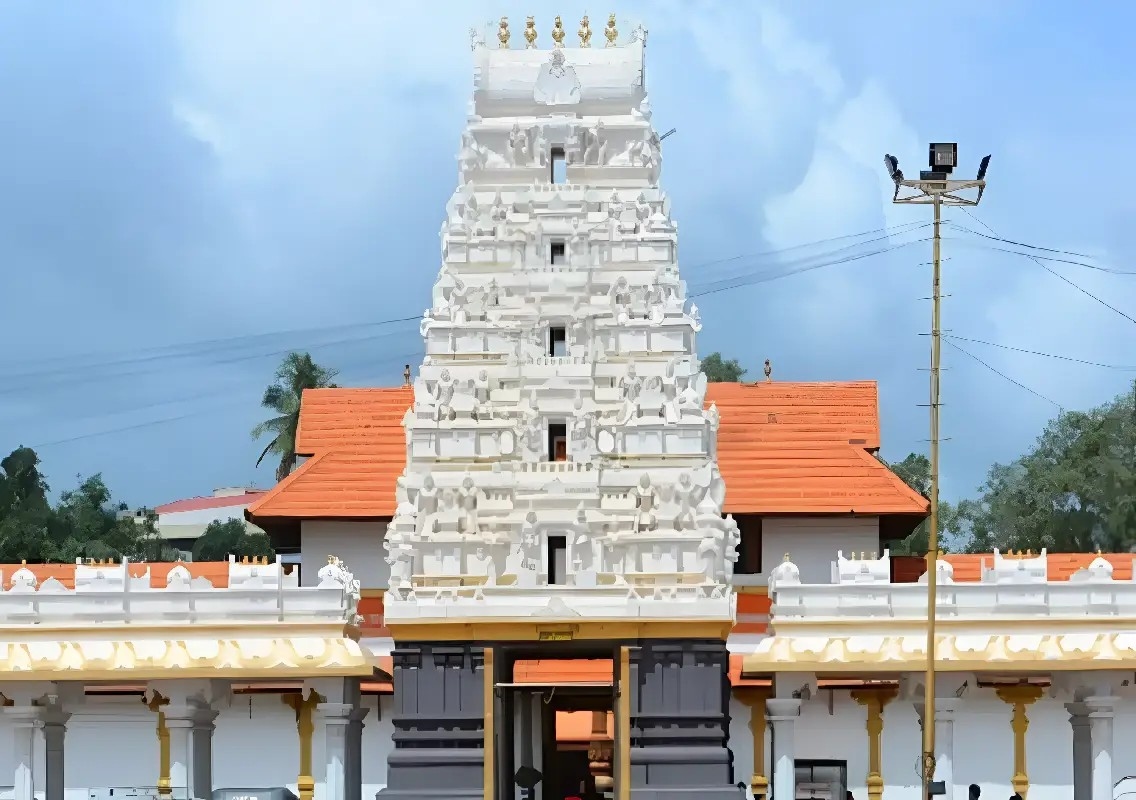


Puttur: Serious allegations of financial irregularities, violation of Muzrai Department rules and administrative lapses have surfaced against the Management Committee of the Sri Mahalingeshwar Temple, Puttur. The Temple Protection Committee (Devasthana Samrakshana Samithi) has demanded an immediate probe into the temple’s financial transactions, management of assets and alleged political interference.
Representatives of the Temple Protection Committee raised the allegations at a press conference and claimed to have documentary evidence pointing to several irregularities under the present management. They urged the authorities to initiate an independent investigation and take action if the allegations are found to be true.
Allegations of financial irregularities
According to the Temple Protection Committee, several financial transactions were allegedly carried out without following the procedures applicable to government-controlled religious institutions.
The committee specifically alleged that an amount of ₹3,00,248 was withdrawn from the temple account through a self-drawn transaction. It claimed that such transactions are prohibited in government departments and alleged that the management had failed to maintain the required financial safeguards.
The committee further claimed that more than ₹40.03 lakh was withdrawn between January 2025 and May 2026 under various minor expenditure and repair-related heads. According to the allegations, several of these expenses were incurred without obtaining the necessary departmental approvals or completing the prescribed oversight procedures.
The Temple Protection Committee has called for a detailed audit of all transactions during the period to establish whether the expenditure complied with Muzrai Department regulations.
Questions raised over temple gold ornaments
The committee also raised concerns regarding the management and valuation of temple gold ornaments.
It referred to Rule 35 of the Karnataka Hindu Religious Institutions and Charitable Endowments Rules, under which temple ornaments are required to be weighed and certified annually by authorised official goldsmiths.
The committee alleged that the prescribed procedure was not followed in this case. Instead of having the ornaments properly evaluated and weighed, their weights were allegedly recorded based on estimated values.
The Temple Protection Committee said the issue requires immediate verification because temple ornaments constitute valuable religious assets and their custody and accounting are subject to strict regulatory procedures.
Alleged illegal felling of trees
Another major allegation concerns temple land and the felling of mature trees.
According to the committee, mature teak, jackfruit and benga trees standing on around 15 acres of temple property at Tenkila were allegedly cut without obtaining the mandatory permissions and valuation from the Forest Department.
The committee questioned how valuable timber from temple property could be removed without completing the required official procedures. It has demanded that the authorities verify the extent of tree felling, assess the value of the timber and determine whether the necessary permissions were obtained.
Works allegedly carried out without tenders
The Temple Protection Committee also alleged irregularities in the execution of various works on temple premises.
It claimed that demolition of old structures and works involving heavy machinery were awarded without inviting public tenders or obtaining the required Public Works Department (PWD) valuation.
The committee further alleged that old building materials worth lakhs of rupees were auctioned for amounts as low as ₹45,000 and ₹52,000. It questioned whether the materials had been properly inventoried and valued before being disposed of.
According to the committee, proper records should have been maintained regarding the quantity, condition and value of the materials before any auction was conducted.
Allegations over festival collections
The committee also questioned the manner in which funds were allegedly collected during the annual temple festival.
It claimed that unauthorised pink-coloured slips were used for collecting money instead of issuing official temple receipts. The committee argued that all collections made on behalf of the temple should be properly recorded through authorised receipts and reflected in the institution’s accounts.
Another allegation concerned the opening of bank accounts for collecting donations towards renovation work before formal government approval was obtained for the renovation committee.
The Temple Protection Committee said such practices could create difficulties in maintaining transparent financial records and called for scrutiny of all donation collections and bank transactions.
Demand for SIT investigation
Holding Management Committee president Panjigudde Ishwara Bhat and local MLA Ashok Kumar Rai responsible for what it described as administrative interference and a breakdown in temple management, the Temple Protection Committee demanded immediate intervention by the authorities.
The committee urged the Deputy Commissioner to constitute a Special Investigation Team (SIT) to conduct a comprehensive investigation into the alleged financial and administrative irregularities.
It also demanded that the existing Management Committee be suspended and that the Executive Officer be removed pending an investigation.
The committee said an independent investigation was necessary to establish the facts and ensure accountability in the management of the temple’s finances and properties.
Protest warning issued
The Temple Protection Committee warned that it would intensify its campaign if the authorities failed to respond to its demands.
According to the committee members, corrective action should be initiated within a week. If no action is taken, devotees will reportedly be mobilised for a large-scale public protest at the Mahalingeshwar Temple grounds on September 21.
The allegations made at the press conference are yet to be independently established, and the concerned temple management and authorities would need to respond to the claims. A detailed audit and official investigation could determine whether the transactions, asset management and works cited by the committee complied with the applicable rules.
The controversy has brought renewed attention to the need for transparent financial administration and proper regulatory oversight in the management of prominent Muzrai temples.