







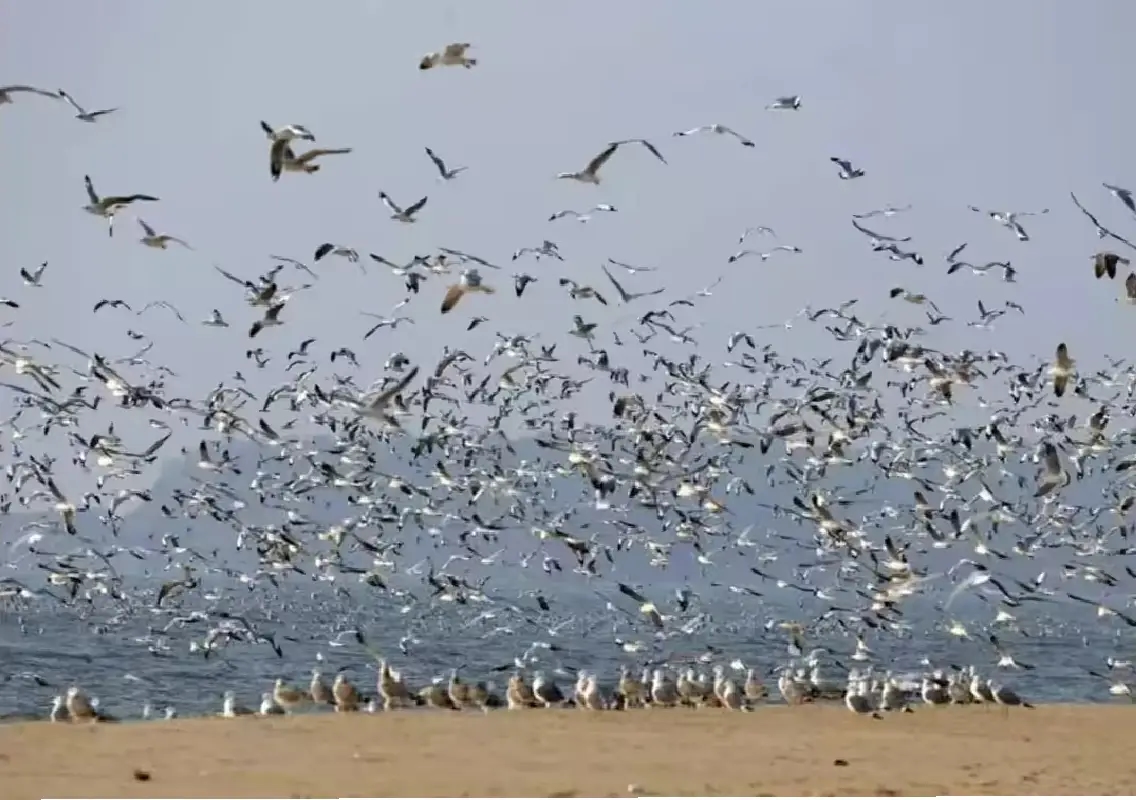


Mangaluru: The Uttara Kannada coastline is witnessing a notable increase in the population of terns and gulls this season, with birdwatchers reporting a 10–20 per cent rise in sightings compared to previous years. Birders attribute the trend to favourable coastal and migratory conditions, though broader environmental factors may also be influencing the shift.
The increase was recorded during the recent wetland waterbird census conducted as part of the Asian Waterbird Census (AWC), an annual citizen science initiative linked to the global International Waterbird Census. The AWC is held every winter and involves volunteers counting waterbirds across wetlands in Asia to track population trends and assess the ecological health of wetlands.
Census highlights growing seabird presence
According to Vignesh Bhat, a Bengaluru-based software engineer and experienced birder from Kumta, one of the most striking observations during this year’s census was the sharp rise in the number of gulls and terns along the coast. He noted that birders documented a 10–20 per cent increase in sightings compared to previous seasons.
The AWC data collected during the exercise is uploaded to global platforms such as eBird. In India, the programme is coordinated by Wetlands International in collaboration with the Bombay Natural History Society (BNHS). The census also plays a crucial role in identifying important waterbird habitats and conservation hotspots.
Extensive wetland coverage and species count
Bhat said that while his team has participated in the census for several years, this year’s exercise was conducted in a far more systematic manner. Over two days, the team surveyed nearly 50–60 per cent of the wetlands across the district and recorded as many as 195 bird species.
“This level of coverage gave us a clearer picture of bird distribution across different habitats,” he said, adding that the results highlighted the ecological richness of the region.
Shift in traditional birding patterns
Traditionally, areas around Kundapur have been known to report higher numbers of gulls and terns during the migratory season. However, this year, birders observed significant numbers of these seabirds further north along the Uttara Kannada coastline.
“This time, we observed substantial populations here as well, which is a noticeable change from earlier trends,” Bhat said.
Species recorded during the census included the Brown-headed Gull, Black-headed Gull, Lesser Black-backed Gull, Slender-billed Gull, Gull-billed Tern, Sandwich Tern, and both Greater Crested and Lesser Crested Terns. The presence of such a wide range of species indicates suitable feeding and resting conditions along the coast.
Climate change a possible factor
While the exact reasons behind the increase and shift in seabird populations are not yet fully understood, Bhat suggested that climate change could be a contributing factor. “We are witnessing several unusual bird records across the state, not just in this region,” he said, pointing to changes in migratory behaviour and habitat use.
Birders across Karnataka have reported altered arrival times, extended stays and sightings of species in areas where they were previously uncommon, trends often associated with changing climatic conditions.
Rediscovering overlooked habitats
Bhat also recalled that prior to the Covid-19 pandemic, many birding hotspots in Uttara Kannada were relatively unexplored. During the lockdown period, he, along with fellow birder Shwetha Bharati, undertook extensive field visits to identify and map several such sites.
“The district has an incredibly diverse range of habitats — from laterite plateaus and forest patches to wetlands, rivers and beaches,” he said. This habitat diversity, he added, supports a wide variety of resident and migratory bird species.
Growing recognition among birders
By documenting these locations and sharing information through citizen science platforms and birding networks, the team has helped bring attention to the region’s rich avian diversity. As a result, the district is increasingly being recognised as an important destination for birdwatchers and conservationists.
The findings from this year’s census are expected to contribute valuable data for long-term monitoring of coastal and wetland ecosystems and may aid conservation planning in the future.
Conclusion
The reported rise in tern and gull populations along the Uttara Kannada coast highlights the ecological importance of the region’s wetlands and coastal habitats. Continued monitoring through initiatives such as the Asian Waterbird Census will be crucial in understanding changing bird populations and ensuring informed conservation efforts amid evolving environmental conditions.