









Mangaluru: Dakshina Kannada and Udupi districts have recorded a steady rise in tourist footfall over the past few years, driven by pilgrim centres, scenic beaches and a widening mix of tourism experiences across Coastal Karnataka. Official data from the Tourism Department shows strong growth in domestic arrivals, while foreign tourist numbers have remained modest but consistent.
The upward trend is being attributed to the region’s spiritual destinations, coastal attractions, adventure and maritime activities, eco and wellness tourism, and its well-known food and cultural traditions. However, industry stakeholders say infrastructure gaps and connectivity challenges continue to limit the sector’s full potential.
Sharp rise in domestic tourist arrivals
Tourism Department figures indicate that Dakshina Kannada recorded 6,53,39,542 domestic tourists and 6,115 foreign tourists in 2025. This marks a substantial jump compared to 2024, when the district received about 5.07 crore visitors, including 6,448 foreign nationals.
In 2023, Dakshina Kannada saw 3.28 crore tourists, of whom 7,875 were foreigners, showing that domestic travel demand has grown sharply over a two-year period.
Udupi district has also maintained strong numbers. In 2024, it attracted 5.78 crore tourists, including 77,312 foreign visitors. In 2023, the district recorded 4.74 crore tourists, including 41,236 foreigners. Officials say temple tourism, beach circuits and short-stay coastal travel have contributed significantly to the rise.
Tourism officials note that improved road access, social media visibility of destinations and increased interest in short spiritual and leisure trips have played a key role in boosting visitor numbers.
Pilgrim centres draw the largest crowds
Pilgrimage tourism continues to be the biggest driver of footfall in Dakshina Kannada district. Among religious destinations, Kukke Subrahmanya Temple recorded the highest number of visitors, with 1,60,12,150 pilgrims, including 210 foreign nationals during the year.
Shree Kshethra Dharmasthala followed with 1,17,39,480 pilgrims, including 1,083 foreigners. The temple town remains one of the most visited spiritual centres in Karnataka, attracting devotees throughout the year.
Other major pilgrimage destinations and their recorded footfall include:
- Kateel Durgaparameshwari Temple — 63,55,180 pilgrims
- Bappanadu Durgaparameshwari Temple — 27,35,100 pilgrims
- Sooryanarayana Temple — 23,69,880 pilgrims
- Kodyadka Annapoorneshwari Temple near Moodbidri — 21,41,400 pilgrims
Officials say festival seasons and special rituals significantly increase periodic surges in visitor numbers at these centres.
Beaches and nature spots see strong turnout
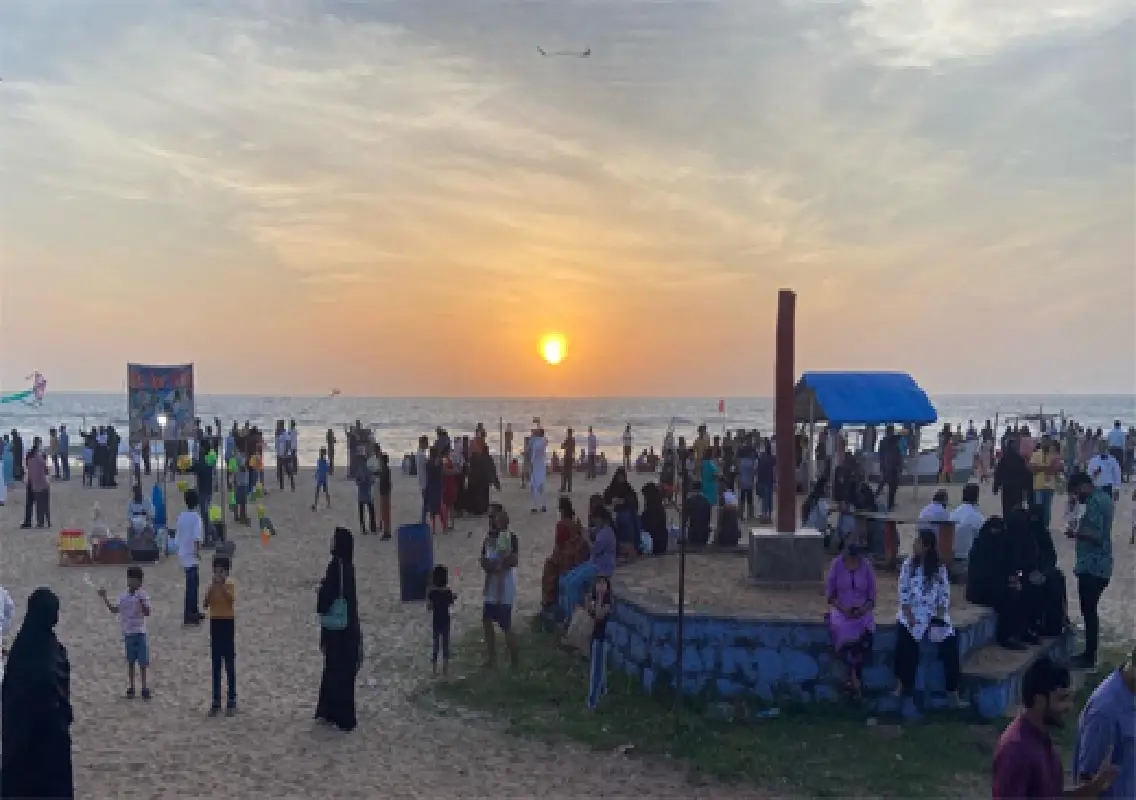
Beach tourism continues to be another major attraction across the coastal belt. Among beaches in Dakshina Kannada, Panambur Beach recorded the highest footfall with 46,41,590 visitors.
Other popular beaches include:
- Someshwara Beach — 43,38,000 visitors
- Tannirbhavi Beach — 37,48,900 visitors
- Sasihithlu Beach — 20,36,300 visitors
- Surathkal Beach — 12,82,700 visitors
Nature and recreation destinations also contributed significantly. Pilikula Nisargadhama drew 27,96,500 domestic tourists and 967 foreign visitors, reflecting growing interest in eco and family tourism hubs near Mangaluru.
Additional attractions that reported notable tourist movement include:
- Sulthan Bathery watchtower — 5,58,550 visitors
- 1,000 Pillar Basadi at Moodbidri — 8,16,900 visitors
- Postcard Collection Centre at Pandeshwar
Tourist data was also compiled from sites such as Ullal Beach, Nelliteertha Guhalaya, Nethravathi River stretches, Venur Gomateshwara, Jamalabad Fort, Kadamagundi Falls, Thodikana Falls, Shiradi, and Sammilana Butterfly Park.
Infrastructure gaps remain a concern
Despite the surge in arrivals, tourism promoters say Coastal Karnataka is still viewed as underdeveloped compared to other major tourism circuits. They point to inadequate last-mile connectivity, traffic congestion and limited public transport options to beaches and interior destinations.
Beach tourism promoter Yathish Baikampady said travel time from Mangaluru city to nearby beaches remains a key issue. He stressed the need for farsighted infrastructure projects and a stronger public transport network linking tourist spots with markets and urban centres.
Stakeholders also highlight the need for better amenities, parking facilities, signage, sanitation and regulated commercial activity around popular beaches and temple towns.
New tourism projects planned along coastline
Meanwhile, the state government has announced fresh investments aimed at strengthening tourism infrastructure across the coastal belt. Tourism Department Secretary Thrilok Chandra, speaking at the Coastal Karnataka Tourism Conclave in Mangaluru, said the entire 320-km coastline should be developed as a multi-product tourism destination.
He said 45 tourism projects worth Rs 718 crore have been sanctioned for coastal districts under the Karnataka Tourism Policy 2024–29. These projects are expected to focus on infrastructure upgrades, destination development, amenities and experience-based tourism.
Officials believe that if connectivity and infrastructure improve alongside planned investments, Dakshina Kannada and Udupi could emerge as one of the most dynamic tourism zones in the state. The steady rise in footfall already indicates strong demand, with further growth likely in the coming years.