







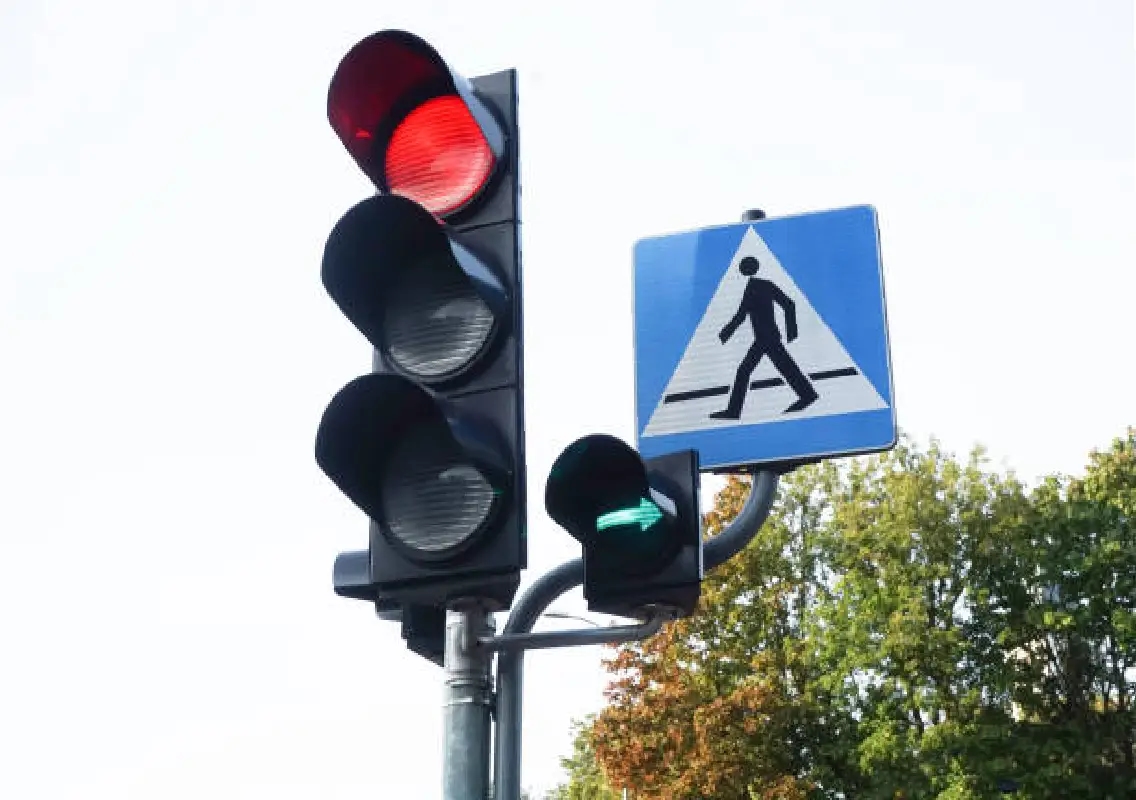


Mangaluru: The trial run of traffic signals at three more busy junctions in the city—Balmatta, Ambedkar Circle, and Bunts Hostel—was met with severe backlash on Monday, as the move led to traffic snarls and chaos.
New signals spark congestion
The Mangaluru city police, which had earlier introduced the intelligent traffic management system (ITMS) with the support of smart cameras, extended the traffic signal system to additional locations from Sunday. However, by Monday morning, heavy congestion was reported at all three newly signalised junctions.
As a result, by afternoon, the traffic signal lights at Balmatta, Ambedkar Circle, and Bunts Hostel Circle were switched off, returning traffic flow to manual regulation. Currently, signals are operational only at Karavali Circle, PVS Junction, Lalbagh, and Hampankatta.
Past trial runs saw similar problems
This is not the first time Mangaluru has faced issues with the introduction of signal systems. In May, similar experimental runs at Ballalbagh and KSRTC Junction also resulted in significant traffic disruptions. Commuters complained of long delays, slower vehicle movement, and increased bottlenecks at key junctions.
Although Mangaluru Smart City Limited (MSCL) has equipped all major junctions with signal systems, their integration into the city’s traffic flow has proven difficult. Unlike larger metropolitan cities, Mangaluru’s road network, dominated by narrow stretches and high vehicle density, has posed challenges for smooth adaptation.
Stakeholders call for proper study
Former president of the Dakshina Kannada District Bus Owners’ Association, Dilraj Alva, criticised the move, saying the traffic police must first conduct a comprehensive study before expanding signalised junctions.
“After 1991, no study was conducted about traffic management in the city. There is a need for a proper study on the number of vehicles, existing roads, and traffic density. When the signal is activated at a new junction, the traffic gets choked,” Alva said.
He added that the association plans to bring the matter to the notice of the authorities, emphasising that unplanned implementation without adequate groundwork is counterproductive.
Police clarify trial objective
Defending the trial run, Deputy Commissioner of Police (Crime & Traffic) K Ravi Shankar said the exercise was carried out to ensure that recently repaired equipment was functioning properly.
“The signal lights were under repair, and all equipment was fixed. Hence, a trial run was conducted to confirm whether the system is in order. It is yet to be made functional permanently,” he explained.
The DCP further stated that the shortcomings, including timing adjustments for signals at each junction, would be addressed before making the system fully operational.
Need for a long-term traffic plan
The recurring disruptions highlight the urgent need for a scientific traffic management plan for Mangaluru. With vehicle numbers steadily rising and road infrastructure largely unchanged, experts argue that piecemeal approaches such as isolated signal trials may not ease congestion effectively.
A detailed traffic study, taking into account road widths, junction designs, and peak-hour movement, is expected to be the key to creating a more sustainable and efficient system. Until then, commuters are likely to continue experiencing delays whenever new traffic management measures are introduced on an experimental basis.
Conclusion
While the Mangaluru police’s intention behind reintroducing signal systems is to modernise traffic management, the backlash from Monday’s trial run has underlined the challenges of adapting such systems to the city’s unique road conditions. For long-term solutions, a comprehensive traffic study and coordinated planning between authorities and stakeholders will be crucial before permanent rollout.