







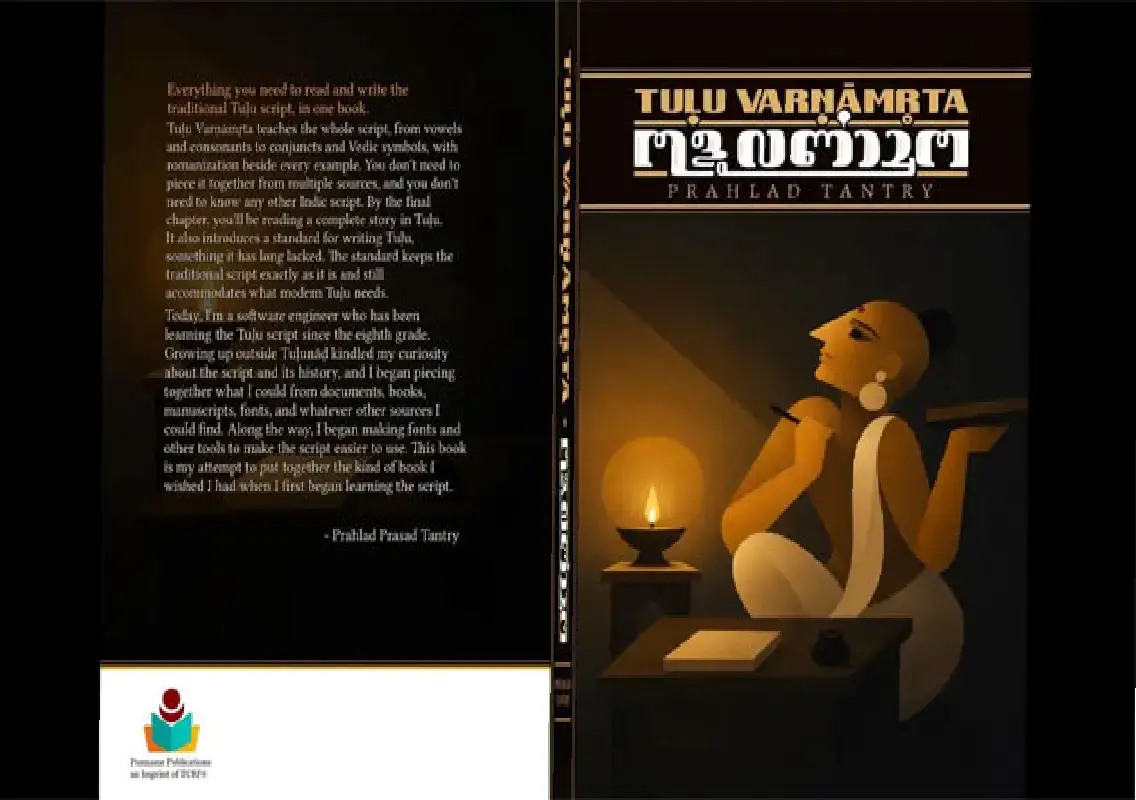


Mangaluru: A primer on the Tulu script titled Tulu Varnamrta, authored by Prahlad Tantry, and a monthly Tulu magazine, Punnameda Bolpu, were released at Mulki on Friday as part of World Tulu Script Day celebrations. The programme also featured a seminar on the demand for official recognition of Tulu and discussions on preserving and promoting the language.
The event, titled Tulu Pajje, was organised jointly by the Tuluva Mahasabhe Mulki zone and the Tulu Cultural Research Foundation (TCRF). It brought together language activists, researchers, educators and cultural representatives to discuss the future of the Tulu script and the need for wider adoption of the language.
The release of the primer and magazine marked an effort to strengthen Tulu literature, encourage the use of its traditional script and provide platforms for research and cultural expression.
Tulu Varnamrta aims to bring uniformity to script
Explaining the objective of Tulu Varnamrta, author Prahlad Tantry said the primer was intended to bring greater uniformity to the use of the Tulu script, as a standardised system had yet to be established.
He said the book would help readers understand ancient manuscripts written in the script while also supporting its adaptation for contemporary use.
The primer is intended to make the script more accessible to learners and those interested in studying Tulu’s literary heritage. A consistent approach to writing, Tantry indicated, could help learners and researchers engage more effectively with written materials and contribute to the script’s continued development.
The Tulu language has a rich oral and cultural tradition, while its historic script remains an important part of the region’s literary heritage. Efforts to document, teach and standardise its use are viewed by language advocates as important steps towards preserving this legacy for future generations.
Punnameda Bolpu to promote Tulu language and culture
The newly released monthly magazine Punnameda Bolpu is expected to provide another platform for Tulu writing, cultural discussion and literary engagement.
Mahi Mulki, founder of the Tulu Cultural Research Foundation, will serve as the magazine’s editor-in-chief, while Nishith G Ramakunja will be the executive editor.
Mahi Mulki also delivered a lecture titled Arunabjana Bharatakavyada Porlu during the programme, adding a literary dimension to the celebrations.
The launch of a dedicated monthly publication is significant for efforts to expand opportunities for Tulu writers and readers. Regular publications can help sustain interest in the language, document cultural traditions and encourage new contributions from younger generations.
The organisers’ broader objective is to strengthen the ecosystem supporting Tulu through educational resources, research, publications and public engagement.
Seminar discusses official status for Tulu
A major focus of the programme was the demand for official recognition of Tulu and the steps required to advance the language’s status.
GVS Ullal, founder-president of Namma Tulunadu Trust, said Tulunadu could have emerged as a “golden state” for the country if it had been constituted as a separate state during the reorganisation of states. He pointed to the region’s strengths in education, banking and other sectors while making his argument.
His remarks brought the question of Tulu’s recognition into a broader discussion about the cultural and economic identity of Tulunadu.
The demand for official status has long been a subject of discussion among Tulu organisations and language activists. Supporters have called for greater institutional support for the language, including opportunities for education, wider use in public life and measures to preserve its linguistic heritage.
The seminar provided a platform for participants to discuss these aspirations and consider how collective efforts could help advance the cause.
Educators and activists call for script preservation
Inaugurating the programme, Vasudeva Belle, principal of Mulki Government Pre-University College, highlighted the importance of Tulu and its rich script tradition.
He said the script deserved greater attention and concerted efforts for its development. Language, he noted, was integral to human life and essential for the expansion of the material world.
Bhanumathi Shetty Kakvaguthu, president of the Tulu World Foundation, Kateel, called for collective efforts to preserve and promote Tulu. She stressed that recognition accorded to the language by the government should translate into meaningful progress.
She also urged students to learn the Tulu script together, underlining the importance of involving younger generations in language preservation.
Her appeal highlighted the role of educational initiatives and community participation in ensuring that the script remains in active use rather than being confined to historical study.
Call to introduce Tulu script classes in schools and colleges
Udaya Poonja Taripadiguthu, president of the Tuluva Mahasabhe Mulki zone, stressed the need to introduce Tulu script classes in every school and college.
He said broader access to script learning would help students connect with their linguistic and cultural heritage. Introducing structured classes could also provide a foundation for future literary and research activities.
Taripadiguthu further called for collective efforts towards the formation of a separate Tulu state, reflecting the wider regional aspirations discussed during the event.
TCRF president Nishith Ramakunja and Nishanth Rathnakar, head of the foundation’s linguistics and research team, were among those present.
World Tulu Script Day highlights continuing efforts
The Mulki programme brought together several strands of the Tulu language movement: script preservation, literary development, education and the demand for official recognition.
The release of Tulu Varnamrta is intended to support learning and greater consistency in script use, while Punnameda Bolpu seeks to provide a regular platform for language and cultural expression.
Calls for script classes in educational institutions and greater government support reflected the participants’ emphasis on turning cultural pride into sustained action.
The organisers and speakers stressed that preserving Tulu requires cooperation among researchers, writers, educators, cultural organisations and the wider community.