







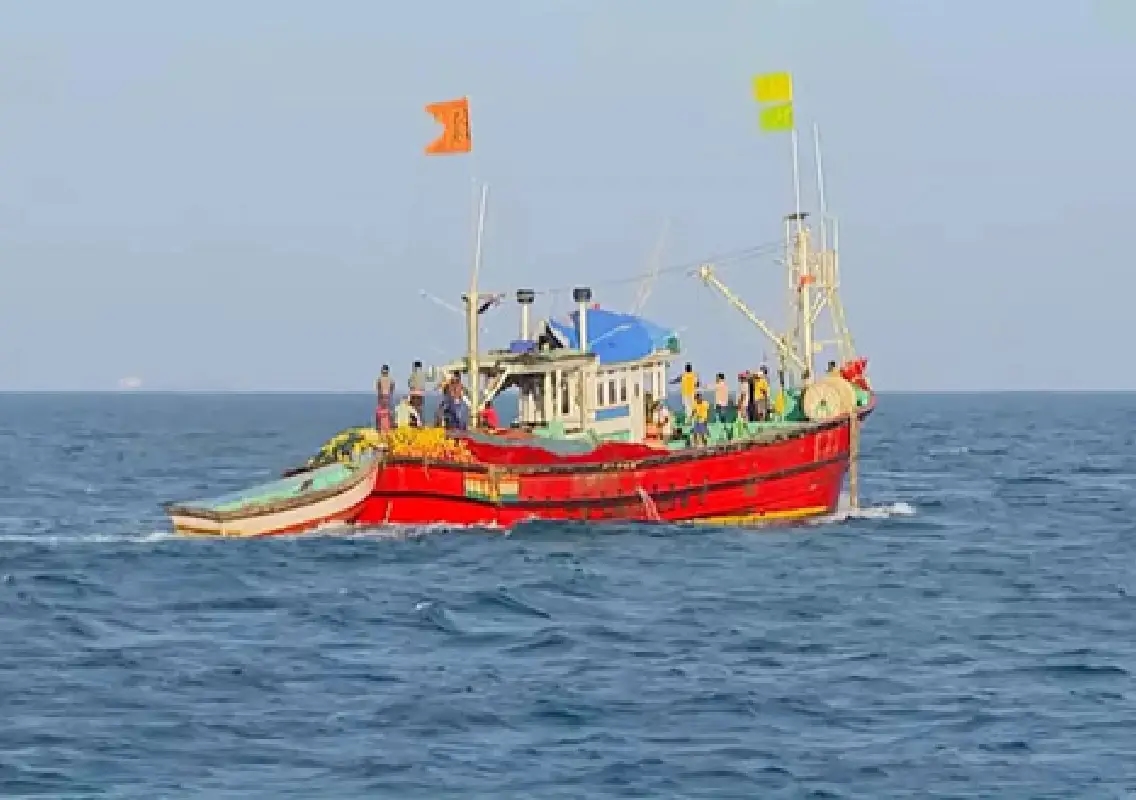


Mangaluru: In a first-of-its-kind community initiative in Karnataka, fishermen from Ullal near Mangaluru have launched a dedicated boat ambulance service to respond to medical and accident emergencies at sea. The service aims to bridge a long-standing gap in coastal rescue infrastructure, where delays in bringing injured persons from the sea to the shore have often resulted in avoidable deaths.
The emergency response boat has been introduced by the Ullal zone traditional boat and gillnet fishermen’s association, with the goal of providing immediate first aid and rapid evacuation in cases of boat capsizing, onboard fires and sudden medical emergencies involving fishermen.
Long-standing demand for sea ambulance
Along the coastal belt, accidents at sea — including boat mishaps, engine fires and health emergencies — are not uncommon. However, unlike road accidents where ambulances can reach quickly, rescue at sea has largely depended on nearby fishing vessels, often without medical equipment or trained responders.
Fishermen say there has been a demand for a dedicated sea ambulance for decades. While proposals were discussed at various levels, government-backed projects could not take shape due to technical and financial constraints.
Faced with continued risk and delays in official support, the Ullal fishing community decided to create its own emergency response mechanism instead of waiting further. Pooling local resources and contributions, the association designed and launched the boat ambulance service independently.
Equipped with emergency medical and rescue gear
The newly launched boat ambulance has been specially fitted with essential emergency and rescue equipment to handle critical situations at sea.
Key facilities onboard include:
- Emergency siren and red warning lights
- Stretcher for patient transport
- Oxygen cylinders
- First-aid kits
- Life jackets
- Public address system for alerts and coordination
The siren and warning lights help alert nearby fishing boats and marine traffic to clear the path during an emergency run. The public address system enables rescuers to communicate with people along the coastline and with other vessels when coordinating rescue efforts.
The focus is on stabilising victims quickly — especially those facing breathing difficulties after near-drowning or capsize incidents — and transporting them to shore without delay for advanced treatment.
Trained crew assigned for high-risk rescues
Three trained personnel have been appointed to operate the boat ambulance. According to the fishermen’s association, they are experienced at sea and capable of swimming and conducting rescues even in rough weather and turbulent waters.
Their role includes reaching distress locations quickly, administering first aid onboard and ensuring safe transfer of the injured to land-based medical services.
Community leaders said that the golden-hour concept — well known in road trauma care — is equally critical in marine accidents. Quick oxygen support and early first aid can significantly improve survival chances in drowning and injury cases.
Plans to expand with support
At present, one boat ambulance is operational under the initiative. The association plans to expand the service with more boats and upgraded medical equipment if financial assistance or sponsorship support becomes available.
Fishermen representatives said additional funding could help install advanced life-support systems, better communication tools and GPS-linked distress response mechanisms. Expansion across more coastal stretches of Dakshina Kannada district is also being considered.
Model for coastal safety initiatives
Local fishing leaders and residents have described the effort as a model example of community-driven disaster response and coastal safety. By creating a rapid-response marine unit, the Ullal fishermen have added a crucial layer of protection for those who work daily in high-risk sea conditions.
The initiative is expected to significantly reduce response time during marine emergencies and improve survival outcomes until patients can be shifted to hospitals onshore.