







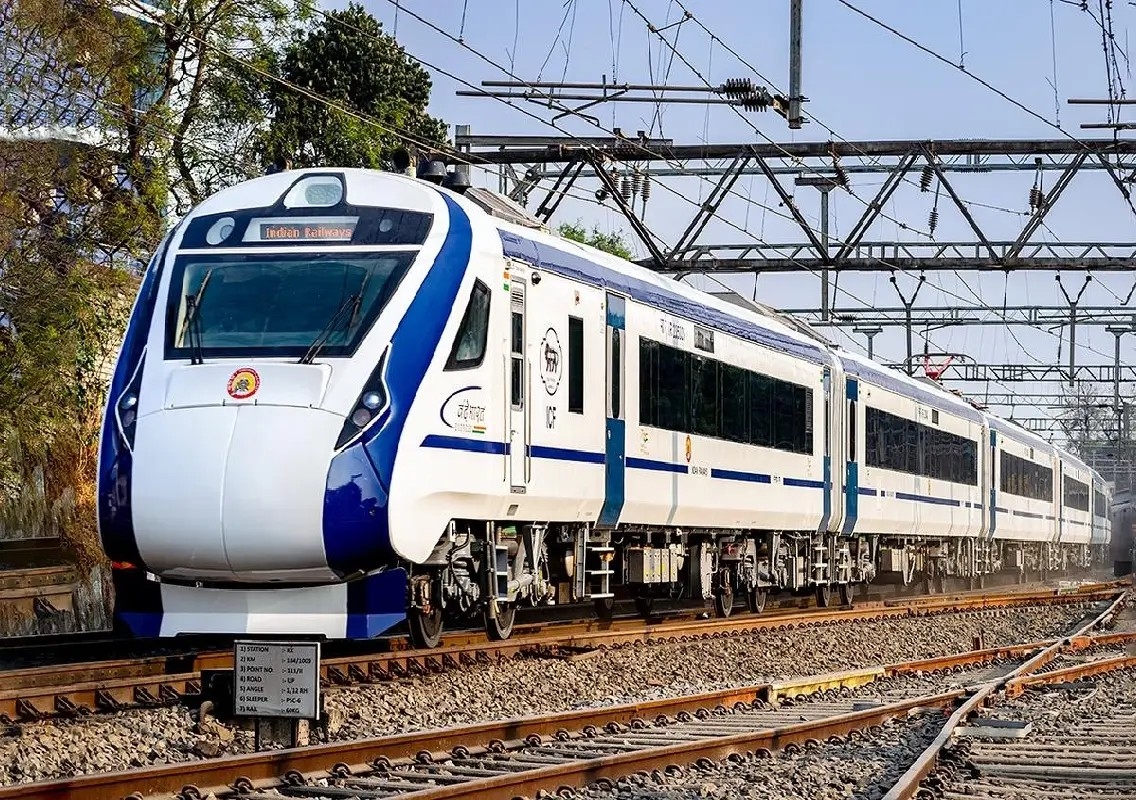


Mangaluru: Another major step has been taken towards introducing the much-awaited Vande Bharat Express service between Bengaluru and Mangaluru, with a trial run on the challenging Sakleshpur–Subrahmanya Road ghat section likely to be conducted in the last week of June.
The trial, to be carried out by the Research Designs and Standards Organisation (RDSO) under the Ministry of Railways, is expected to determine the feasibility of operating the semi-high-speed train on one of Karnataka’s most difficult railway stretches.
If the trial is successful and receives the necessary approvals, it will pave the way for a direct Vande Bharat service connecting Coastal Karnataka with Bengaluru, significantly reducing travel time and improving passenger convenience.
Special braking system to be tested
The 55-km ghat section between Sakleshpur and Subrahmanya Road is considered one of the most technically demanding railway routes in the state due to its steep gradients and sharp curves.
As per the directions of the Commissioner of Railway Safety, trains operating on this section are subject to a maximum speed limit of 30 kmph. To ensure compliance with this restriction, the Vande Bharat train has been fitted with a special Automatic Emergency Braking (AEB) system.
The AEB technology automatically reduces the train’s speed whenever it exceeds the prescribed limit, thereby enhancing operational safety on the ghat section.
Railway officials said the technology is currently being installed on Vande Bharat coaches at the Integral Coach Factory (ICF) in Chennai. The specially equipped rake is expected to arrive in Karnataka next week for the trial.
Previous tests completed successfully
Providing details about the preparations, Mudit Mittal, Divisional Railway Manager of the Mysuru Division of South Western Railway, said trial runs involving ICF and LHB coaches have already been completed successfully on the ghat section.
“The trial run of the Vande Bharat train is the only remaining step. A special rake fitted with the AEB system is being readied for the purpose,” he said.
The earlier tests, which began during the second week of June, involved five trips conducted over five days. According to railway officials, all technical parameters were successfully achieved during these trials.
The successful completion of these preliminary tests has increased optimism that the Vande Bharat service could soon become operational on the route.
Major hurdle set to be cleared
The proposed Bengaluru-Mangaluru Vande Bharat service has long been awaited by residents of Coastal Karnataka, business travellers, students and tourists.
However, the technical challenges associated with operating high-speed trains on the ghat section have delayed the launch of the service.
If the upcoming Vande Bharat trial is successful and the RDSO grants approval to the Railway Ministry, the biggest technical obstacle preventing the operation of the train on the route will be overcome.
The service is expected to offer passengers a faster, safer and more comfortable mode of travel between the coast and the state capital, reducing dependence on road transport and conventional rail services.
Electrification completed last year
The Hassan-Mangaluru railway line also achieved a major milestone with the completion of electrification works in December 2025.
The project, executed by RITES, included the electrification of the entire route, including the difficult ghat section between Sakleshpur and Subrahmanya Road.
The completion of electrification and the ongoing safety trials have brought the long-pending dream of introducing Vande Bharat services to Coastal Karnataka closer to reality.
With the final trial now expected by the end of June, railway passengers across the region are eagerly awaiting the commencement of the Bengaluru-Mangaluru Vande Bharat Express, which promises to significantly improve connectivity between Karnataka’s coast and its capital city.