







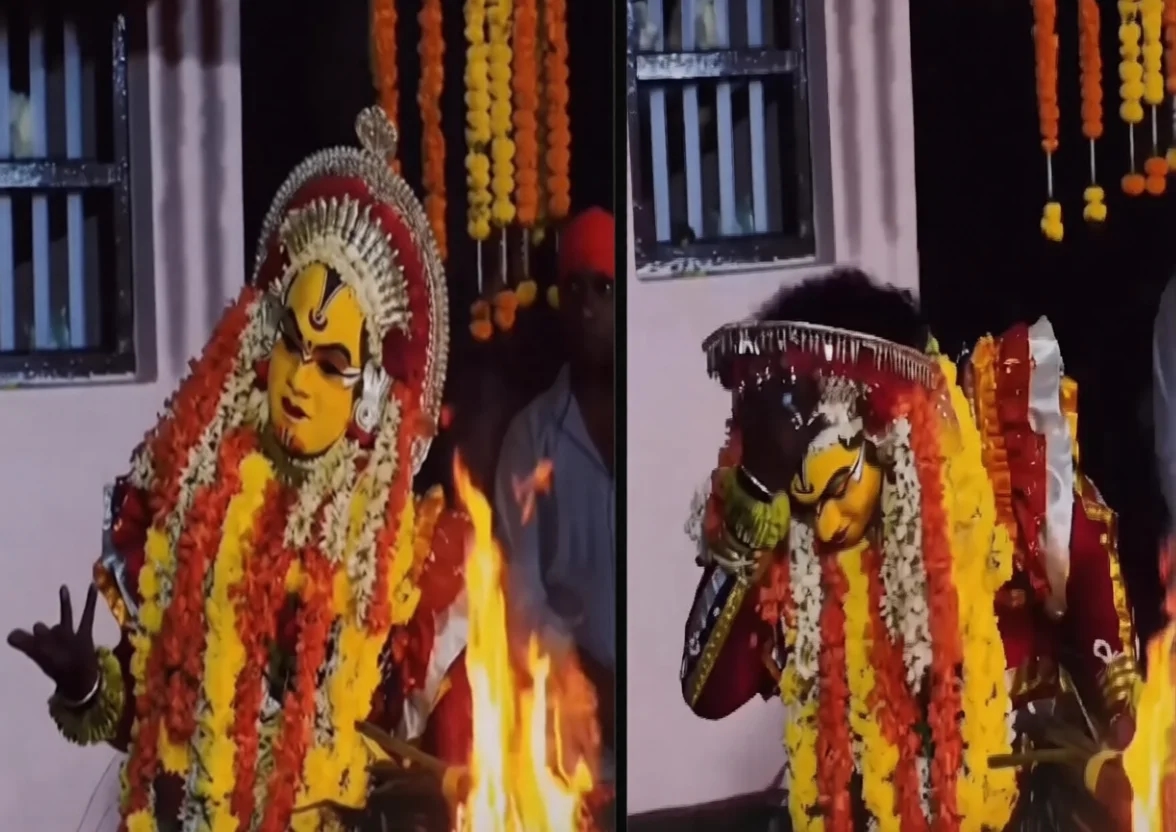


Mangaluru: A viral video from the coastal region of Tulu Nadu has sparked widespread discussion about the growing trend of recording sacred rituals, after a performer embodying a daiva appeared to react angrily towards a woman filming the ceremony.
In the culturally rich belt of coastal Karnataka, the worship of daiva—spirit deities revered through traditional rituals such as Bhoota Kola and Nemotsava—is considered deeply sacred and governed by strict customs and discipline.
Incident during Nemotsava goes viral
According to reports, the incident occurred during a Nemotsava, a ritual festival dedicated to deities. A woman, who later shared the video on Instagram, was recording the ceremony when the daiva performer suddenly turned towards her.
In the video, the daiva—portrayed by a trained performer in elaborate attire and believed by devotees to be a divine medium—appears to warn the person recording, expressing visible anger. The moment has since gone viral, drawing mixed reactions online.
The woman who posted the video suggested that the reaction may have been triggered not only by the act of filming but also by her wearing red clothing, which in some traditions is associated with specific ritual contexts.
Cultural sensitivity and traditional norms
Experts and community elders note that rituals like Bhoota Kola are not merely performances but are deeply spiritual practices that demand adherence to long-standing customs.
In many cases, there are unwritten rules regarding behaviour, attire, and conduct during such ceremonies. Filming or photographing without permission is often discouraged, as it is believed to disrupt the sanctity of the ritual.
The role of the daiva performer is particularly significant, as they are considered a medium through which the deity communicates with devotees. Any perceived breach of decorum during this time is taken seriously by participants and organisers.
Debate over social media influence
The incident has reignited debate over the growing influence of ‘reels’ culture and social media documentation of traditional practices. While some argue that recording helps preserve and promote cultural heritage, others believe it risks trivialising sacred customs.
Critics say that the increasing tendency to capture every moment for platforms like Instagram may undermine the seriousness and spiritual essence of rituals that have been followed for generations.
Supporters of stricter guidelines are calling for better awareness among attendees, urging people to respect local customs and seek permission before recording such events.
Balancing tradition and modernity
The viral video highlights the broader challenge of balancing age-old traditions with modern digital behaviour. As cultural practices gain visibility online, questions arise about how to preserve their authenticity without restricting documentation entirely.
Community leaders have suggested that organisers of such events could establish clear rules regarding photography and videography, ensuring that both devotees and visitors understand the boundaries.
Conclusion
The incident serves as a reminder of the deep-rooted beliefs associated with daiva worship in Tulu Nadu. As social media continues to shape public engagement with cultural practices, maintaining respect and sensitivity towards traditions remains essential.