







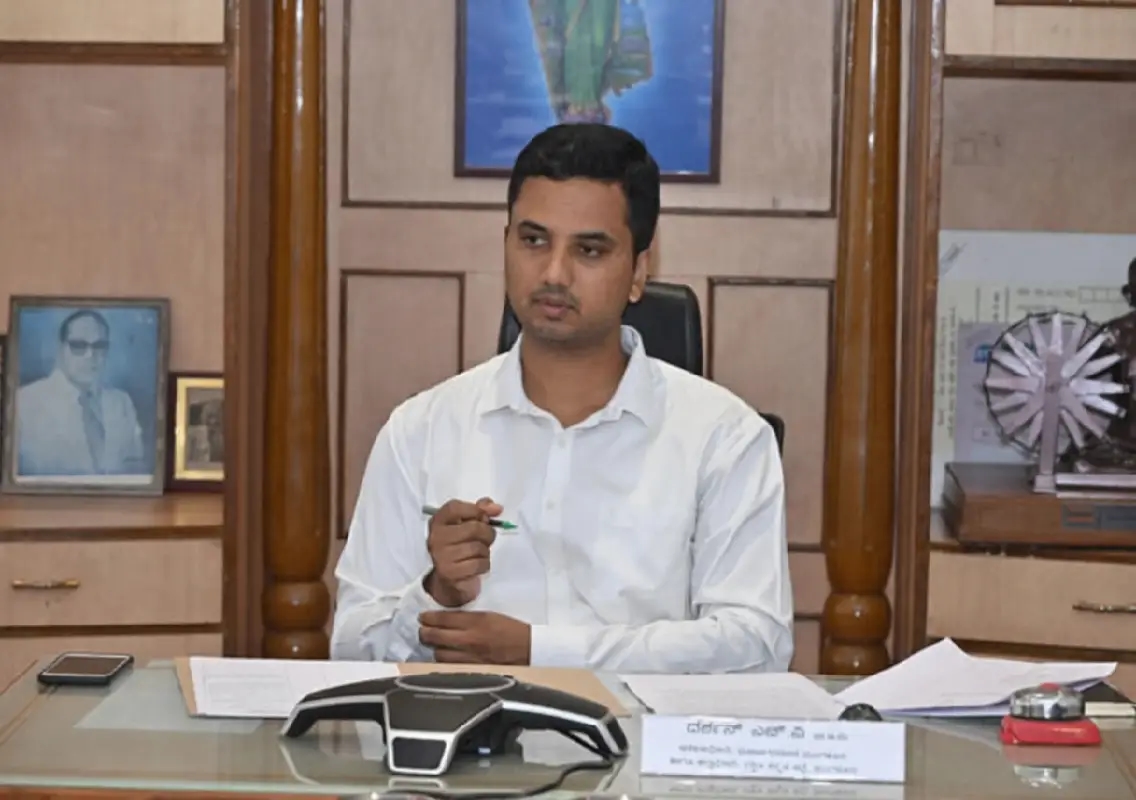


Mangaluru: Residents within the limits of Mangaluru City Corporation will face water rationing from May 1, as authorities move to manage rising summer demand despite adequate storage in key reservoirs. Deputy Commissioner and MCC Administrator Darshan H V announced that water supply will be regulated to ensure equitable distribution across all 60 wards.
Speaking after a phone-in programme held at the MCC office on Friday, the DC stated that existing water reserves at Thumbe vented dam and AMR dam are sufficient to meet drinking water needs until June 10. However, with increased summer consumption, precautionary rationing has been deemed necessary.
Supply plan and current water levels
At present, around 160 MLD (million litres per day) of water is being pumped from the Thumbe dam, and this will continue without interruption. However, supply will be restricted for a few hours in certain areas to ensure that all wards receive water at least once every two days.
As of April 24, the water level at Thumbe dam stands at 4.53 metres, while AMR dam has recorded 18.53 metres. Officials noted that water has not yet been released from AMR to Thumbe, although inflow has been observed due to rainfall in the Western Ghats and nearby regions.
Areas such as Surathkal, which typically face higher demand during summer, are expected to benefit from this regulated distribution system.
Illegal connections under scrutiny
Addressing concerns over unauthorised water usage, the DC revealed that more than 40 illegal connections have been identified, particularly in rural areas linked to the city’s water supply network. Additional suspected connections are currently under verification.
While authorities have not yet disconnected these connections on humanitarian grounds, steps are being taken to install meters and regulate supply. Officials aim to bring such users under a formal system to ensure fair usage and accountability.
Zero tolerance for illegal flex banners
The issue of unauthorised flex banners across the city was also raised during the interaction. Installations on road dividers and public spaces have been flagged as a growing concern.
The DC emphasised that such practices will not be permitted under any circumstances, including for government events. Public representatives, including MLAs and MLCs, have been informed, and strict action is expected in the coming days as part of a zero-tolerance policy.
Jalasiri project and monsoon preparedness
The ongoing Jalasiri water infrastructure project has been given a deadline for completion by December-end. In preparation for the monsoon, all trenches dug under the project must be closed by May 20.
Authorities have clearly stated that no excavation work will be allowed during the monsoon season. Contractors have been instructed to restore all dug-up areas completely to prevent waterlogging and accidents.
Desilting works and flood mitigation measures
To address urban flooding concerns, tenders worth around ₹4 crore have been floated for desilting stormwater drains and rajakaluves across 32 packages. Work has already commenced in 27 packages, with the remaining expected to begin within a week.
To ensure transparency and effectiveness, 2 to 5 local residents will be involved in monitoring the desilting process. This move comes in response to complaints that improper desilting has previously led to artificial flooding in several areas.
Flood-prone zones such as Jyothi and Pumpwell are receiving special attention. At Pumpwell, where water flows from five directions, measures are underway to block inflow from three sides. Plans also include raising the service road bridge by one metre and widening nearby drains.
Additionally, the bridge near TMA Pai is proposed to be elevated after the monsoon to improve water flow and reduce flooding risks.
Strengthening civic infrastructure
In preparation for the rainy season, emergency response teams have been formed to handle natural calamities. Coordination meetings have been held with forest officials to manage risks from fallen trees, including preventive trimming of branches.
MESCOM has deployed seven personnel to ensure the proper functioning of streetlights and transformers across the city. Authorities expect all preparatory measures to be completed by May 20.
Smart streetlight system under way
Under the Smart City initiative, MCC has directed the installation of 66,000 LED streetlights across all wards by the end of June. Once completed, the system will be integrated with a central command and control centre.
This will enable automated switching of streetlights, addressing issues caused by manpower shortages, such as lights remaining on during daytime hours.
Public grievances highlight civic issues
During the phone-in programme, residents raised several concerns, with poor drainage systems topping the list. Other issues included lack of water supply despite valid connections, sewage discharge into stormwater drains, and traffic congestion caused by roadside vendors.
Citizens also demanded shifting the private bus stand from State Bank to Pumpwell and installation of zebra crossings in areas such as Marakada, Jyothinagar, and Kavoor Road.
Concerns were also raised about the absence of pedestrian crossing facilities along the Mangalajyothi–Vamanjoor stretch, affecting schoolchildren and daily commuters.
Conclusion
While Mangaluru currently has adequate water reserves, the decision to implement rationing reflects a proactive approach to managing summer demand and ensuring equitable distribution. Alongside water management, the focus on infrastructure upgrades, flood prevention, and public grievance redressal highlights the city’s broader efforts to strengthen civic systems ahead of the monsoon.