







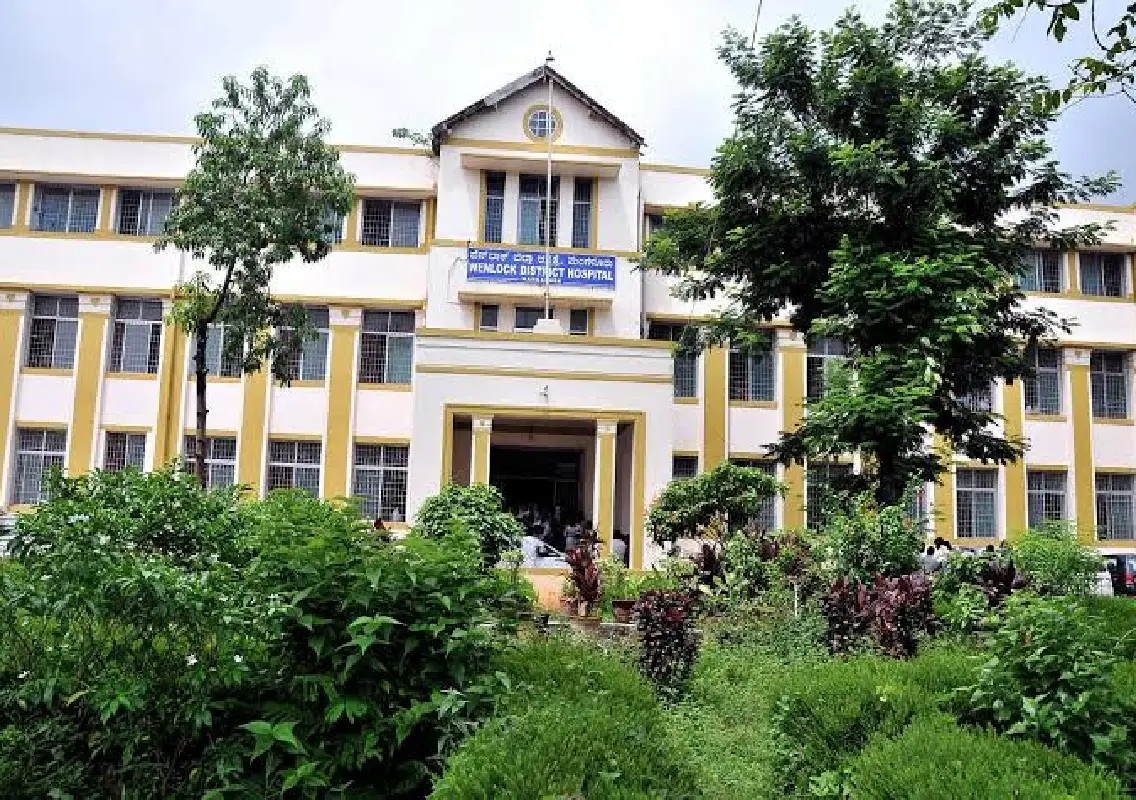


Mangaluru: In a significant relief for patients and their families, Government Wenlock Hospital in Mangaluru has discontinued the practice of insisting on replacement blood donors for patients requiring plasma therapy. The decision is expected to reduce the burden on families, who were often asked to arrange blood donors despite the availability of adequate plasma stocks in blood banks.
Health and Family Welfare Minister U T Khader welcomed the initiative, describing it as a progressive step towards making healthcare more patient-friendly. He said the decision taken by the blood bank at Government Wenlock Hospital could serve as a model for the rest of Karnataka, adding that the state government is examining the possibility of implementing a similar policy across all government hospitals.
Relief for patients and attendants
Until now, relatives of patients requiring Fresh Frozen Plasma (FFP) were frequently asked to arrange replacement blood donors before plasma could be issued. Hospital authorities noted that this practice often placed unnecessary emotional and logistical pressure on families already dealing with medical emergencies.
Officials pointed out that plasma availability in Karnataka is sufficient and that insisting on replacement donors in such cases is not justified. Since plasma reserves are maintained separately from whole blood, the demand for replacement donors for plasma therapy has long been questioned by experts.
With the new policy in place at Wenlock Hospital, patients eligible for plasma therapy can receive treatment without first having to arrange a replacement donor, provided plasma is available in stock.
Karnataka has ample plasma reserves
According to the Karnataka Health Department’s Jeeva Sanjeevini portal, nearly 60,000 units of Fresh Frozen Plasma were available in blood banks across the state as of Monday.
The Dakshina Kannada Blood Transfusion Officer said the high volume of stored plasma clearly indicates that replacement donations for plasma are unnecessary in most situations. He added that blood banks often face storage limitations because of excess plasma availability.
Authorities said surplus plasma that remains unused is routinely sold to licensed pharmaceutical fractionation companies for the manufacture of essential life-saving medicines, ensuring that valuable blood components are not wasted.
Demand for replacement donors likely to reduce
Officials estimate that the new policy introduced at Government Wenlock Hospital will reduce the demand for replacement blood donors by nearly 50 per cent.
The Blood Transfusion Officer also warned that strict action would be initiated if hospitals continue to compel patients or their families to arrange replacement donors specifically for plasma requirements. Families have been encouraged to report such incidents to the concerned authorities.
Health officials emphasised that replacement donations should only be sought in exceptional circumstances, particularly when rare blood groups are required and immediate availability is limited.
Voluntary blood donation remains the priority
Under existing blood bank guidelines, around 95 per cent of blood collection should come through voluntary blood donation camps.
Replacement donors are recommended only for rare blood groups, which account for roughly 5 per cent of the overall requirement. Officials said encouraging voluntary blood donation ensures a stable and safe blood supply while reducing dependence on patients’ families during emergencies.
The latest move by Wenlock Hospital is also expected to strengthen public confidence in the voluntary blood donation system.
Surplus plasma supports medicine production
Fresh Frozen Plasma can be preserved in deep freezers at temperatures of minus 80 degrees Celsius for up to two years. If the plasma remains unused after about a year, it is transferred to licensed fractionation companies that process it into medicines used for treating various serious medical conditions.
Government Wenlock Hospital recently sold surplus plasma worth around Rs 30 lakh to such companies. Officials noted that the market value of plasma has increased considerably over the years, rising from approximately Rs 1,600 per litre five years ago to around Rs 5,600 per litre at present.
This process helps optimise the use of donated blood while contributing to the production of critical medicines.
Plasma therapy saves lives
Plasma therapy, also known as plasma exchange, is used in the treatment of several life-threatening and complex medical conditions. These include Guillain-Barré syndrome, Myasthenia Gravis, certain neurological disorders, liver failure, MDP and yellow phosphorus poisoning.
During blood donation, each unit of whole blood is separated into multiple components, including red blood cells, plasma, platelets and cryoprecipitate. This allows a single donation to benefit multiple patients, with one unit of donated blood potentially helping save up to four lives.
Step towards patient-friendly healthcare
The decision by Government Wenlock Hospital is being viewed as an important reform aimed at reducing unnecessary hardship for patients and their attendants. By eliminating the replacement donor requirement for plasma therapy, the hospital has streamlined access to treatment while making better use of the state’s existing plasma reserves.
If adopted across Karnataka, the initiative could significantly improve patient care, reduce delays in treatment and reinforce the importance of voluntary blood donation as the backbone of the state’s blood transfusion services.