







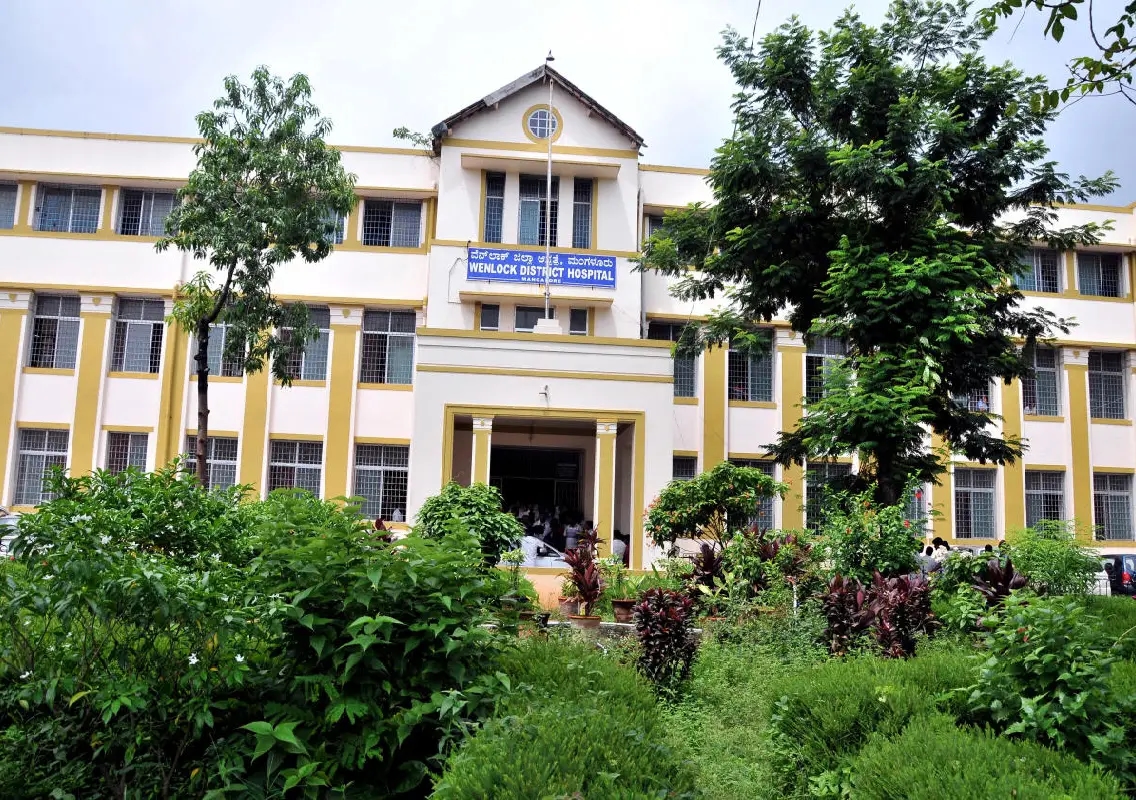


Mangaluru: An RTI response from Mangaluru’s district Wenlock Hospital has raised questions over the treatment of patients from Kerala and the absence of clarity regarding financial support from the neighbouring state, according to a Deccan Herald report.
The information was furnished by the hospital’s Public Information Officer (PIO) in response to an application filed under the Right to Information (RTI) Act by Sanjeeva. The application sought details about treatment provided to patients from outside Karnataka.
According to the report, the RTI response stated that patients from Kerala and other states were not being provided free treatment at Wenlock Hospital. It also stated that the hospital had not received funds from the Kerala government’s Arogya Raksha Samithi.
The response, which was subsequently shared on social media, led to criticism and allegations that the hospital had suppressed facts or provided misleading information.
RTI application seeks details on outside-state patients
Sanjeeva sought information on patients from outside Karnataka receiving treatment at Wenlock Hospital. The issue assumed significance because the Mangaluru government hospital caters not only to patients from Dakshina Kannada but also to people from neighbouring districts and states.
The RTI response reportedly stated that the hospital had not received funds under Kerala’s Arogya Raksha Samithi. However, questions were raised over whether patients from Kerala were paying for treatment at Wenlock Hospital under any government order.
Sanjeeva said the information supplied by the PIO did not provide clarity on this aspect.
Following the controversy over the response, Sanjeeva said he would file an appeal against the information furnished by the PIO.
Earlier efforts sought financial support from Kerala
The issue of financial support for patients from Kerala is not new. According to Deccan Herald, the Karnataka government had previously sought to have Wenlock Hospital included in schemes through which treatment costs of eligible patients from Kerala could be supported.
In 2018, then health and family welfare secretary Shalini Rajneesh, based on data submitted by Wenlock Hospital, wrote to the Kerala government seeking the hospital’s inclusion in its list of empanelled hospitals under the Karunya Benevolent Fund Scheme (KBFS).
The request was subsequently linked to the Ayushman Bharat National Health Protection Scheme (AB-NHPS), according to the report.
Sources cited by the newspaper said successive governments had been seeking such an arrangement since 2014. However, there was reportedly no positive response from the Kerala government to the requests.
The matter is significant because Wenlock Hospital is a major government healthcare institution in coastal Karnataka and receives patients from areas beyond Dakshina Kannada, including neighbouring Kerala.
Earlier data showed significant Kerala patient share
Hospital statistics submitted to the Karnataka government provide an indication of the number of patients from Kerala who have historically accessed services at Wenlock Hospital.
According to figures cited by Deccan Herald, the hospital admitted 22,197 patients in 2017. Nearly 15% of those admitted were from neighbouring Kerala.
The data also showed a particularly high share of patients from Kerala in some departments.
Of the 166 maternity cases registered at the hospital in 2017, 120 were from Kerala, according to the newspaper report. In the trauma ward, patients from Kerala accounted for around 50% of the cases.
These figures highlight the cross-border role played by Wenlock Hospital in providing specialised and emergency healthcare.
For residents of Kasaragod and other parts of northern Kerala, Mangaluru has traditionally been an important healthcare destination because of the availability of tertiary and specialised medical facilities.
Hospital questions manner of RTI disclosure
Wenlock Hospital superintendent and district surgeon Dr D S Shivaprakash responded to the controversy surrounding the RTI information.
According to the report, Dr Shivaprakash said the applicant should have approached the designated appellate authority if he was dissatisfied with the information provided by the PIO, instead of uploading it on social media.
The hospital also questioned the public interest behind the queries raised through the RTI application.
The response has added another dimension to the issue, with the focus now extending beyond the treatment of patients from Kerala to questions about the RTI process and the adequacy of information supplied by the hospital.
Applicant cites pressure on ICU facilities
Sanjeeva, meanwhile, said his decision to file the RTI application was prompted by concerns regarding access to critical-care facilities for poor patients from Karnataka.
He said he was informed that the large number of patients from Kerala was making it difficult for poor patients from Puttur, Sullia, Bantwal and Moodbidri to access ICU facilities at Wenlock Hospital.
The claim has brought attention to the broader question of capacity at the government hospital and the pressure on specialised services.
However, the RTI information reportedly does not establish whether patients from Kerala are occupying facilities at the expense of local patients or whether any specific government arrangement governs their treatment.
Such questions would require detailed information on patient numbers, bed occupancy, ICU utilisation, funding mechanisms and treatment categories.
Questions remain over inter-state healthcare arrangement
The controversy has also revived the question of whether there is any formal financial arrangement between Karnataka and Kerala for patients from the neighbouring state receiving treatment at Wenlock Hospital.
Activists cited by Deccan Herald said the issue should not be viewed simply as a question of whether patients from Kerala should receive treatment at Wenlock Hospital.
Instead, they raised a broader concern over whether the district-level public healthcare system has sufficient capacity to meet the needs of local residents while also serving patients from neighbouring areas.
The issue is particularly relevant in Mangaluru, which functions as a major healthcare hub for parts of coastal Karnataka and northern Kerala.
Appeal likely to seek greater clarity
Sanjeeva has indicated that he will appeal against the information furnished by the PIO. The appeal could seek greater clarity on the treatment provided to patients from outside Karnataka, the applicable payment arrangements and whether any financial support has been received from the Kerala government.
The controversy has therefore brought renewed attention to the long-standing movement of patients from Kerala to Mangaluru for government healthcare services.
With earlier government records indicating a substantial share of Kerala patients at Wenlock Hospital and previous attempts to secure financial support from Kerala, the latest RTI controversy has highlighted the need for greater clarity on the existing arrangements.
The matter may now be examined through the RTI appeal process, which could provide further information on the hospital’s treatment, funding and patient records.