







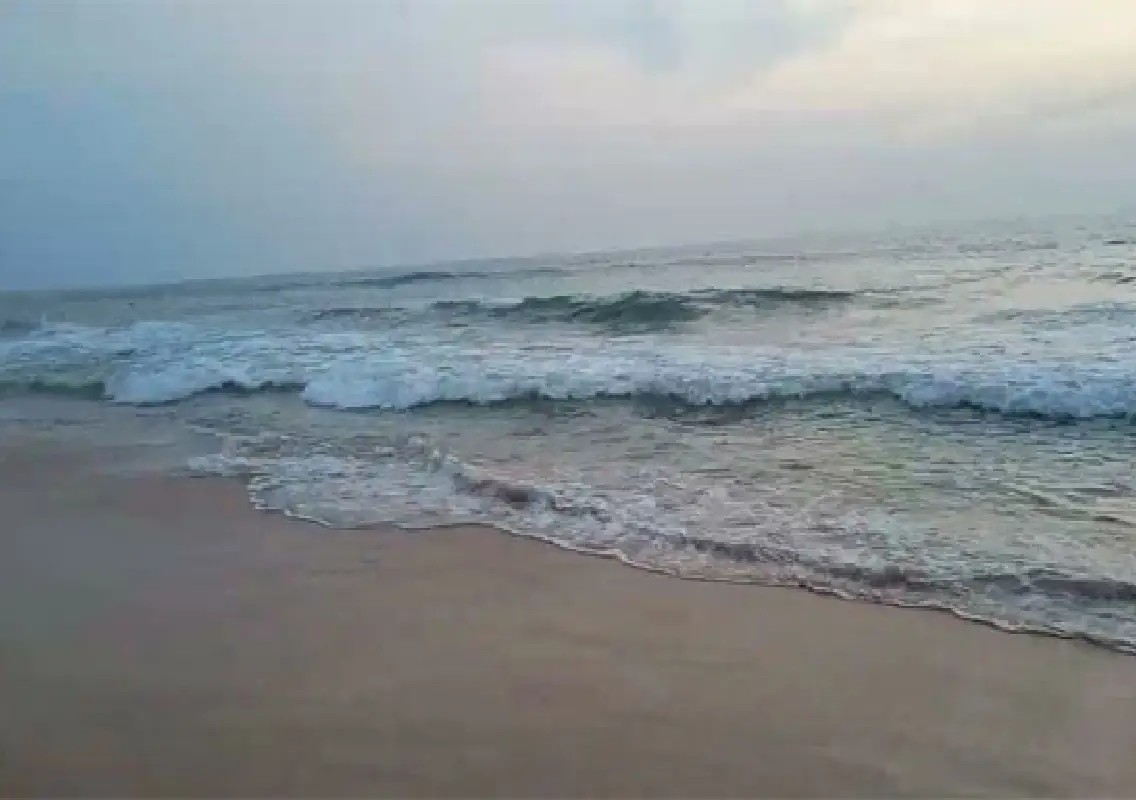


Mangaluru: A thick layer of white foam washing ashore at Sasihithlu Beach amid rough monsoon seas has drawn the attention of coastal residents, raising questions about its origin and whether it poses any environmental or health concerns.
The unusual phenomenon, which was first observed along the Kundapura coast a few days ago, has now appeared at Sasihithlu. Strong waves have carried the foam onto the shoreline, while gusty monsoon winds have blown it into the air, creating balloon-like clusters that have intrigued beachgoers. Some local residents, including children, were seen playing with the floating foam.
Experts, however, have advised the public to exercise caution until scientific analysis confirms the exact cause of the foam.
Natural marine processes may be responsible
Marine experts said the formation of sea foam is often associated with natural oceanic processes.
According to them, seawater contains organic matter such as algae, microscopic marine organisms and decaying plant material. When these substances are churned by powerful waves, especially during the monsoon, they can produce thick layers of foam that accumulate along the shoreline.
The current monsoon season has brought strong wave activity to the Karnataka coast, creating favourable conditions for such natural foam formation.
Monsoon runoff could contribute
Experts explained that heavy monsoon rains cause rivers to carry large quantities of soil, organic debris, minerals and naturally occurring waste into the sea.
As these materials mix with seawater and are agitated by turbulent wave action, bubbles are formed that combine into visible foam.
Such occurrences are not uncommon during periods of intense wave activity, particularly when organic material in the water is abundant.
Scientific tests needed to determine exact cause
While natural causes are considered the most likely explanation, experts said the possibility of industrial waste or chemical contaminants contributing to the foam cannot be ruled out without laboratory analysis.
They noted that determining the source requires scientific examination of the foam’s chemical composition, colour, odour and physical characteristics.
Only after such testing can authorities conclusively establish whether the foam is entirely natural or influenced by pollutants entering the marine environment.
Public advised to avoid direct contact
Although naturally occurring sea foam is generally not regarded as harmful, experts have advised people to avoid unnecessary physical contact until its source has been scientifically verified.
They particularly cautioned children and individuals with skin allergies or other sensitivities against playing with or handling the foam.
The advisory is intended as a precautionary measure rather than an indication of any confirmed health risk.
Marine pollution indicators being monitored
Experts said that if the foam is linked to pollution, the first signs would likely appear in the marine ecosystem.
Indicators such as mass fish deaths, discoloured seawater, foul odours or other unusual environmental changes would warrant immediate collection and laboratory testing of water samples.
So far, no such incidents have been reported along the coastal belt.
Local fishermen, who have also observed the foam over the past few days, have not reported any unusual developments, including fish mortality or changes in marine life.
Multiple factors may influence foam formation
According to experts, several factors could contribute to the formation of the white foam, including:
- Strong monsoon wave action mixing naturally occurring organic matter in seawater.
- Decomposition of algae and other biological materials.
- Organic waste and sediments carried into the sea by rivers during the monsoon.
- Possible influence of industrial wastewater or other pollutants.
- Changes in sea temperature and broader climatic conditions.
They stressed that identifying the dominant cause requires scientific testing rather than visual observation alone.
No cause for panic, say experts
Experts have urged the public not to panic, noting that sea foam is a naturally occurring phenomenon that is often observed during periods of rough seas and high organic activity.
At the same time, they emphasised the importance of continued monitoring of coastal waters. If environmental warning signs such as fish deaths or deterioration in water quality emerge, authorities should promptly collect water samples for detailed analysis.
Until then, residents have been advised to remain cautious, avoid unnecessary contact with the foam and allow scientific investigations to determine its exact origin.
The unusual appearance of the foam has generated widespread curiosity among coastal communities, but experts maintain that there is currently no evidence of an environmental emergency.